
 Add Preferred Source
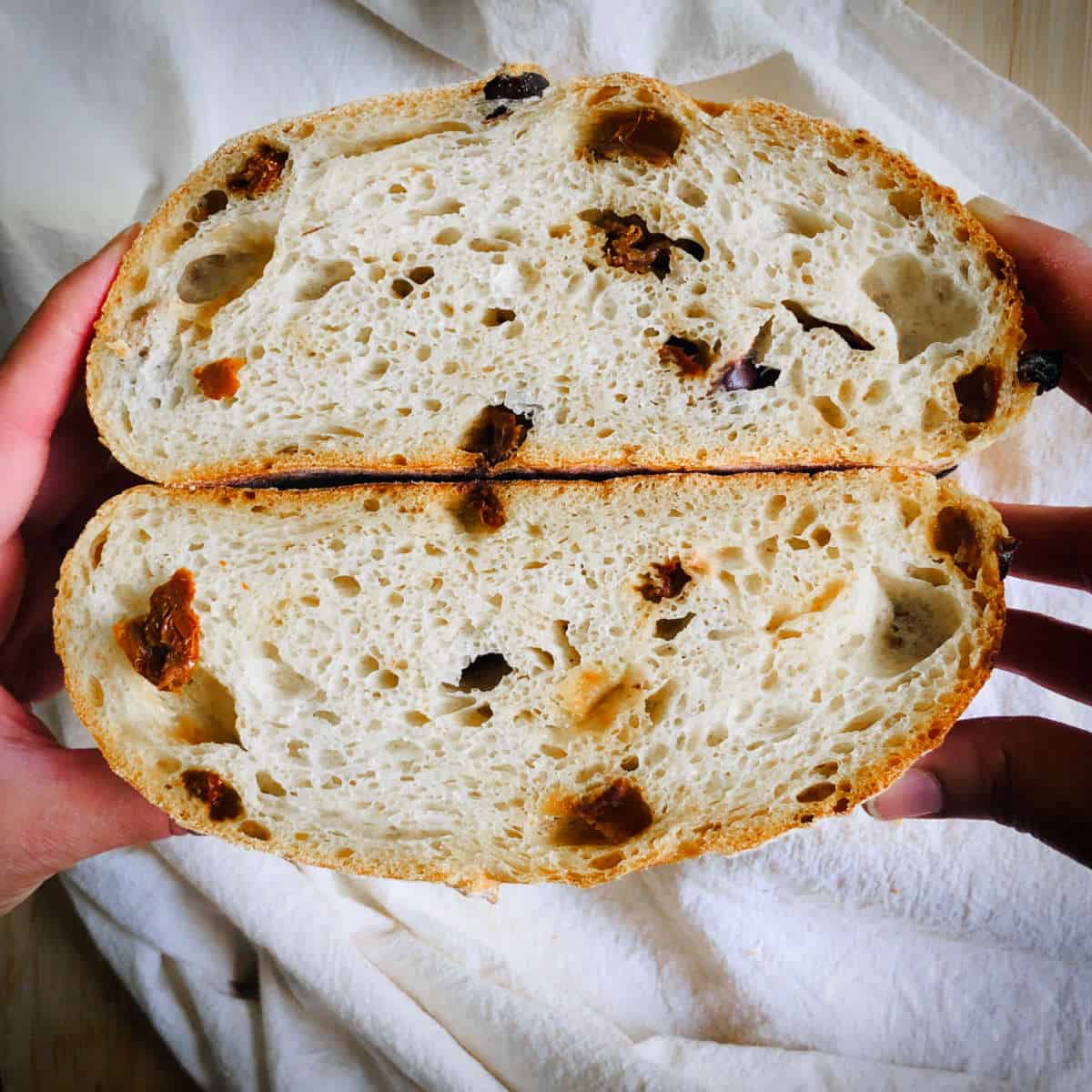
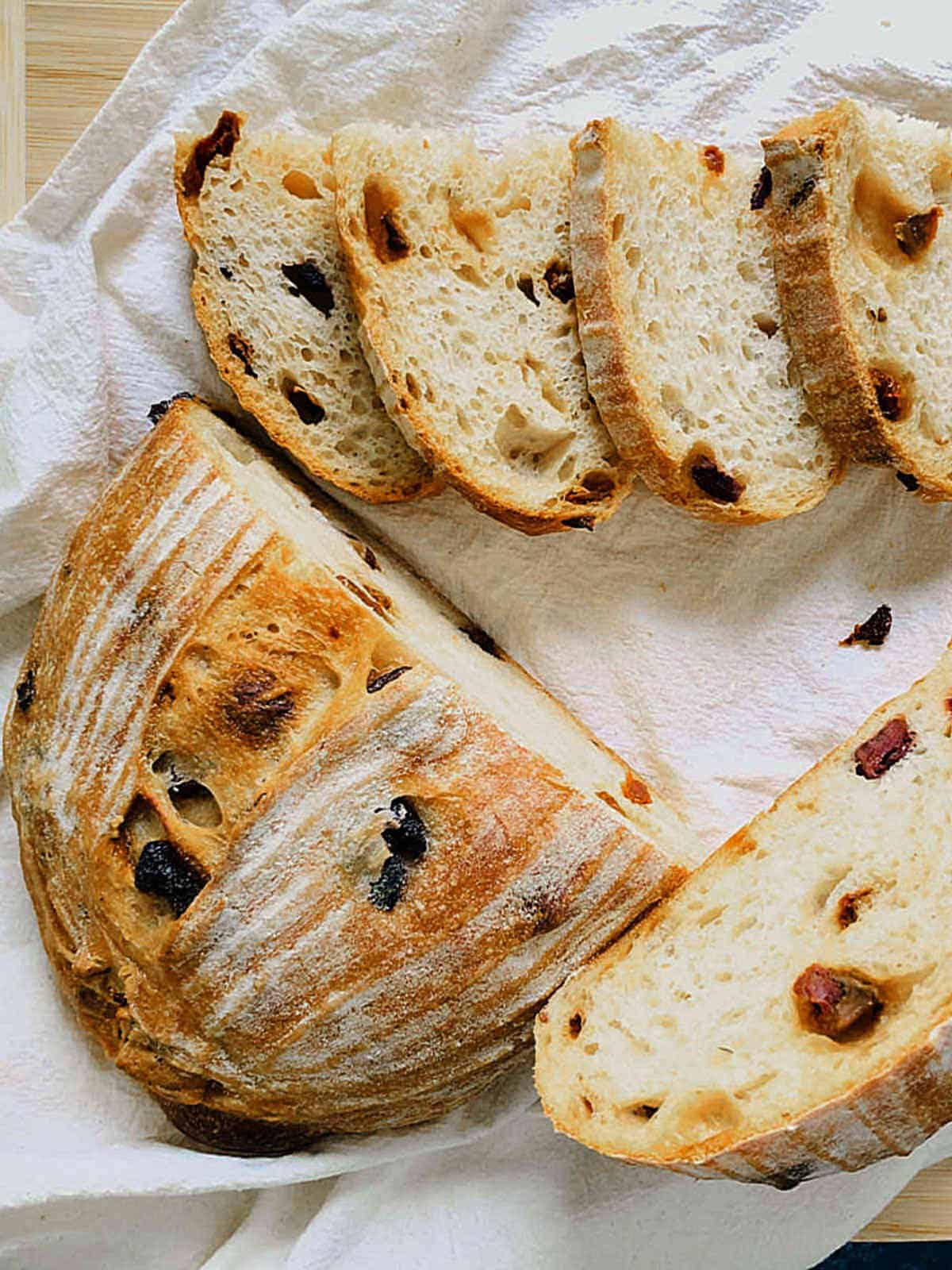
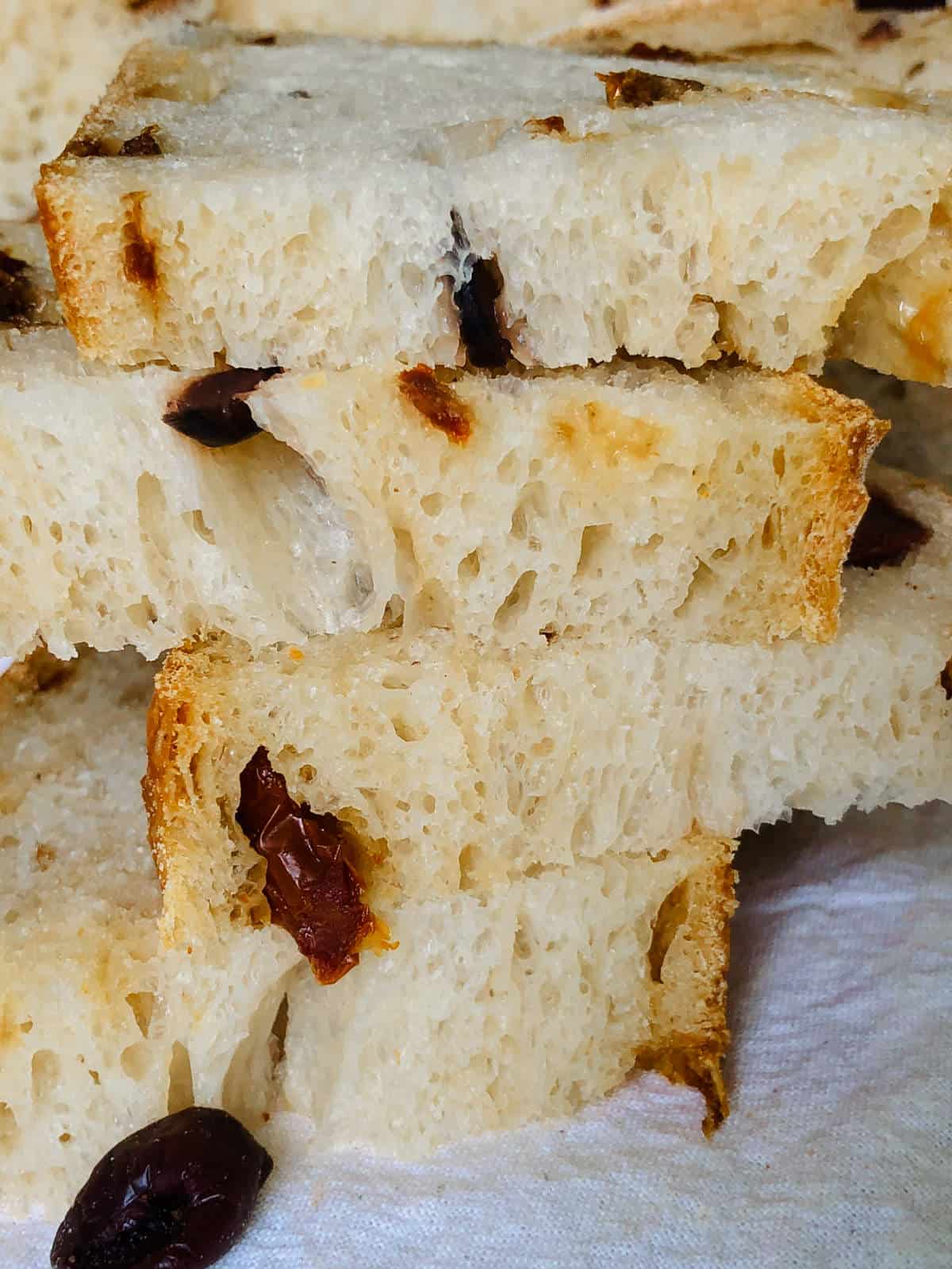
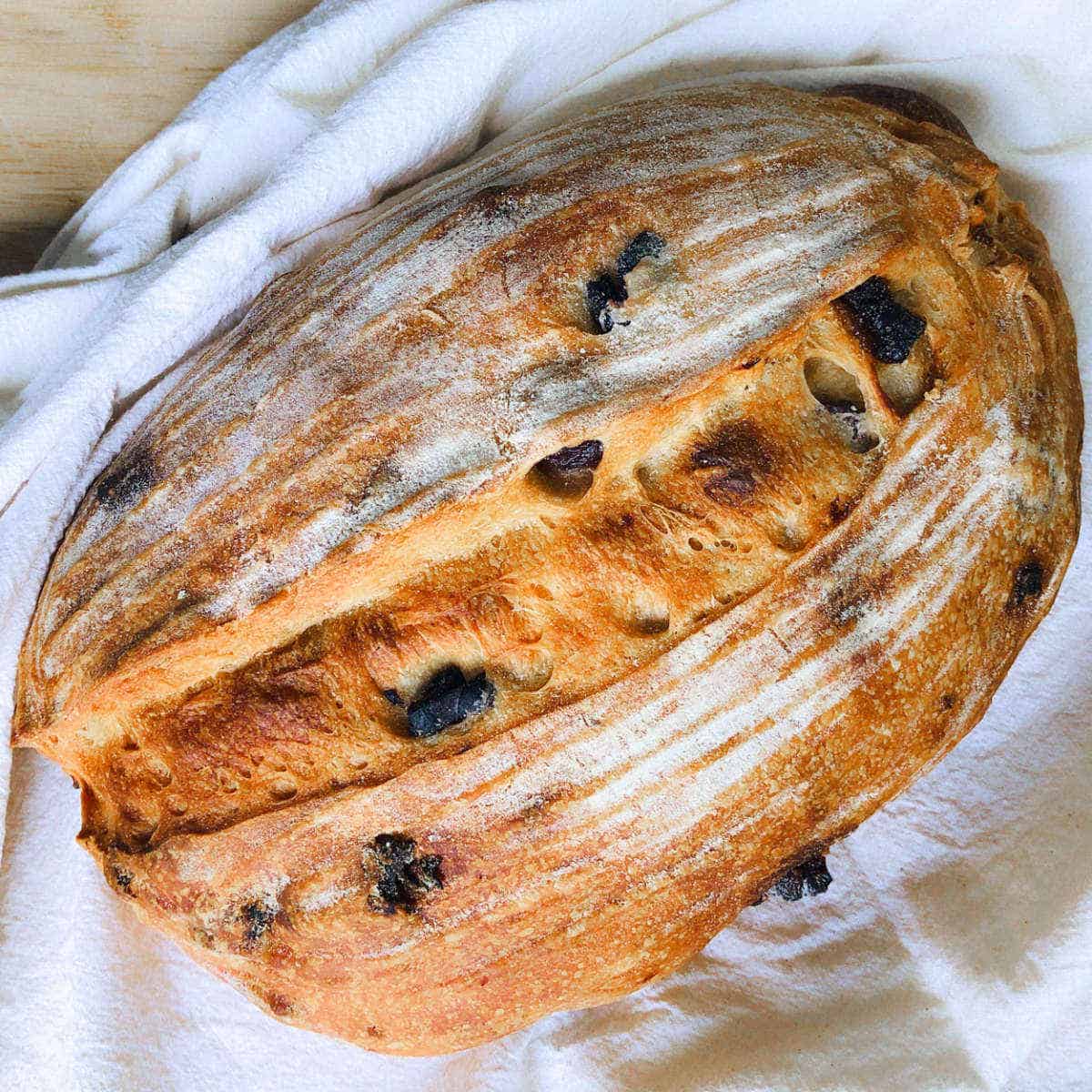
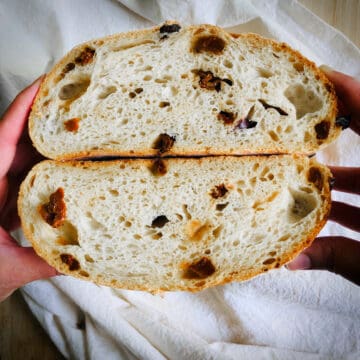
This sun-dried tomato and olive sourdough bread is a perfect blend of tangy, savory, and fruity flavors. This sourdough olive bread has a soft crust and a super-soft crumb filled with delicious add-ins.
Why you will love this recipe?
- The combination of sun-dried tomatoes and olives adds a burst of flavor to the sourdough bread. The sweet-tangy tomatoes and fruity olives create a delightful taste experience that is both savory and slightly tangy.
- Unlike traditional sourdough bread, this recipe yields a soft crust. The crumb of this sourdough olive bread is exceptionally soft and tender. This delicious and unique sourdough bread flavor is a must-try.
Ingredients
Sourdough starter: This is the key ingredient to make any sourdough bread. Make sure the sourdough starter is active and bubbly.
Sun-dried tomatoes: I use sun-dried tomatoes in oil. I also use the oil from the jar. You may choose to replace it with olive oil.
Olives: I used pitted kalamata olives. I give them a rinse with filtered water and chop them into small, round discs.
See the recipe card for full information on ingredients and quantities.
Step-by-step instructions
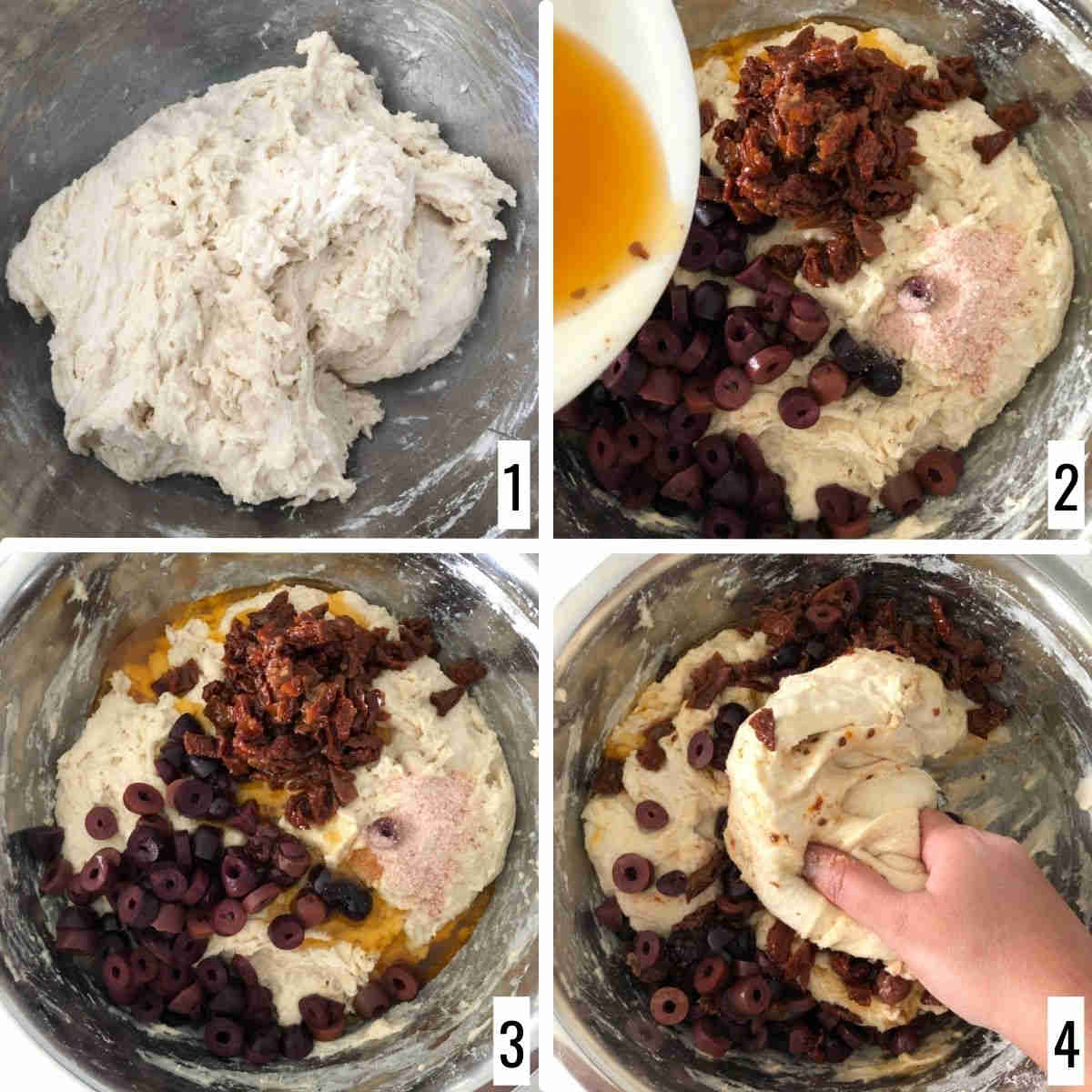
Step 1: Combine the active sourdough starter with water in a large bowl until it is fully incorporated. You can use a dough whisk or a wooden spoon for this. Slowly add the flour and mix well, making sure there are no dry bits of flour. Let it rest for 30 minutes (image 1).
Step 2: Next, add salt, sun-dried tomatoes, oil, and chopped olives to the dough (images 2 and 3). Mix well and try to incorporate them as much as possible. Let the dough rest for 30 minutes (image 4). All the add-ins may not get incorporated at the beginning, and that is fine. They will integrate into the dough along with every stretch and fold.
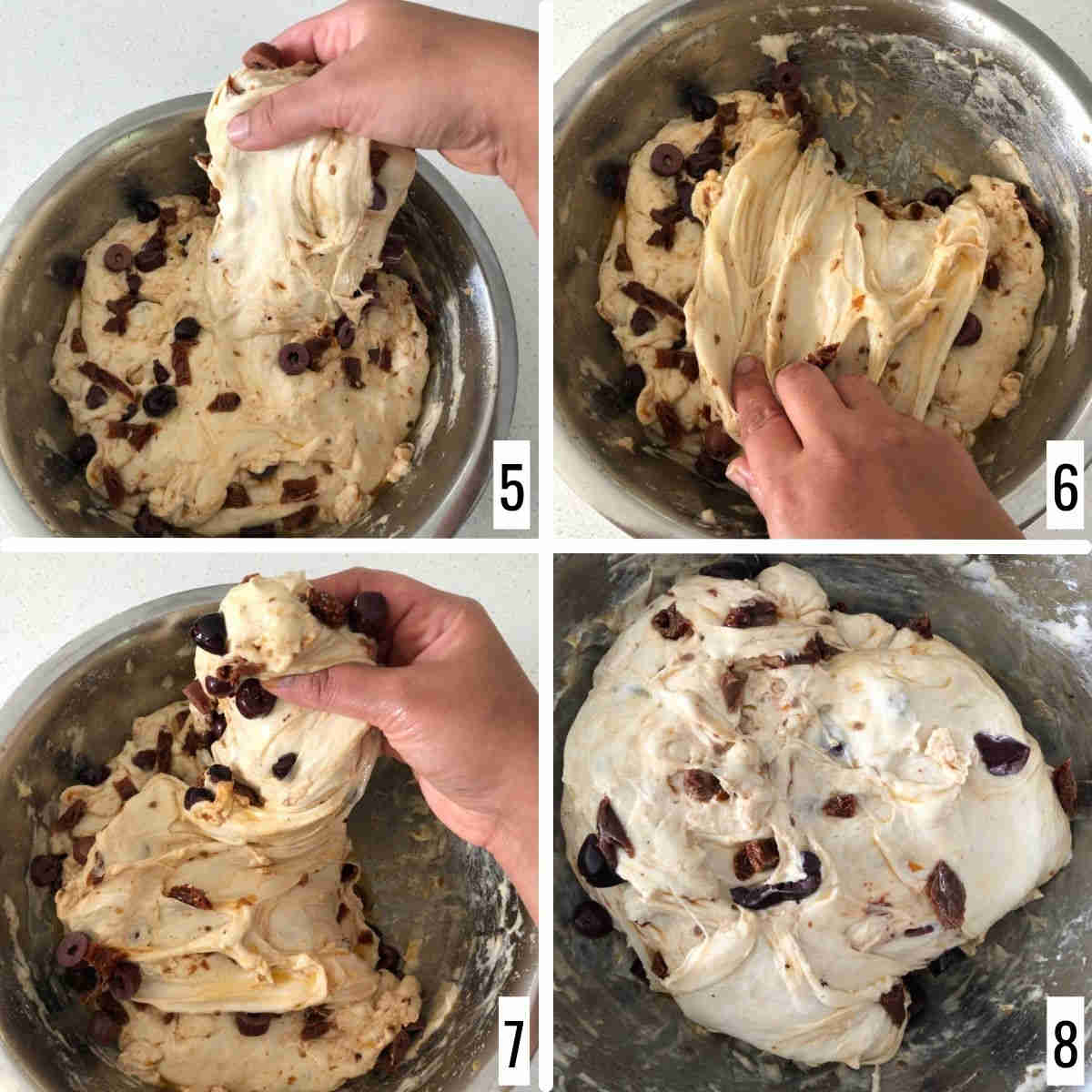
Step 3: Once the dough has rested, begin the stretch and fold technique. Gently pull the dough to perform stretch and fold. Gently stretch the edges of the dough and fold it back to the center of the dough (images 5 and 6).
Step 4: Continue to stretch and fold the dough, turning the side of the bowl after each dough rest (images 7 and 8).
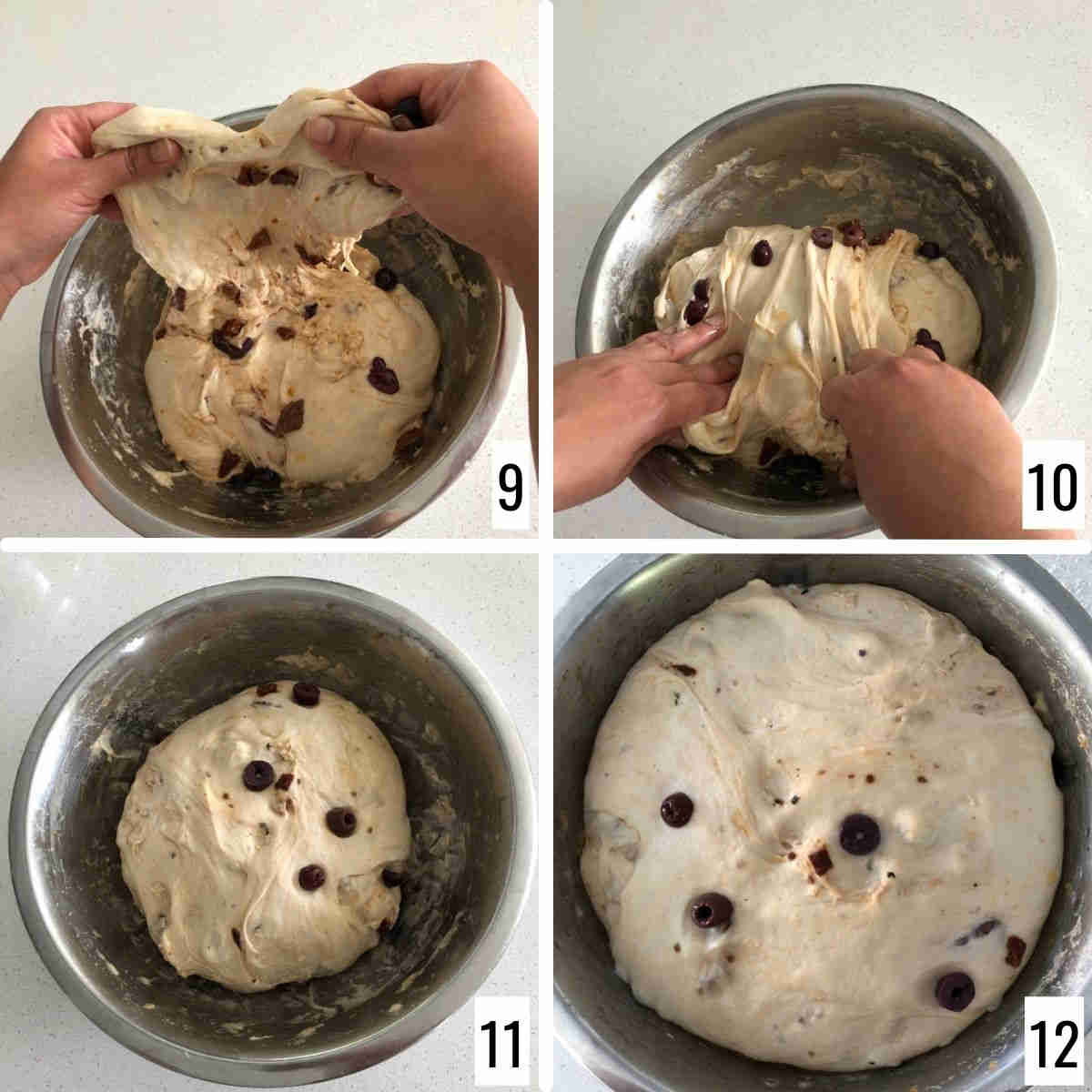
Step 5: The dough develops gluten and builds strength and structure with every stretch and fold. As you can see, the add-ins are all well incorporated at the end of these cycles (images 9 and 10).
Step 6: Let the dough sit for bulk fermentation (image 11). The time taken depends highly on the ambient temperature of your kitchen, so go by the feel of the dough rather than the time. The dough rise is almost doubled after bulk fermentation (image 12).
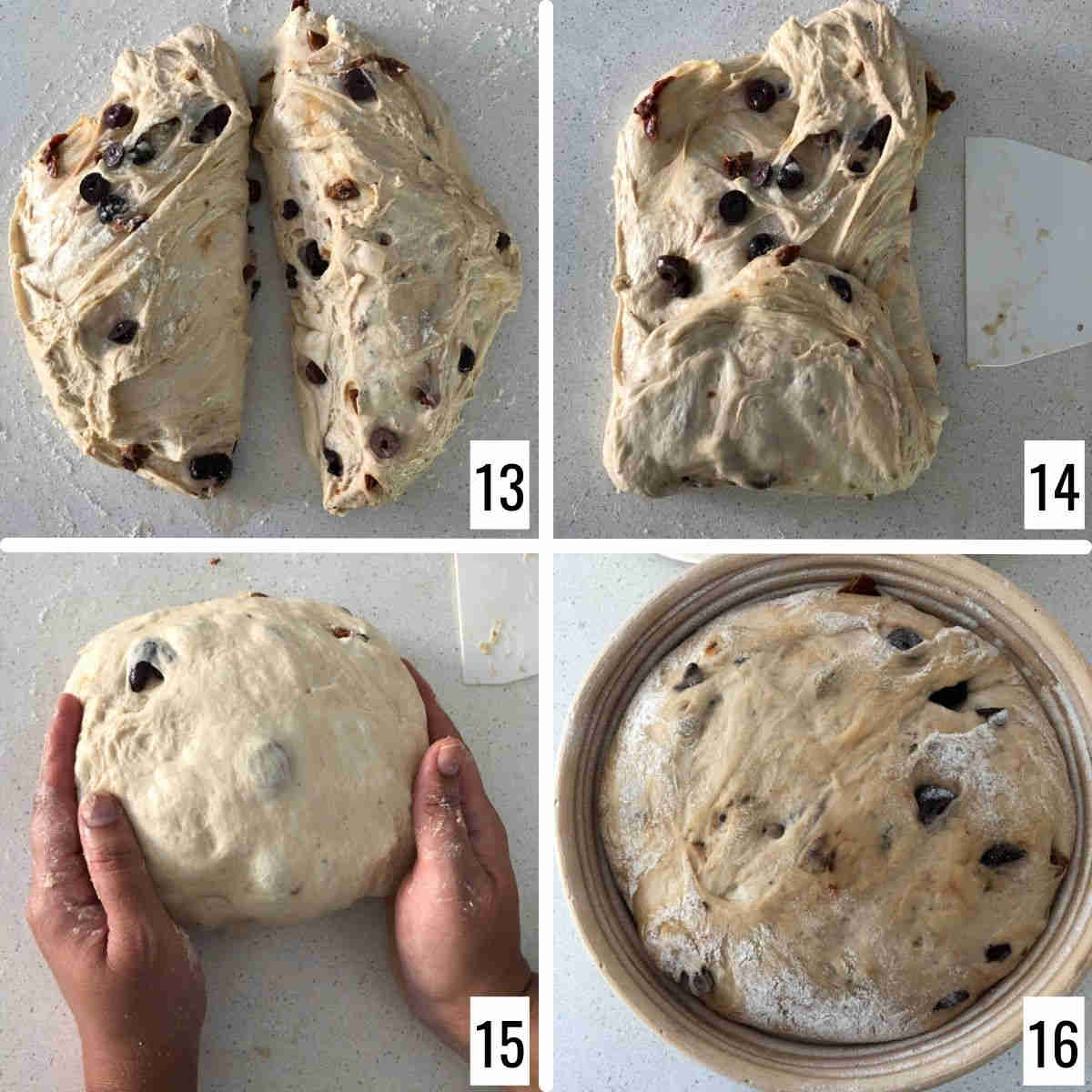
Step 7: Flip the dough onto a lightly floured work surface and divide it into two parts (image 13).
Step 8: Using a dough scraper, pick one side of the dough and fold it to the center. Pick the other side and fold it to the center. Now, hold the dough gently and tuck it to form a log (images 14 and 15).
Step 9: Carefully place the dough seam side up on the banneton. Cover the dough loosely with a damp towel or plastic bag. Place it in the refrigerator overnight for cold fermentation (image 16).
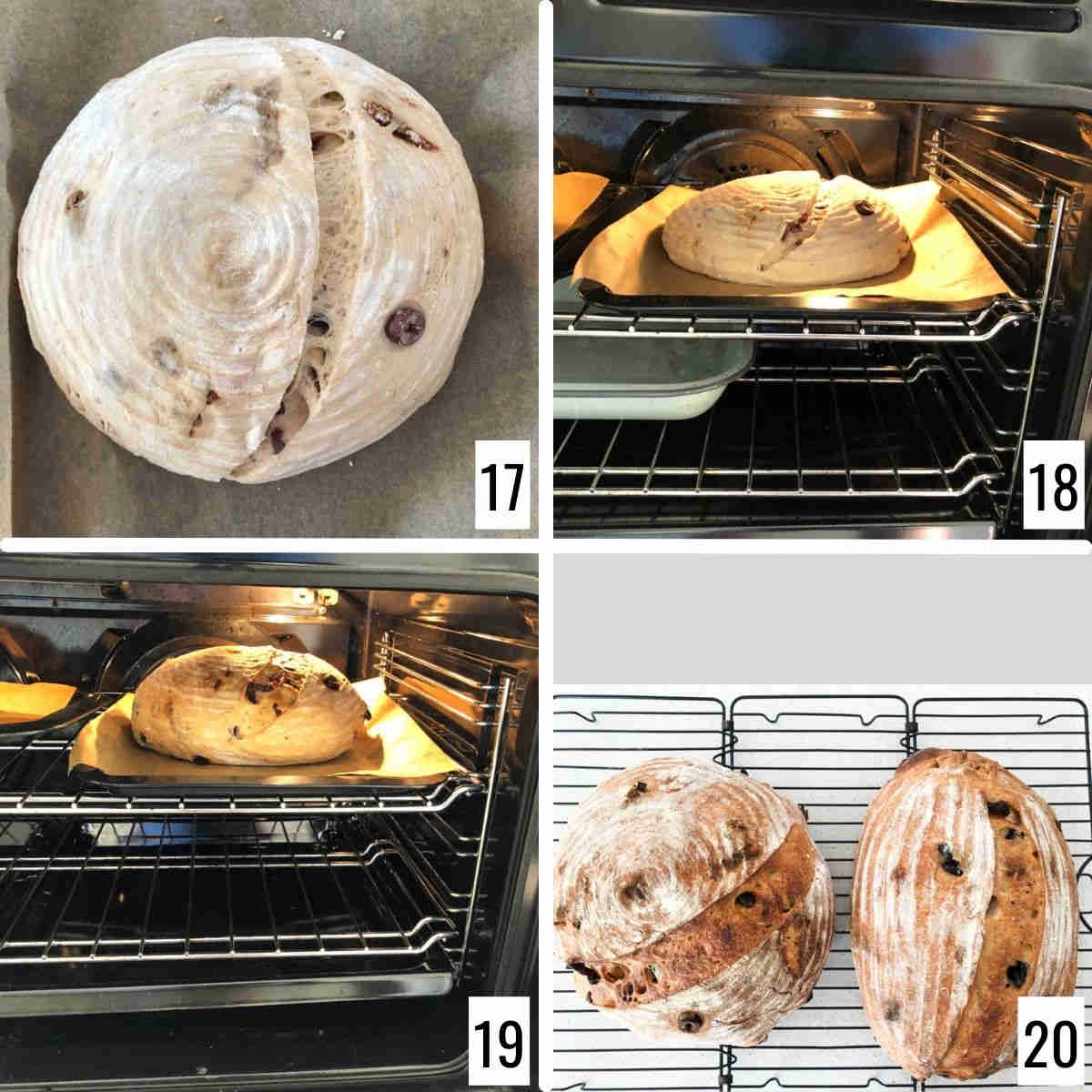
Step 10: The next day, set the oven temperature to 450 F (230 C) and preheat it for 15 minutes. Once the oven is preheated, take the dough out of the fridge. Flip it onto a parchment paper or baking sheet. Score the dough using a blade or sharp knife (image 17).
Step 11: Place water and 8-10 ice cubes in an oven-safe deep tray. Place the water bath in the oven, followed by the baking trays. Bake for 20 minutes (image 18).
Step 12: Reduce the oven temperature to 390 F (200 C) and remove the water bath. Bake for a further 15 minutes (image 19). Cool the sourdough olive bread completely on a cooling rack before slicing (image 20).
Expert Tips
All of the olives and sun-dried tomatoes will not be incorporated in the first go. Don't worry about it. As you stretch and fold the sourdough, they will be incorporated, along with the oil. Just tuck the fillings back into the dough if they pop on the surface.
My olive sourdough bread recipe calls for using the oil from the sun-dried tomato jar. Measure it separately to ensure accuracy and add it to the dough. The oil adds richness and enhances the flavor of the bread.
What to serve with sourdough olive bread?
Toasted slices: Toast the olive sourdough bread and serve it with a spread of butter, cream cheese, or a drizzle of olive oil.
Spreads: Serve the bread alongside dips and spreads like hummus, olive tapenade, roasted red pepper dip, or artichoke dip.
Soup or salad: Serve the sourdough olive bread as a side to a hearty soup or a fresh salad. It pairs well with tomato soup, chicken soup, Greek salad, cabbage salad, and chicken salad.
Recipe FAQs
Substituting fresh tomatoes for sun-dried tomatoes in this recipe may significantly alter the flavor and texture of the bread. Sun-dried tomatoes have an intense, concentrated flavor that adds a unique tanginess and depth to the bread. They also have a lower moisture content, which helps maintain the bread's structure during baking.
Absolutely! Feel free to experiment with different types of olives in this olive sourdough loaf recipe to suit your taste preferences. While I am using pitted kalamata, which are briny olives, you can certainly substitute them with other varieties such as castelvetrano olives, green olives, black olives, or a mix of different olives.
Absolutely! This recipe is versatile enough to be transformed into smaller individual rolls or buns. Simply follow the instructions for preparing and fermenting the dough. Instead of shaping the dough into a large loaf, divide it into smaller portions and shape them into individual rolls or buns. Adjust the baking time accordingly, as the smaller size will require less time in the oven to bake to perfection.
While traditional methods involving hand mixing along with stretch and fold (or coil fold) are commonly used for sourdough bread, you can adapt the recipe to use a bread machine or stand mixer with a dough hook attachment. Adjust the mixing and kneading times accordingly, following the instructions for the specific equipment.
More sourdough recipes

If you tried this Olive Sourdough Bread Recipe or any other recipe on my website, please leave a ? star rating and let me know how it went in the ? comments below.
Recipe card
Sun-dried Tomatoes and Olive Sourdough Bread
Equipment
- Bread lame or razor blade to score the dough
Ingredients
- 150 grams sourdough starter active
- 700 grams bread flour
- 150 grams whole wheat flour (atta)
- 120 grams sun-dried tomatoes
- 40 mL oil from the sun-dried tomatoes
- 100 grams kalamata olives chopped
- 2 teaspoon salt
- 560 grams filter water
- Rice flour to dust the banneton
Instructions
Make the initial dough:
- Measure the oil from the sun-dried tomatoes and set aside. Measure the sun-dried tomatoes and cut them into small pieces. Measure olives and cut them into small discs.
- In a large mixing bowl, combine the active sourdough starter with water until it is fully incorporated.
- Slowly add the flour and mix well making sure there are no dry bits of flour. Let it rest for 30 minutes.
- Next add salt, sun-dried tomatoes, oil, and olives to the dough. Mix well and try to incorporate them as much as possible.
Bulk Fermentation:
- Perform six sets of stretch and fold at an interval of 30 minutes. With wet hands, grab a portion of the dough and slowly stretch it taking care not to break it, and fold it towards the center over the dough. Keep turning the bowl and repeat the process until all parts of the dough is covered. Carefully flip the dough and round it up. This completes one set of stretch and fold. Repeat this process six times at an interval of 30 minutes.
- Let the dough sit for bulk fermentation until it is almost double and has bubbles on the top. This may take 3-4 hours depending on the ambient temperature.
Shaping and cold fermentation:
- Dust round or oval bannetons well with rice flour.
- Flip the dough onto a lightly floured surface. Divide into two equal parts.
- Pick one side of the dough and fold it to the center. Pick the other side and fold it to the center. Now hold the dough gently and tuck it to form a log. Carefully place the dough seam-side up on the banneton.
- Cover the dough loosely and place it in the refrigerator overnight for cold fermentation and final rise
Bake the olive sourdough bread without Dutch Oven:
- The following day, preheat the oven to 430 F (220 C) for 15 minutes. Line two baking trays with parchment paper or baking paper.
- Place water and 8-10 ice cubes in an oven-safe deep tray.
- Take the dough out of the fridge once the oven is preheated. Place both dough balls in the prepared trays.
- Score them using a razor blade or sharp knife.
- Place the water bath in the oven, followed by the baking trays. Bake for 20 minutes.
- Reduce the oven temperature to 390 F (200 C) and remove the water bath. Bake for further 15 minutes.
- Turn off the oven and let the bread sit in the oven for 15 minutes for curing.
- Cool completely, slice, and serve.
Bake the olive sourdough bread in Dutch Oven:
- The following morning, place the Dutch oven in the oven and preheat to 450 F (230 C) for 45 minutes.
- Once the oven is preheated, take the dough ball out of the fridge. Flip it onto a parchment paper or baking sheet.
- Score the dough using a razor blade or sharp knife.
- Carefully take the Dutch oven out of the oven. Place the scored dough along with the baking paper into the hot Dutch oven and immediately close the lid.
- Place it back in the oven and bake for 20 minutes.
- Take the lid off the Dutch oven and bake for another 15 minutes.
- Turn off the oven and keep the door ajar. Let the bread sit in the oven for 15 minutes for curing.
- Cool completely, slice, and serve.


Linda K Slyder says
my sun dried tomatoes are not in oil.. Can i still use them in this recipe?
Shilpa says
Hi Linda, Sure, you can you it. Just add equal amount of olive oil instead. Hope this helps.
- Shilpa