
 Add Preferred Source
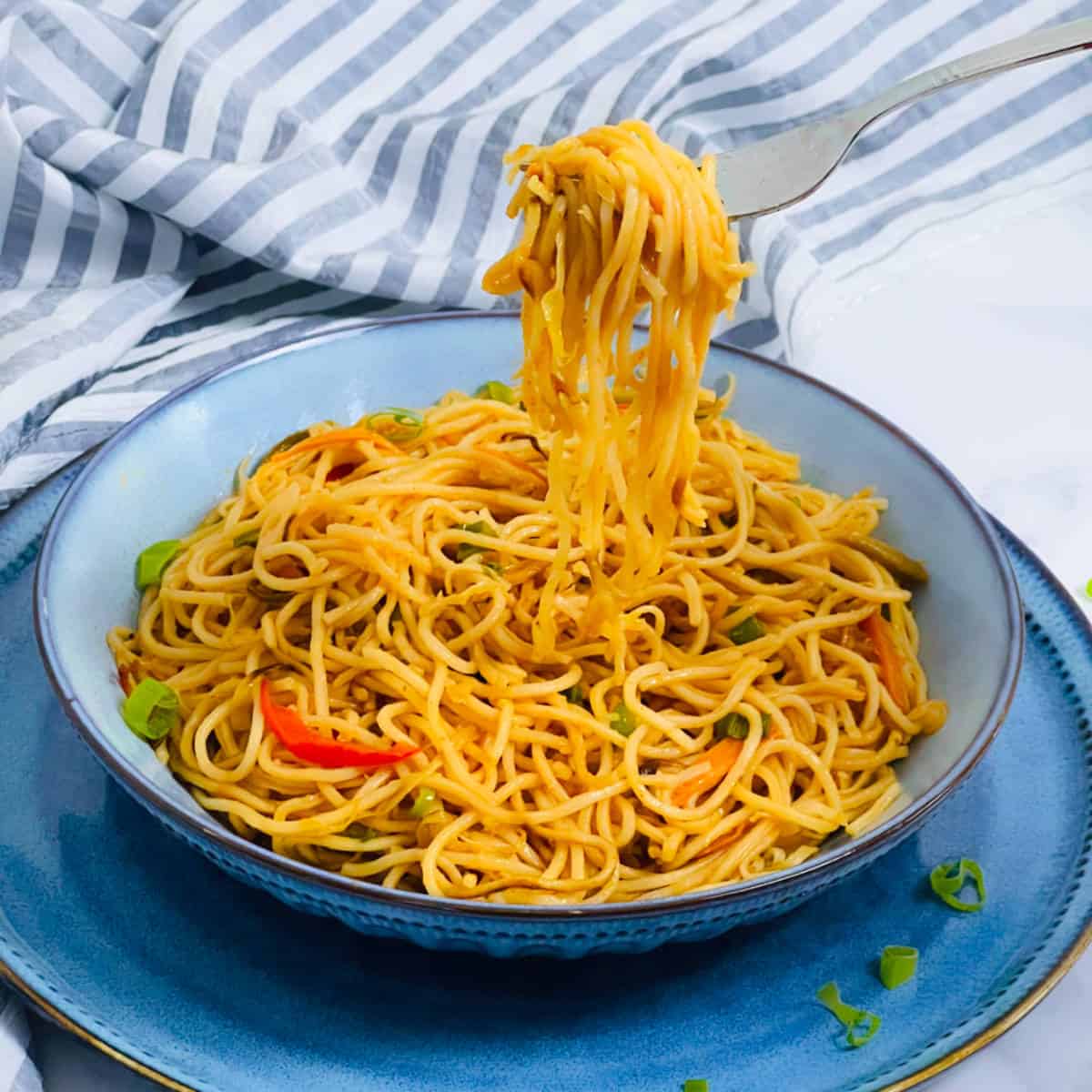
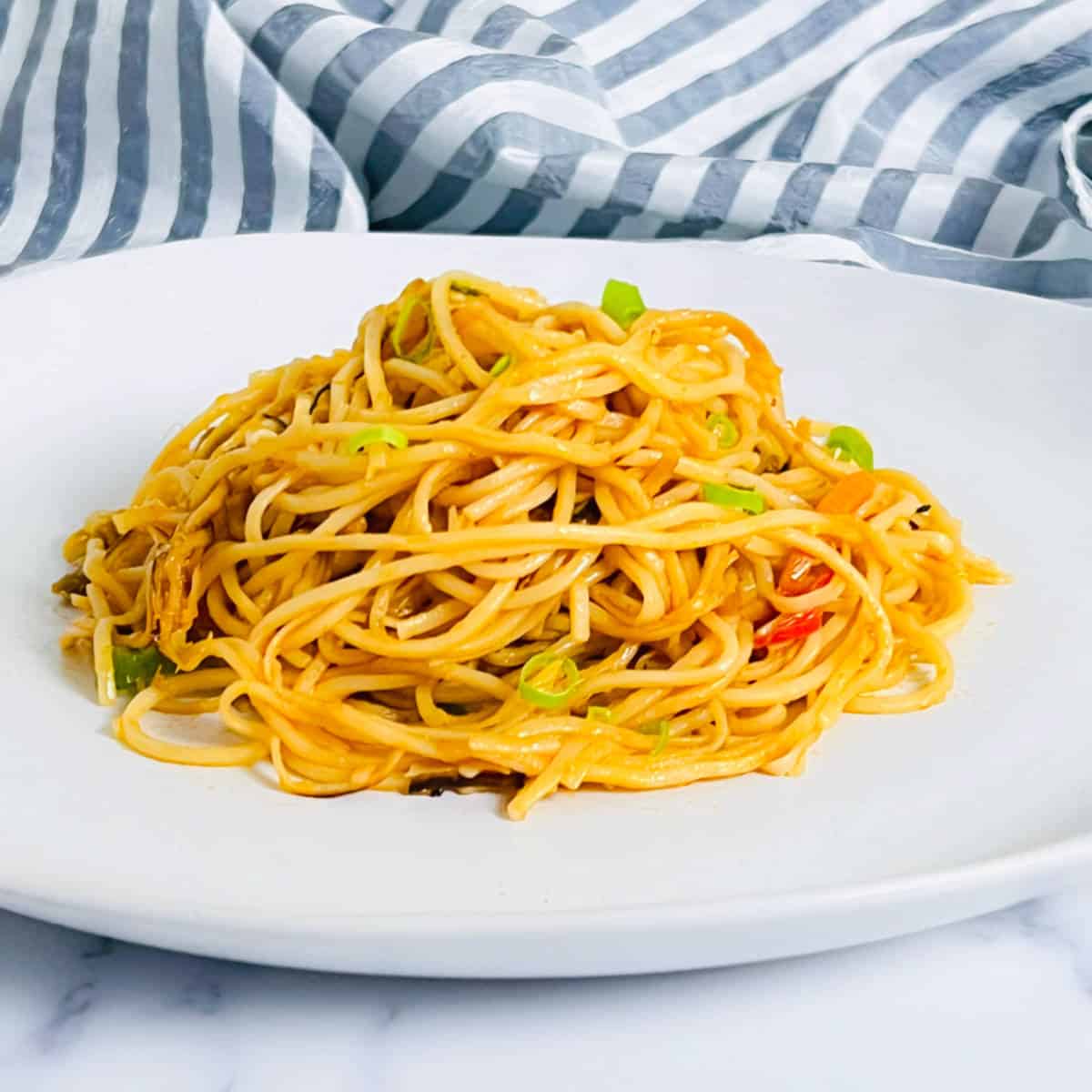
Noodles are always a crowd-pleaser, but have you tried Hakka noodles yet? If not, you're in for a treat! Made with chewy and flavorful wheat noodles stir-fried with fresh veggies, street-style vegetable Hakka noodles are a beloved staple in Indian-Chinese cuisine. It is a perfect pair with chilli chicken, gobi manchurian, or chilli eggs.
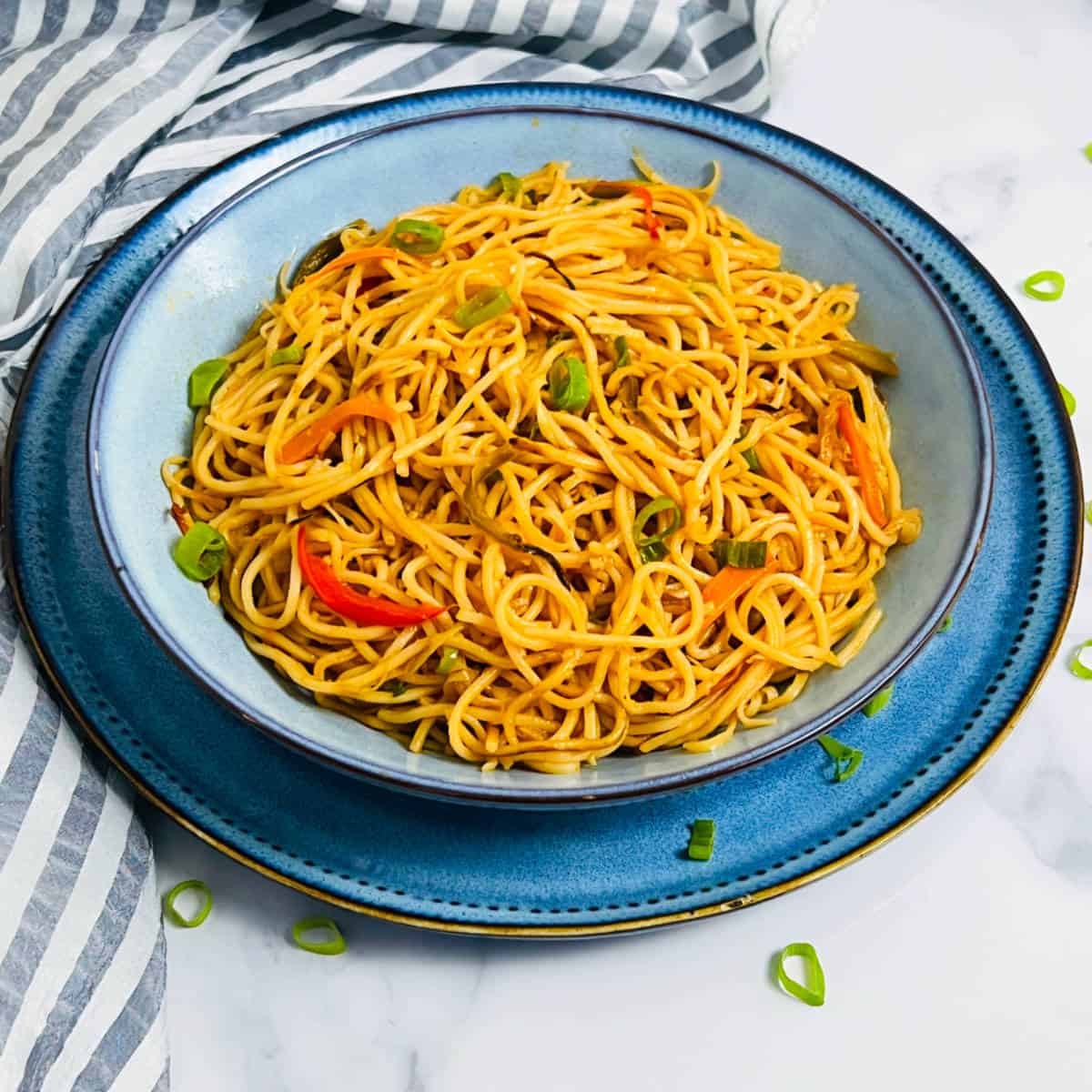
Veg Hakka noodles, also known as vegetable noodles, are likely the most commonly ordered Indo-Chinese dish at Indian restaurants and are widely enjoyed and loved by most Indians. In addition, it is a staple street food item found at food trucks and roadside stalls throughout the country.
Why you will love this recipe?
- Use of fresh vegetables: This recipe uses an ample amount of fresh vegetables to make the dish more nutritious and filling.
- Proper cooking of noodles: I am including tips to cook the noodles correctly so that they don't stick to each other.
- Balanced seasoning: The seasoning I am using is well-balanced to achieve a flavorful taste.
Ingredients
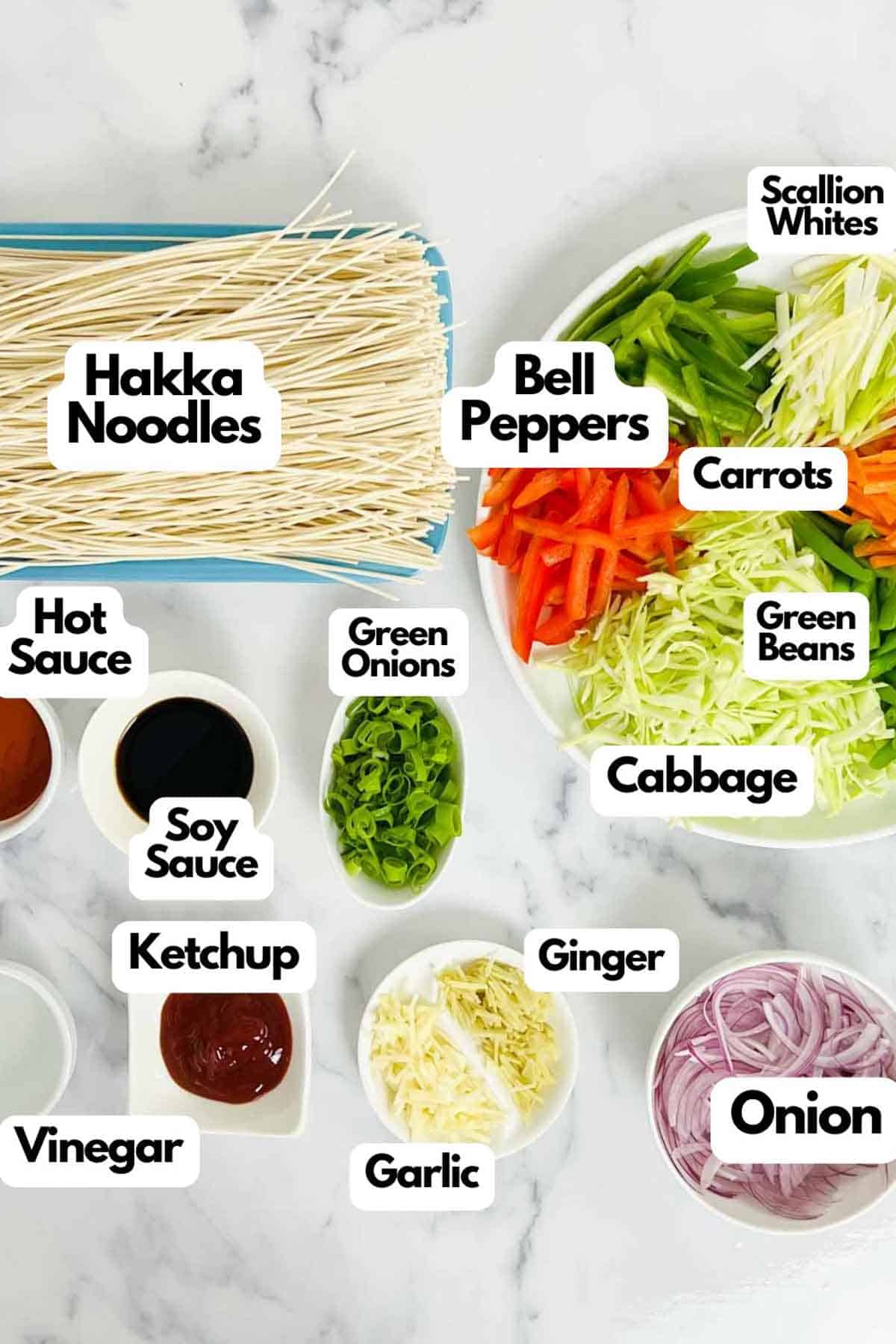
Noodles: I use plain noodles made using wheat flour for this dish, which works best. You may also use any other type of noodles (like egg noodles or soba noodles) if you prefer.
Vegetables: I use carrots, bell peppers (red and green), onion, cabbage, green beans, and scallions (spring onions). Other vegetables such as mushrooms, cauliflower, broccoli, and baby corn are also great additions to the dish.
See the recipe card for full information on ingredients and quantities.
Step-by-step instructions
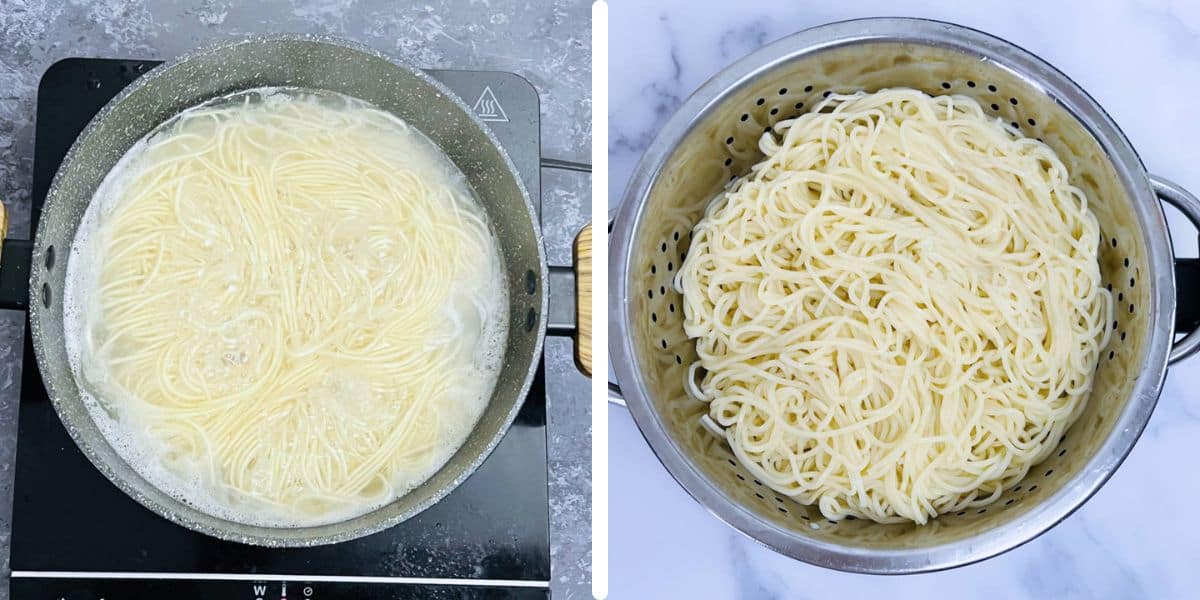
Step 1: Cook the flat noodles in boiling water as per package instructions. Drain excess water once the noodles are cooked. Rinse with cold water and cool it (this will also help remove the excess starch). Drizzle a little oil and mix the noodles using a pair of tongs. This will prevent them from clumping together.
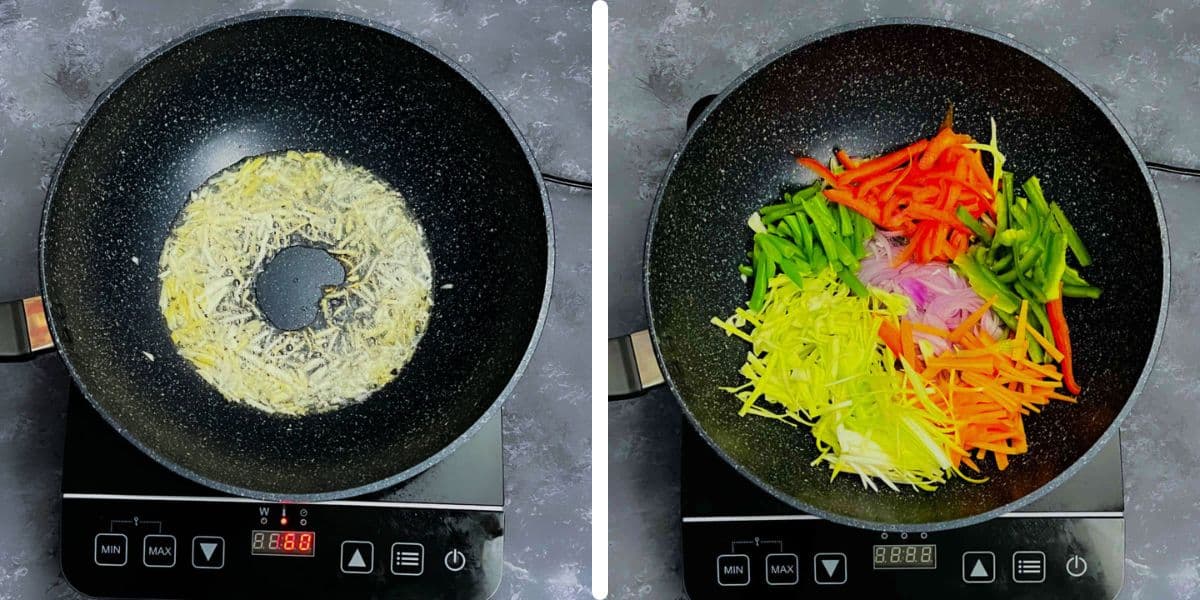
Step 2: Heat oil in a large wok (you can use a cast iron wok or a nonstick wok). Add ginger and garlic, and saute for one minute on high heat. Add onions, cabbage, carrot, green bell peppers, red bell peppers, French beans, and scallion whites.
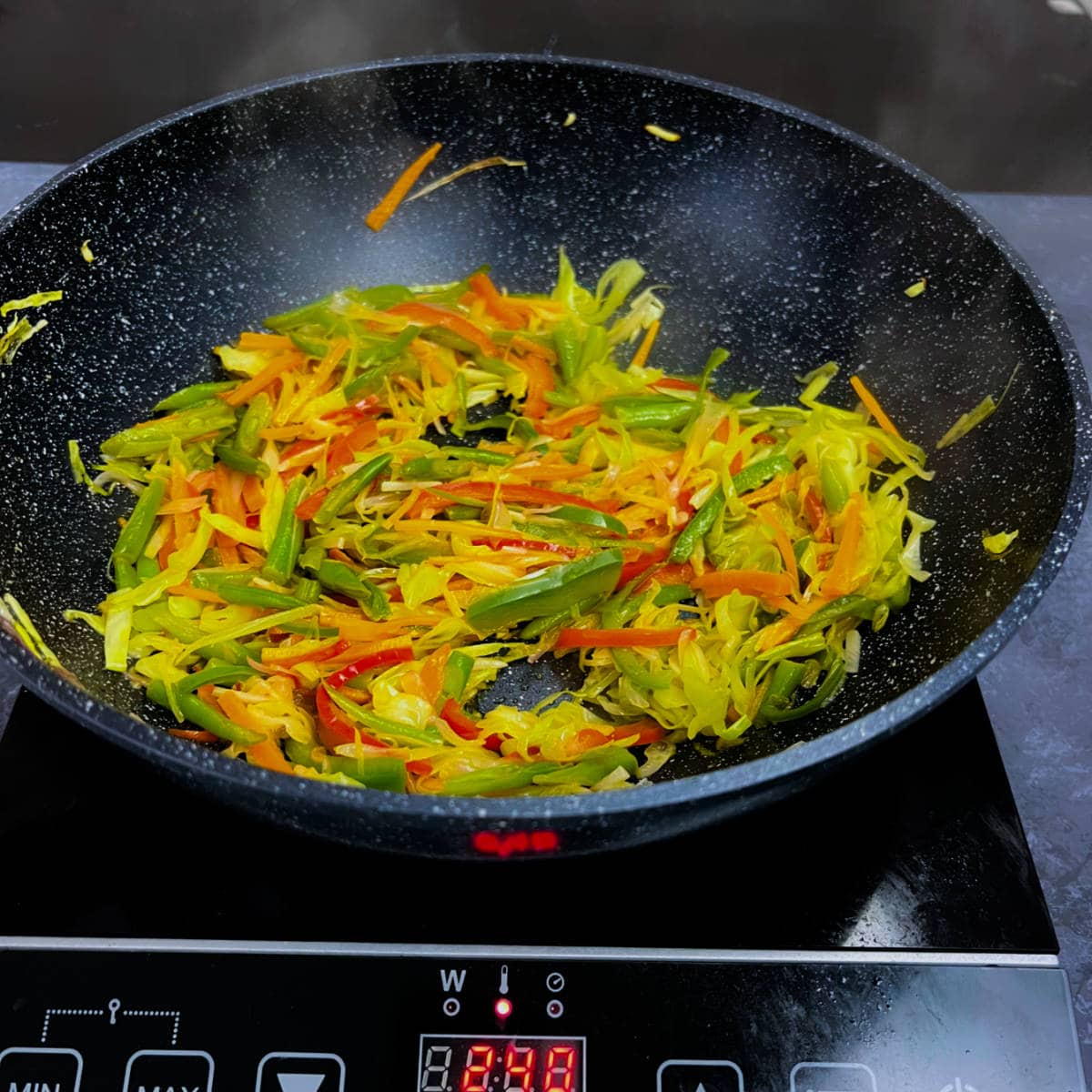
Step 3: Stir fry on high flame for 2-3 minutes.
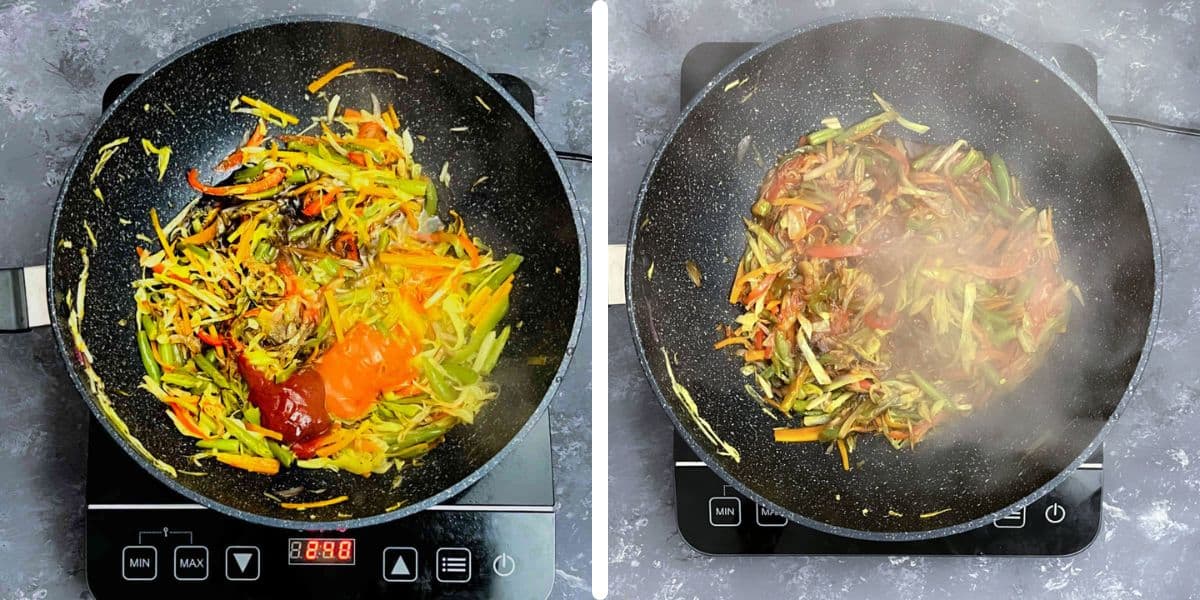
Step 4: Add red chili sauce (or hot sauce), white vinegar, soya sauce, tomato ketchup, salt, and black pepper powder. Saute for 1-2 minutes.
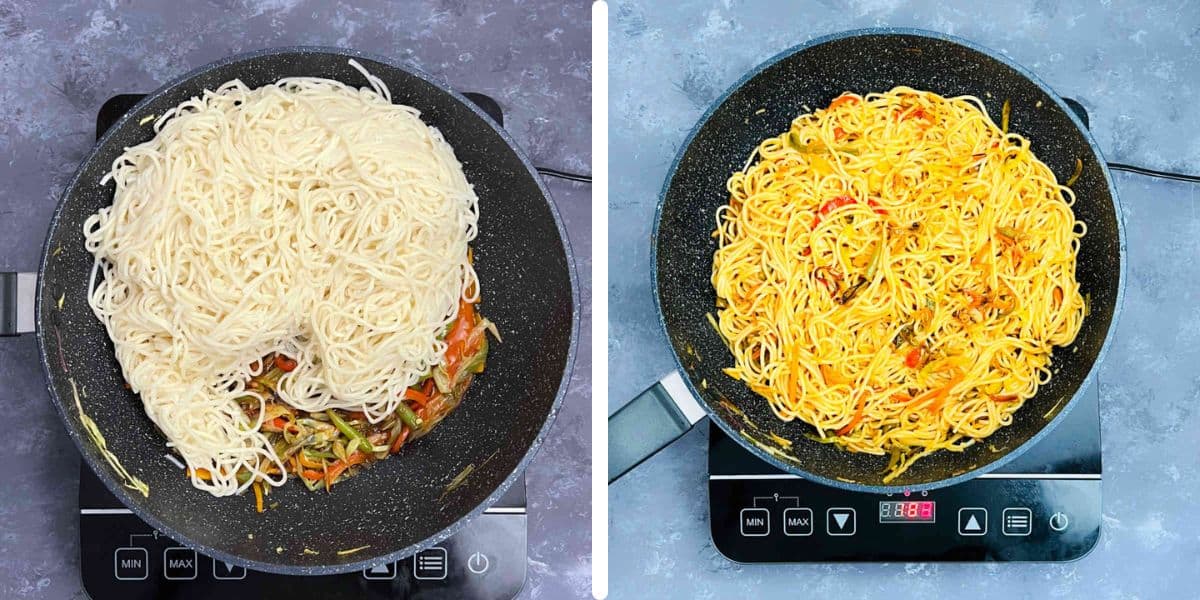
Step 5: Add the cooked noodles. Mix well using a wooden spoon or spatula.
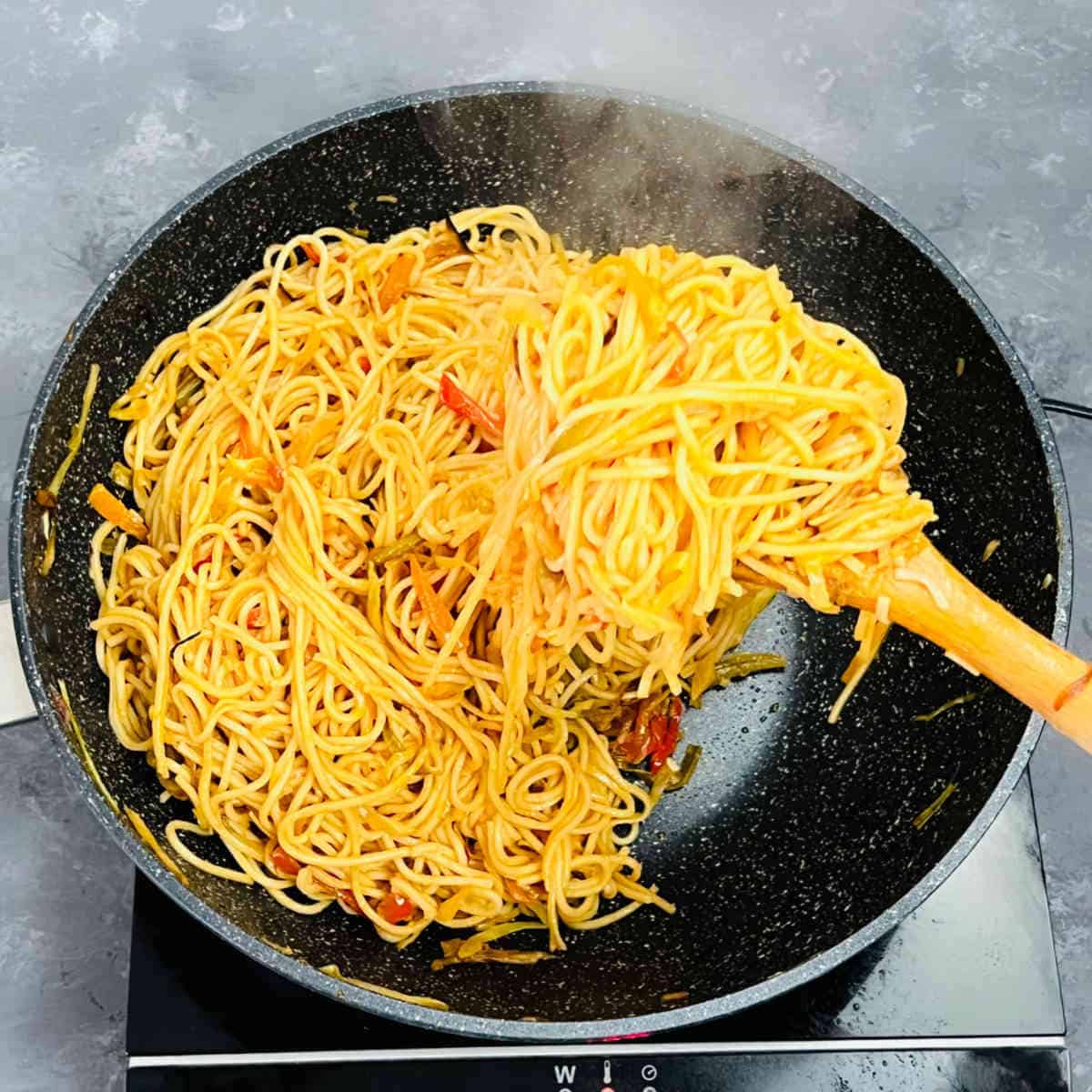
Step 6: Toss the noodles on high heat for that street-style touch.
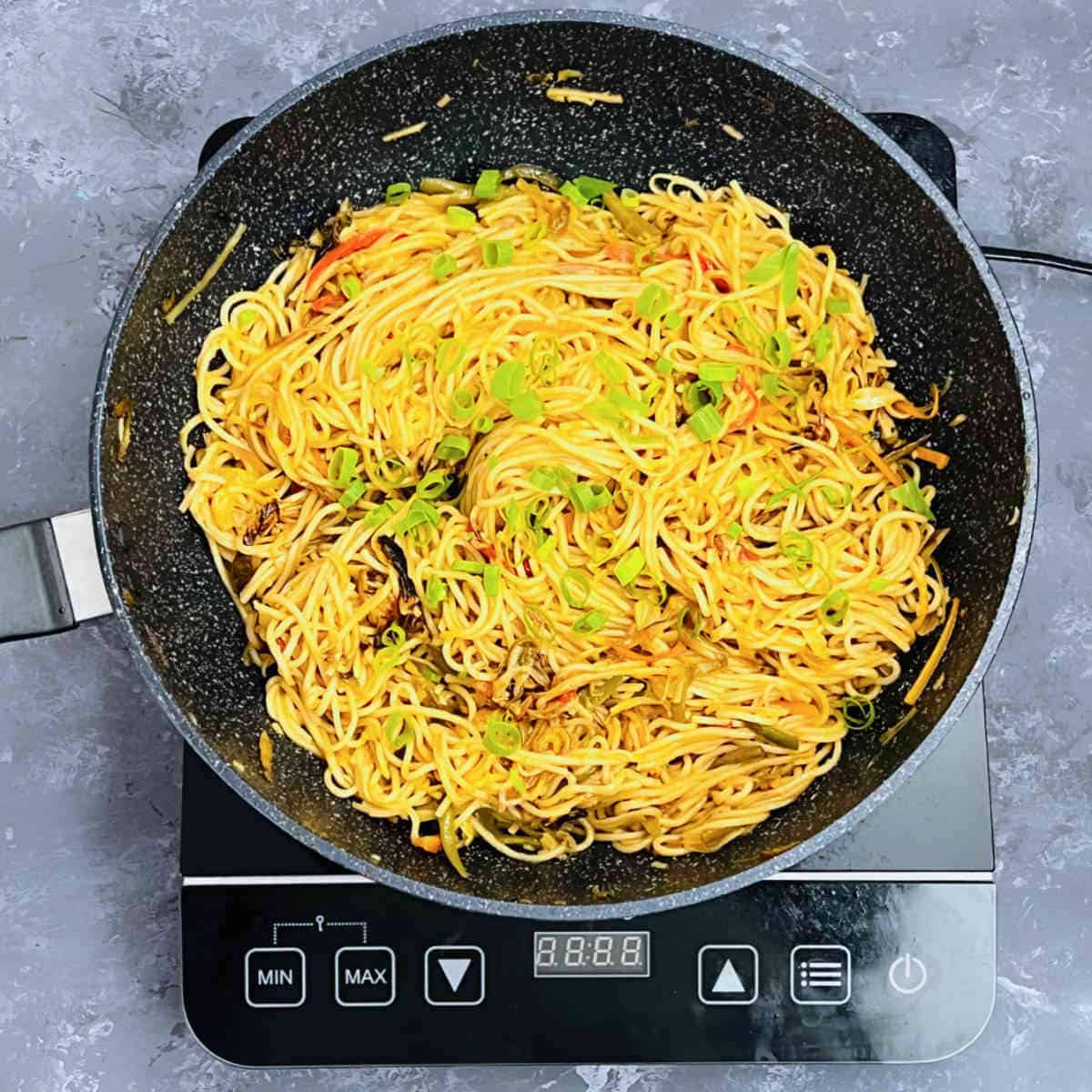
Step 7: Garnish with green onions and serve hot.
Expert Tips
Keep all the ingredients ready and handy before starting cooking. Chop the vegetables, measure the sauces, and cook and cool the noodles before you begin tossing the noodles in the sauces.
Boil the noodles as per packet instructions and rinse them with cold water. This prevents it from becoming sticky. Drizzle some oil on the cooled noodles to avoid them from clumping together. Also, take care not to overcook the noodles. It should be just done, similar to al dente in pasta.
Stir-fry the vegetables for 2-3 minutes only on high heat. Do not cover them. They should have a crunch in them and get a slight char.
Soy sauce is quite salty, so adjust the salt level accordingly. I add tomato ketchup to balance the strong flavors. This is optional and can be skipped.
You can also make chicken Hakka noodles using this veg Hakka noodles recipe. Use thinly sliced chicken breast and saute them on high heat before adding the veggies. The rest of the recipe remains the same.
What to serve with Hakka noodles?
Gobi Manchurian or Veg Manchurian: Crispy cauliflower florets or veggie balls coated in a tangy and spicy sauce; gobi Manchurian and veg Manchurian are popular Indo-Chinese dishes that pair well with Hakka noodles.
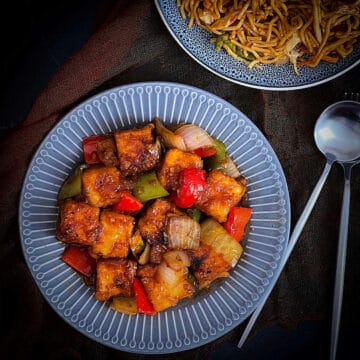
Chilli chicken or chili paneer: Spicy and flavorful chili chicken is a favorite Indo-Chinese dish made with boneless chicken, bell peppers, onions, and a spicy sauce. For a vegetarian option, chili paneer is an excellent choice, made using cubes of paneer (Indian cottage cheese) stir-fried with bell peppers, onions, and a spicy sauce.
Recipe FAQs
There are several brands that you can use, and our favorite is Chings. You can buy them in Indian grocery stores or online stores like Amazon.
While Hakka noodles are also called chow mein in many parts of India, they are both different in terms of the cooking styles and ingredients used. Hakka noodles are tossed on high flame, and it has more distinctive Indo-Chinese flavors. Chowmein is stir-fried noodles and has many localized and regional versions like American chow mein, Mexican chow mein, etc.
To store leftover veg Hakka noodles, allow them to cool to room temperature before transferring them to an airtight container. Store the noodles in the refrigerator for up to 3-4 days. Reheat in a pan or microwave with a splash of water to refresh their texture and flavor before serving.
More Indian Chinese recipes


If you tried this Hakka Noodles Recipe or any other recipe on my website, please leave a ? star rating and let me know how it went in the ? comments below.
Recipe card
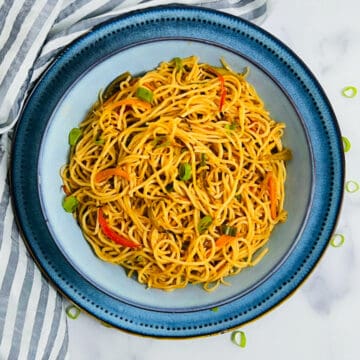
Veg Hakka Noodles (Indo-Chinese Style)
Ingredients
- 2 packtes noodles (300 grams) I used Chings brand
- 4 tablespoon oil
- ½ inch ginger finely chopped
- 3 cloves garlic finely chopped
- 1 small onion sliced
- 1 cup cabbage julienne
- 1 cup bell peppers julienne
- ½ cup carrot julienne
- ½ cup green beans julienne
- ¼ cup scallion whites thinly sliced
- 1 tablespoon tomato ketchup
- 1 tablespoon red chili sauce adjust as per taste
- 1½ tablespoon vinegar
- 3 tablespoon soy sauce
- ¼ teaspoon salt (adjust as per taste)
- ½ teaspoon white pepper
- 2 tablespoon scallion greens chopped
Instructions
Boil the noodles:
- In a large saucepan or stockpot, boil 8-9 cups of water.
- Once the water is boiling, add the noodles and cook them as per the packet's instructions.
- Pour into a colander and drain out all the water. Rinse well in cold running water and let it cool.
- Drizzle 2 tablespoons of oil on the boiled noodles and gently mix them using a pair of tongs.
Stir-fry:
- In a wok or frying pan, heat 2 tablespoons of oil. Add ginger and garlic and saute for a minute.
- Add onions, carrots, bell pepper, green beans, cabbage, and scallion whites. Stir fry on high heat for 2-3 minutes.
- Add red chili sauce, vinegar, tomato ketchup, soy sauce, salt, and pepper. Mix well.
- Add the cooked noodles and mix well. Toss it on high heat for 1-2 minutes.
- Turn off the heat and garnish with scallion greens (spring onion greens). Serve hot.

Comments
No Comments