
 Add Preferred Source
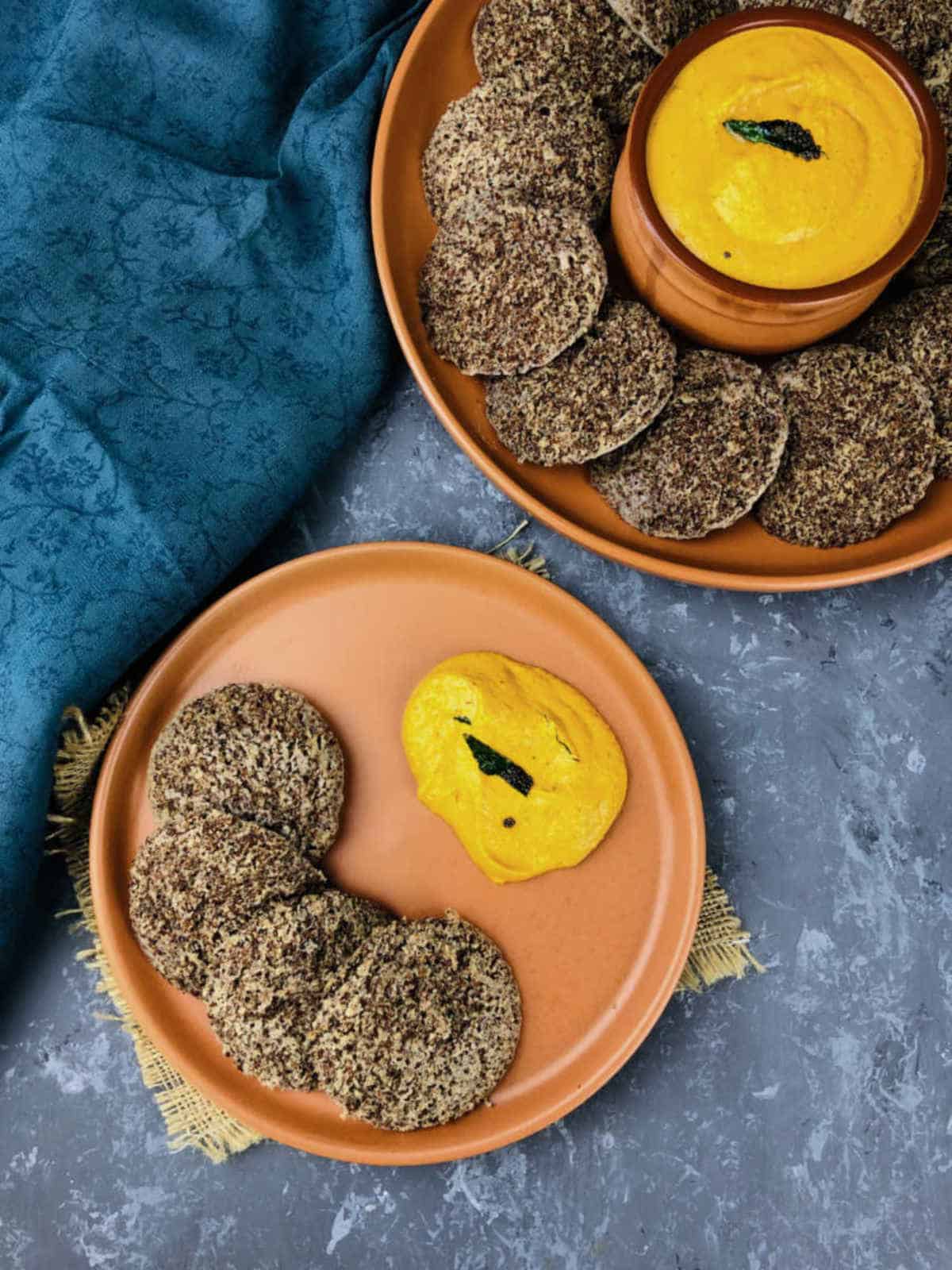
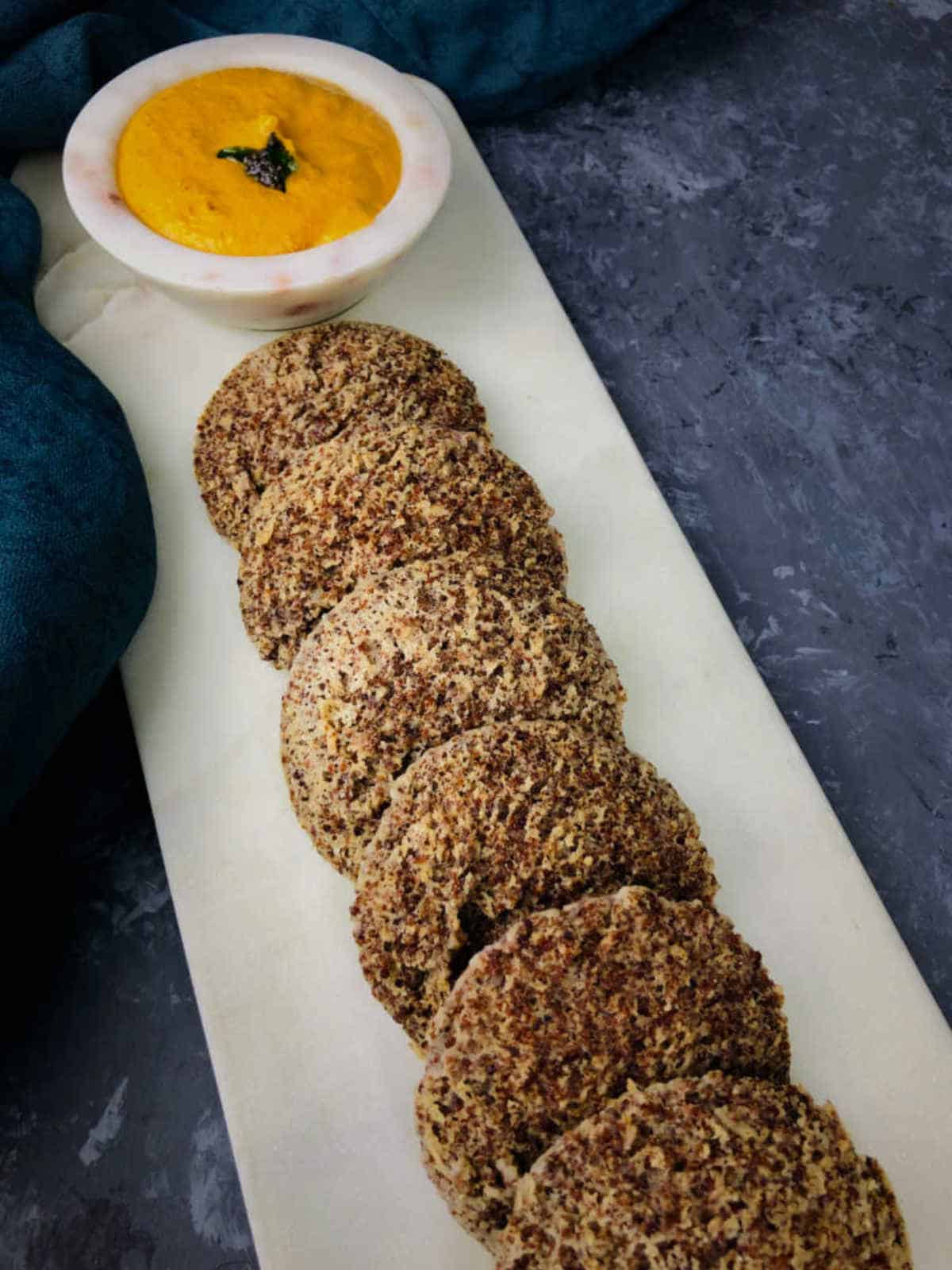
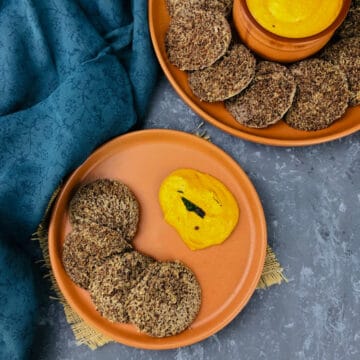
Ragi idli is a variation of the traditional idli. It is made using finger millet and lentils, and the batter is fermented. What's more, this versatile batter can be used to make not just idlis but also crispy dosas.
From preparing and fermenting the batter to perfecting the idli or dosa, I have included all the tips, tricks, and answers to frequently asked questions that will help you create the most delicious ragi idlis. Here is my collection of delicious Indian ragi recipes.
Why you will love this recipe?
- A good alternative to regular rice idli: Ragi idli provides a nutritious alternative to regular rice idli.
- Versatile fermented batter: This ragi idli batter can be used not only to make idlis but also to prepare dosas.
What is idli
Idli is a soft and pillowy steamed savory cake made with fermented rice and black gram (urad dal) batter. This dish is a breakfast staple in South India and is widely popular not just all over India but also outside India. The rice used to make idli is called idli rava or idli rice. It is coarsely ground rice that has a texture similar to rava (suji/semolina).
Unlike dosa batter, the rice in idli is coarse, which gives the idli a perfect texture when steamed. Idli is considered one of the most popular breakfast dishes. Idli is made by soaking and grinding rice and dal, fermenting the batter, and then steaming the fermented batter.
Ingredients
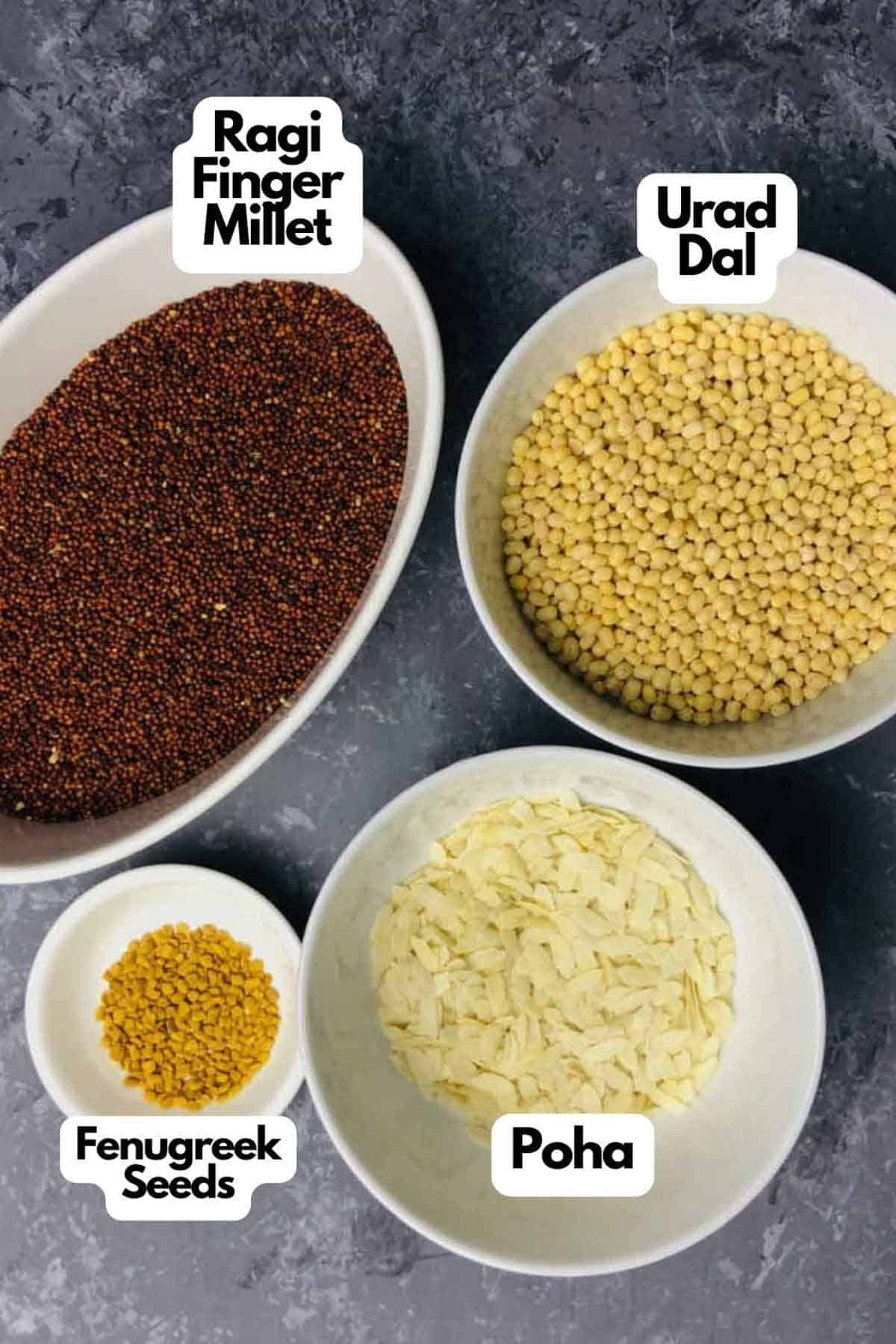
Ragi: I use the whole ragi to make the batter.
Urad dal: I use whole-skinned urad dal (black gram). Urad dal is the key ingredient for fermentation. While split urad dal also works, in my experience, using whole urad dal helps in fermenting the batter well.
Poha: Poha helps balance the ragi and also adds softness to the idlis.
Methi: Methi or fenugreek seeds are an important ingredient that helps aid fermentation.
Step-by-step instructions
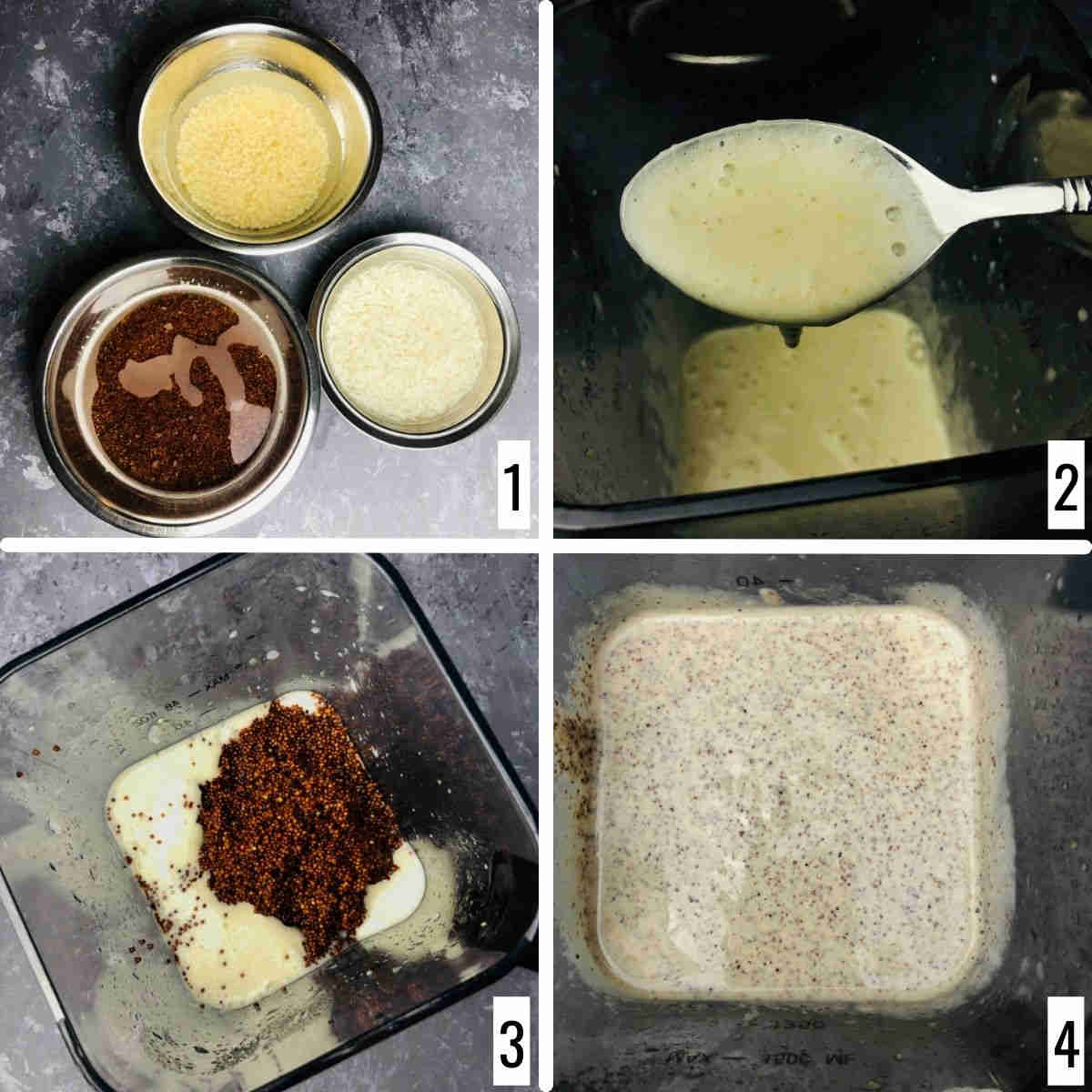
Step 1: Wash and soak ragi for 4-5 hours. Wash and soak urad dal and methi for 4-5 hours. Wash and soak poha for one hour (image 1).
Step 2: Grind urad dal into a smooth batter using a little water (image 2).
Step 3: To this, add poha and ragi. Grind into a slightly coarse batter with little water (images 3 and 4).
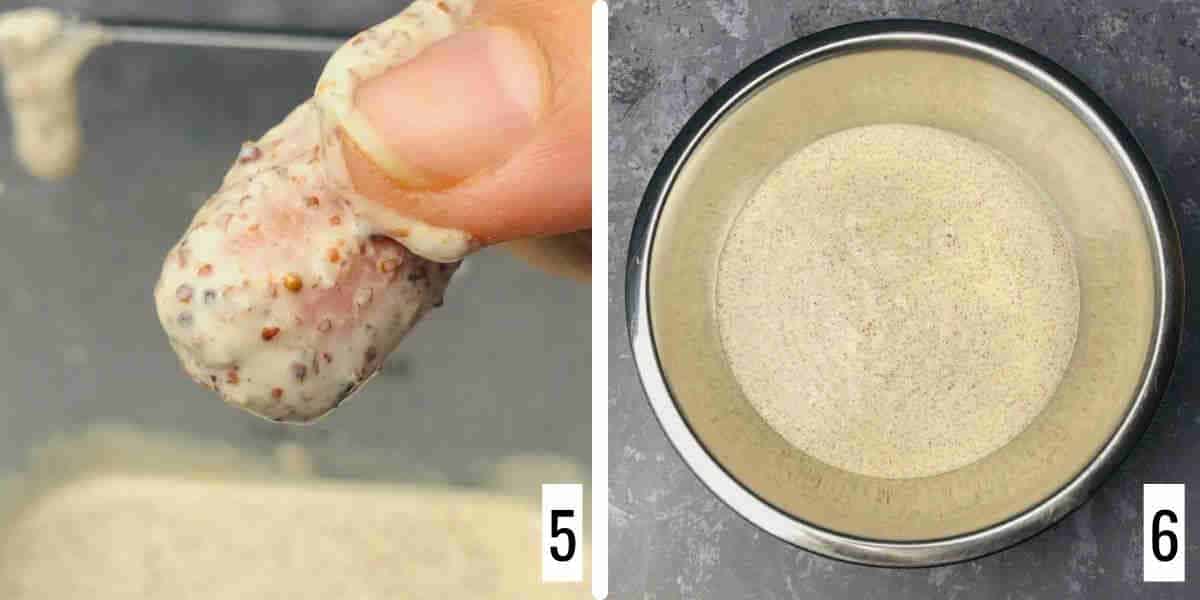
Step 4: Take a small portion between your thumb and finger and rub it. You should be able to feel a slight coarseness (image 5).
Step 5: Transfer the batter to a large bowl or container. Let the batter sit for fermentation in a warm place (image 6).
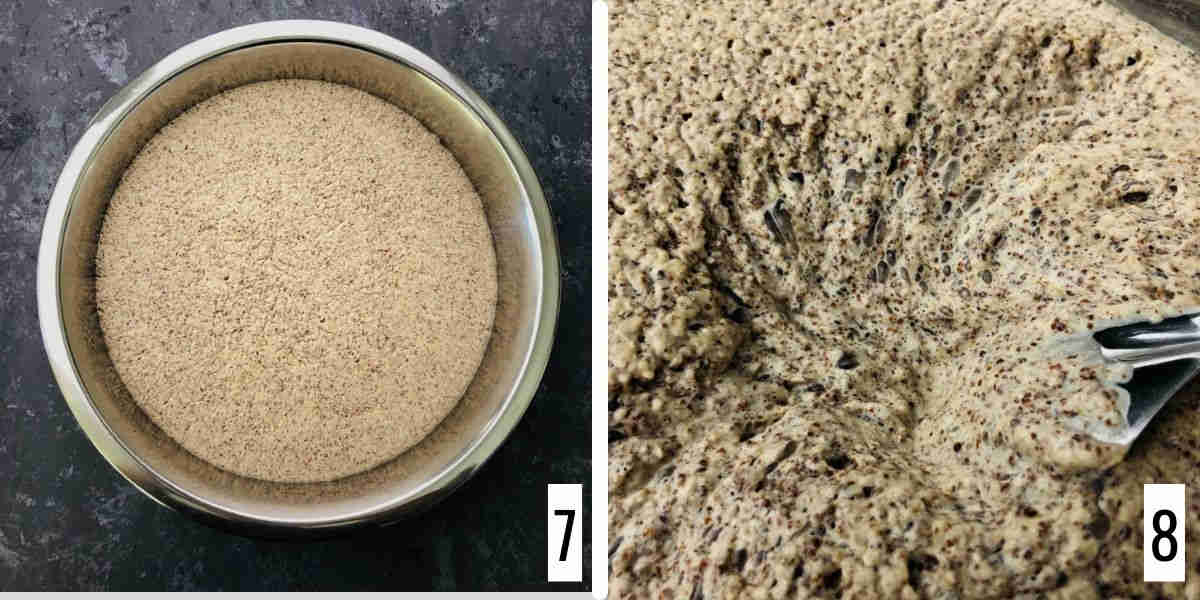
Step 6: The batter will rise after fermentation (image 7). A fully fermented batter will have lots of air bubbles underneath (image 8).
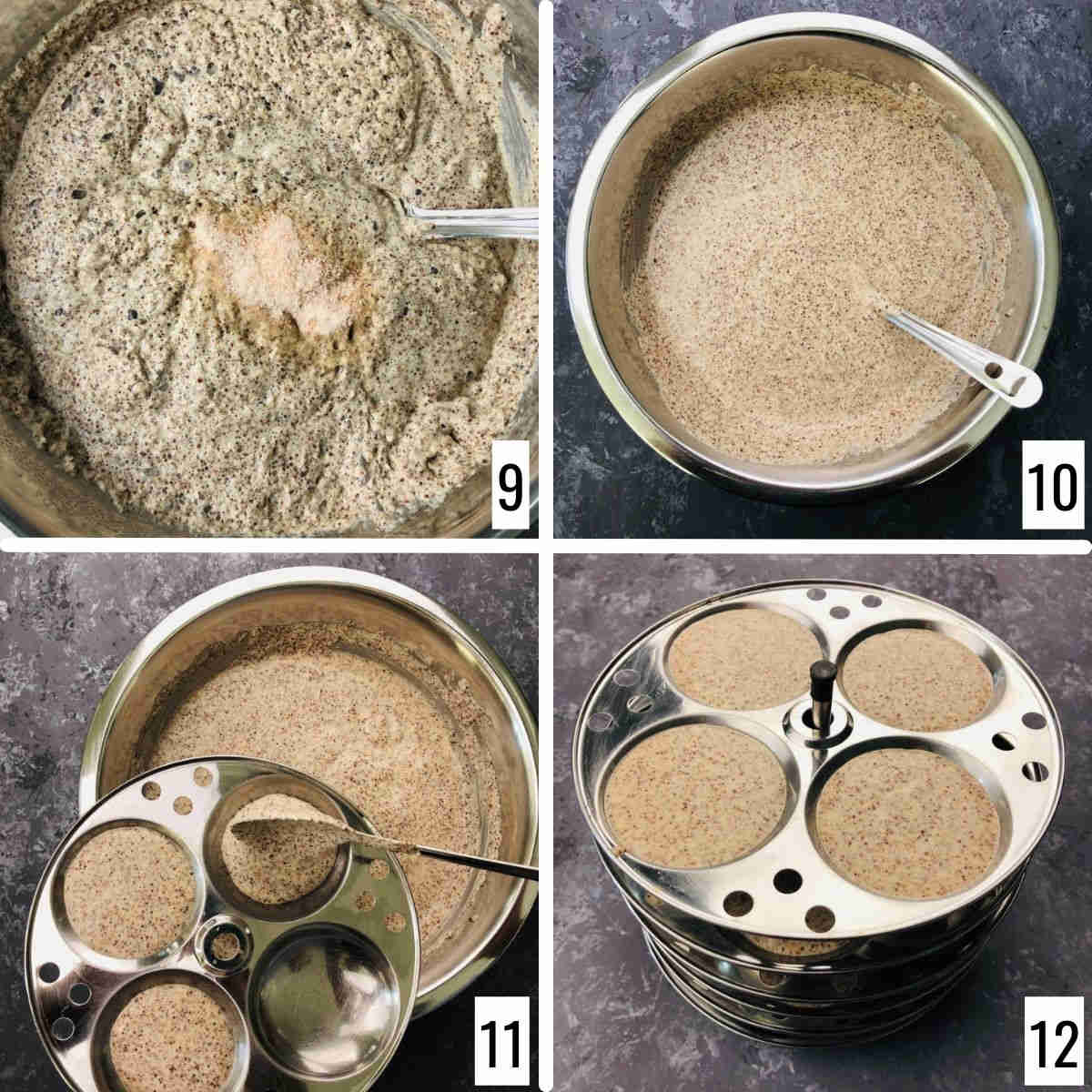
Step 7: Add salt to the ragi batter and mix gently (images 9 and 10). Lightly grease the idli plates with some oil. Spoon in the batter about ¾ of the mold (images 11 and 12).
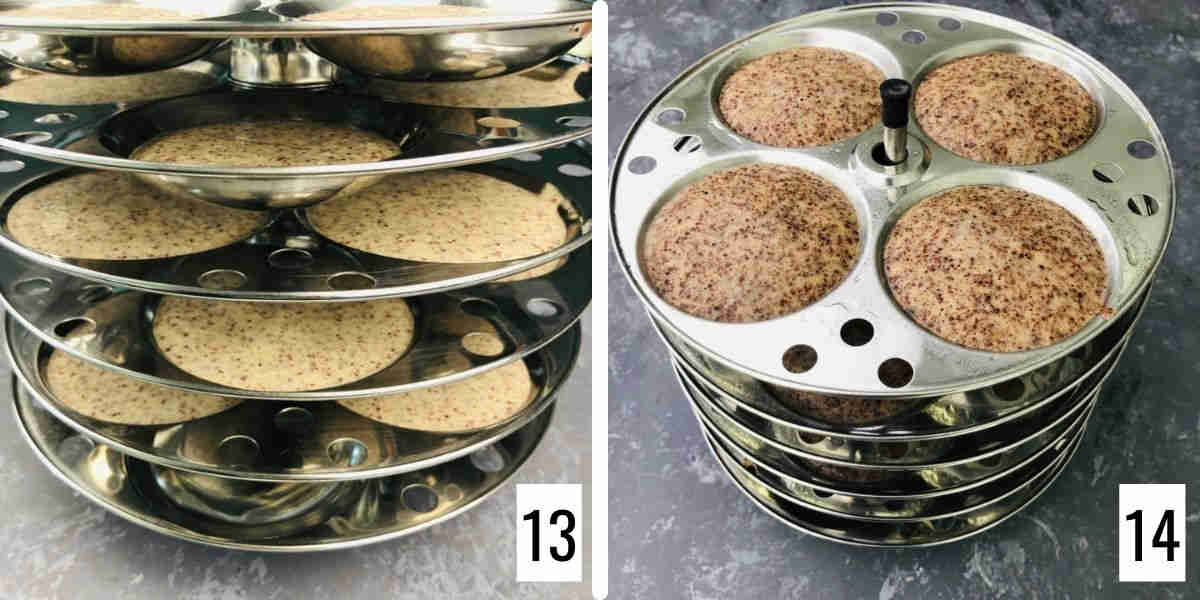
Step 8: Place the mold alternatingly so that there is enough room for the idli to rise (image 13).
Step 9: Place in the steamer and steam for 15 minutes on low heat. Turn off the heat and let the soft idli stand for one minute (image 14).
Making dosa with ragi idli batter
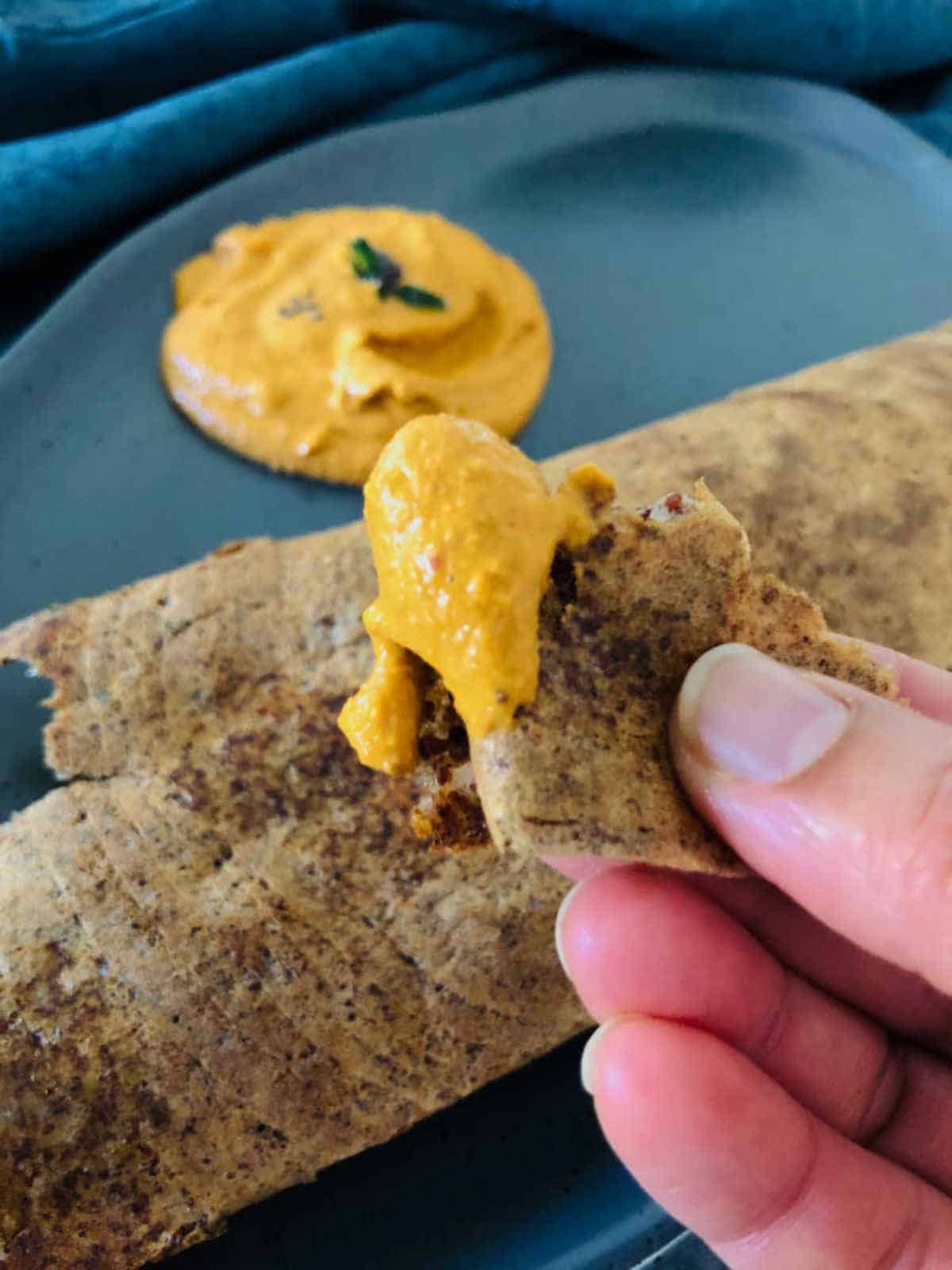
This versatile batter can also be used to make crispy dosa too. Not just dosa, they can also be used to make uttapam and paniyaram too.
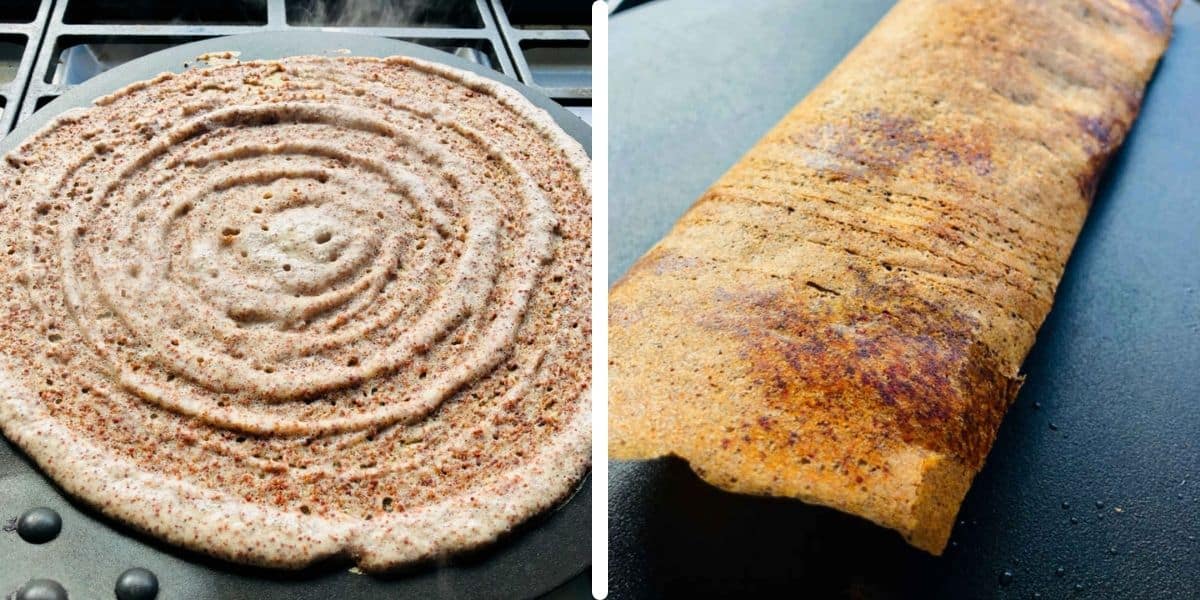
To make the dosa:
- Heat a cast iron tawa or non-stick griddle.
- Take a ladle full of batter and pour it into the center of the tawa. Using the ladle or a small bowl gently spread the batter in a circular motion.
- Pour a teaspoon of oil or ghee onto the dosa.
- Cook on medium flame until brown.
- Fold the dosa as desired and remove it from the tawa.

Repurpose leftover ragi idlis into a completely new dish with a unique taste and texture and turn it into fried idli made in the
Expert Tips
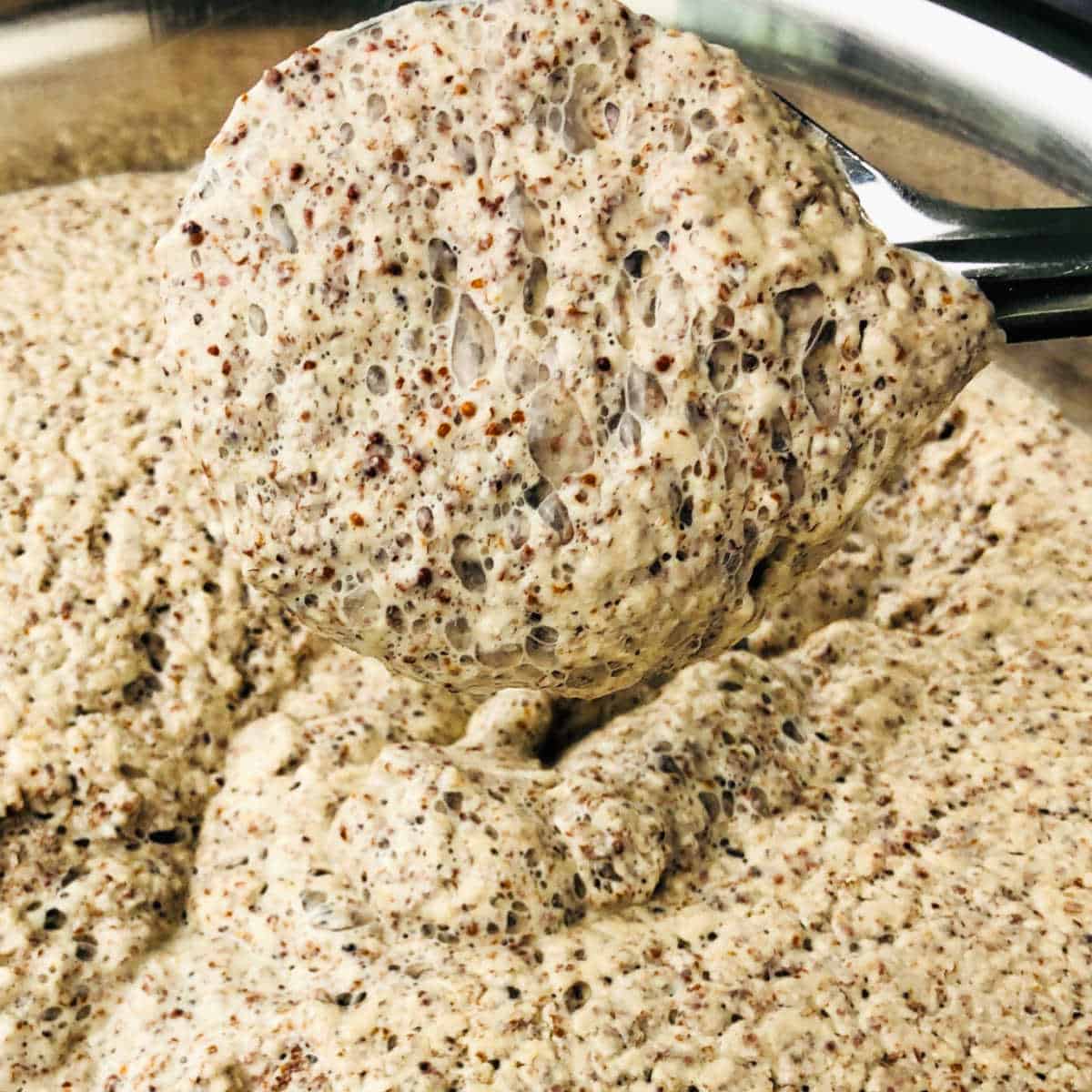
The batter should have a thick consistency. So, while grinding the dal, use less water. Watery or runny batter will result in flat idlis. Grind the urad dal into a fine and thick batter. Add very little water for grinding.
Grind the ragi into a slightly coarse texture. The ground ragi should have the texture of idli rava. Take a small portion between your thumb and finger and rub it. You should be able to feel a slight coarseness (see image below).
I add a small amount of poha to this recipe of ragi idli. This not only helps balance the ragi flavor but also helps with the fermentation.
Soak the ingredients in filtered water where possible. The chlorine in tap water inhibits the growth of bacteria. This is particularly important in cold regions and if you are making idli for the first time.
The batter must be fermented in complete darkness. Do not use transparent vessels for fermentation. For example, clear glass or plastic vessels will not give you a well-fermented batter.
Serving Suggestion
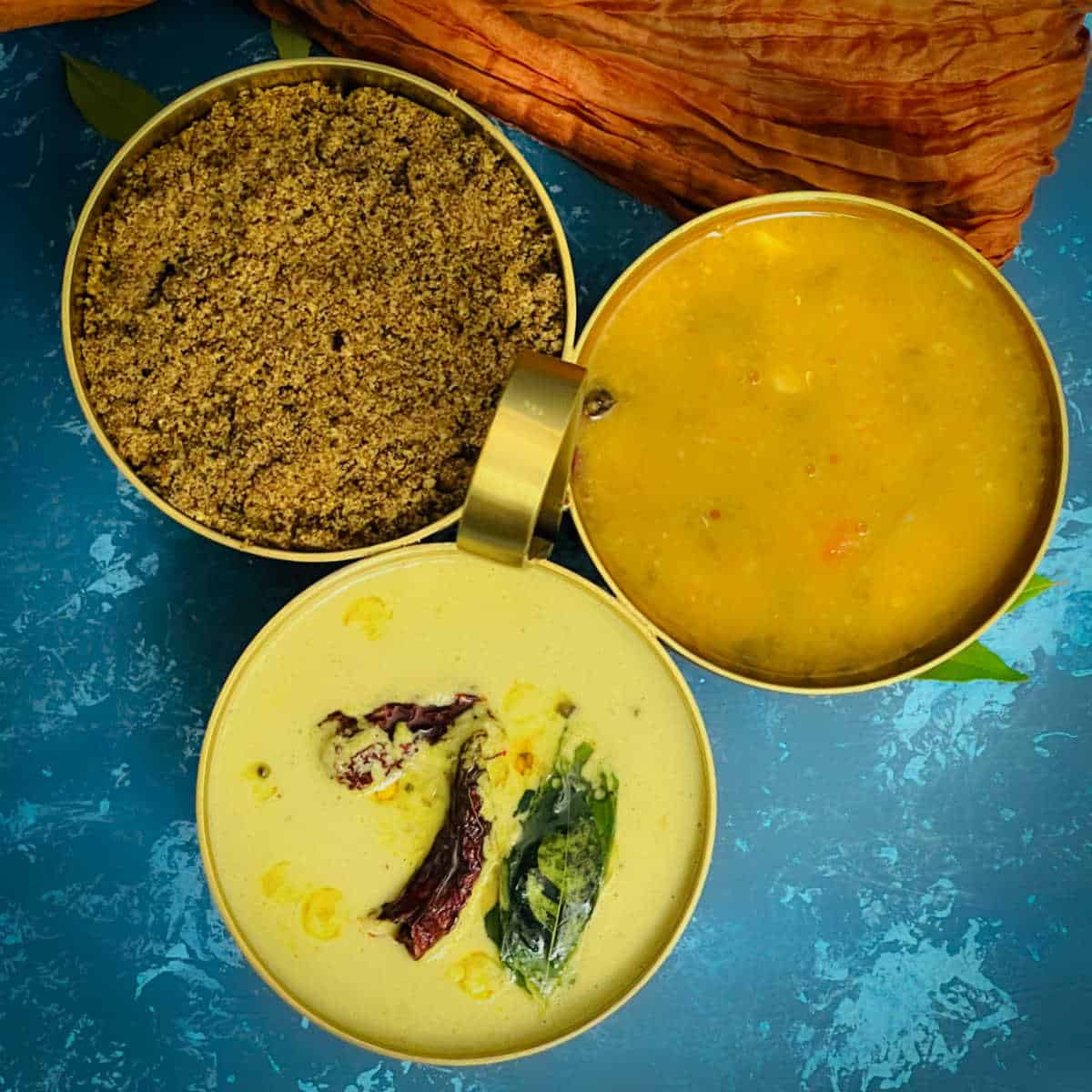
Spongy ragi idlis are usually served with ghee or butter, chutney/chutney powder, along with hot sambar.
Chutney: One of the most common chutneys associated with idli is the coconut chutney, which is almost always served in all restaurants along with dosa and idli. It can also be served with peanut chutney, tomato chutney, Malabar spinach chutney, or dry chutney powder. Both lentil chutney powder and flax chutney powder taste delicious with idlis.
Sambar: Sambar is a South Indian style dal made with pigeon pea lentils (toor dal), vegetables, and spices. When served with idli, it adds more protein to the meal, making it wholesome. It can also be served with horse gram sambar.
Recipe FAQs
Yes. This batter can be used to make dosa, uttapam, and paddu/paniyaram. See the instructions above.
It is best not to skip poha to get light and soft idlis.
Ragi idli must be steamed for a slightly longer time than regular idlis. Bring the steamer water to a rolling boil, place the idli stand, and cover it. Reduce the heat to low and steam for 15 minutes. It is also important to open the cover of the steamer and let the idli sit in the mold for one minute before demolding it.
If you plan to eat the cooked idlis within a few hours, keep them at room temperature in an airtight container or wrap them in a muslin cloth to maintain freshness. Store them in the refrigerator for up to 5 days, and reheat by steaming or microwaving before serving. You can also freeze them for up to one month. Reheat frozen idlis by steaming until heated through.
Ragi idli dosa batter can be conveniently stored in the refrigerator to preserve its freshness and quality for a few days. After preparing the batter, transfer it to an airtight container and refrigerate for up to one week. Before use, let the batter come to room temperature for about 30 minutes to an hour. For longer storage of up to one month, freeze the batter in a freezer-safe container. When you wish to use the frozen batter, thaw it in the refrigerator overnight, bring it to room temperature, and gently stir to ensure it's well-mixed.
More millet recipes
If you tried this Ragi Idli Recipe or any other recipe on my website, please leave a ? star rating and let me know how it went in the ? comments below.
Recipe card
Ragi Idli (Nachni Idli and Dosa)
Equipment
Ingredients
- 1½ cups ragi finger millet
- ½ cup urad dal skinned black gram
- 1 teaspoon methi fenugreek seeds
- ¼ cup thick poha flattened rice
Instructions
Soaking:
- Take ragi in a bowl and rinse it well (2-3 times). Add fresh water and let it soak for 4-5 hours.
- In another bowl, take urad dal and methi, and rinse it well (2-3 times). Add fresh water and let it soak for 4-5 hours.
- One hour before grinding, take poha in a bowl and rinse it well. Soak for one hour.
Grinding the batter:
- Once everything is soaked, we can begin the grinding process. Drain all the water from dal, ragi, and poha.
- Start with grinding the urad dal first. Add it to a mixie jar and add very little water. Grind into a very smooth batter.
- The urad dal should be thick and frothy.
- To this add poha and ragi. Grind into a slightly coarse batter with little water
- Take a small portion between your thumb and finger, and rub it. You should be able to feel slight coarseness - like idli rava.
Fermenting the batter:
- Pour the batter into a thick-bottom vessel making sure there is enough room for it to rise. Let it ferment for 8-10 hours.
Making ragi idli:
- Pour water into the idli steamer and bring to a boil.
- Lightly grease the idli plates with some oil. Spoon in the batter about ¾ of the mold.
- Place in the steamer and steam for 15 minutes on low heat.
- Turn off the heat and let it stand for one minute. Use a spoon to de-mold the idlis.
- Serve hot with any chutney of your choice.




Comments
No Comments