
 Add Preferred Source
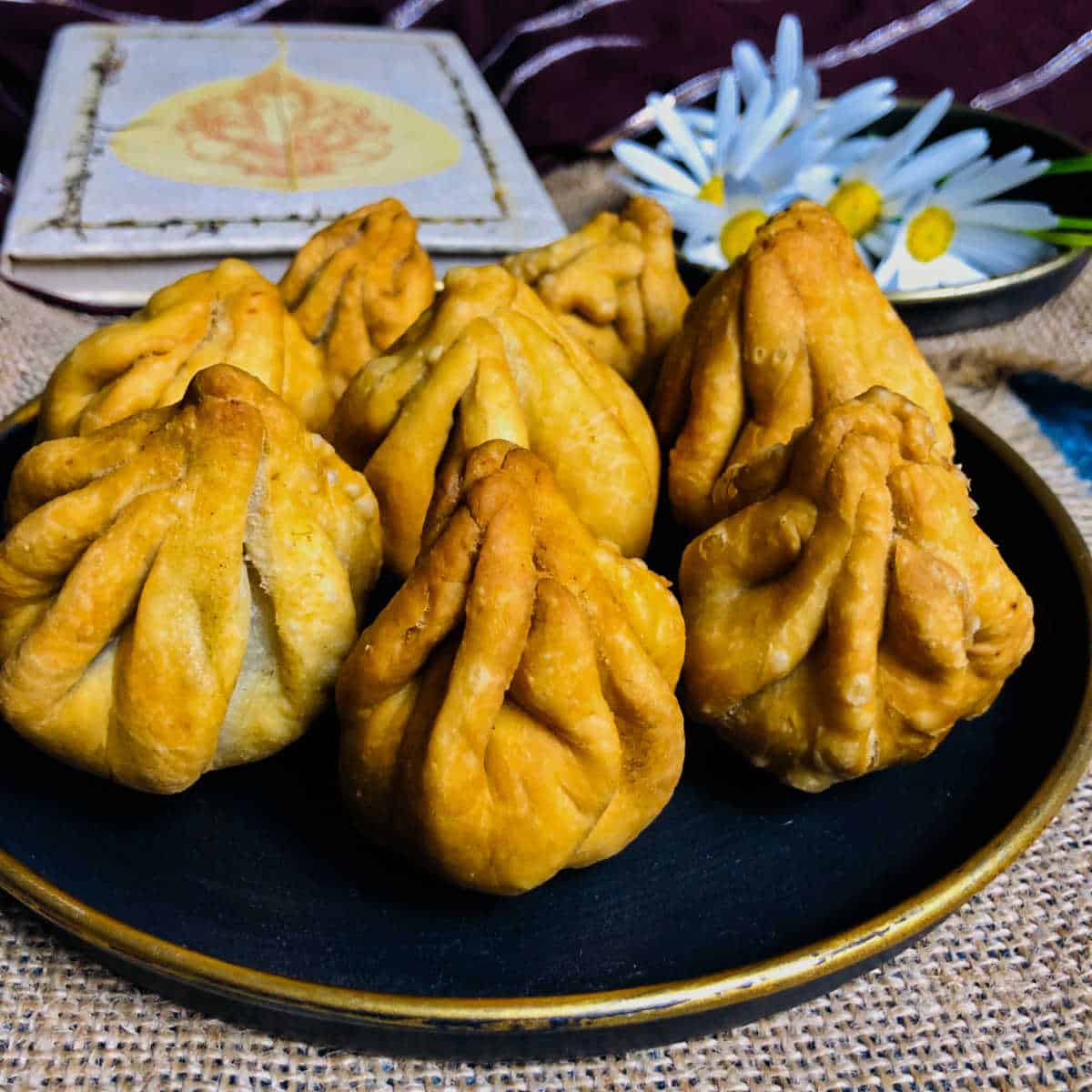
Fried Modak is a popular Indian sweet dish commonly made during the festive season of Ganesh Chaturthi. These crispy and delicious dumplings are filled with a sweet mixture of coconut, jaggery, and nuts. This easy and fail-proof recipe yields perfect results every time.
I am including all the necessary tips and tricks and answers to common questions that you will need to know to make perfect fried modakums. They can be made ahead and stored, making them an ideal dessert for gatherings or celebrations.
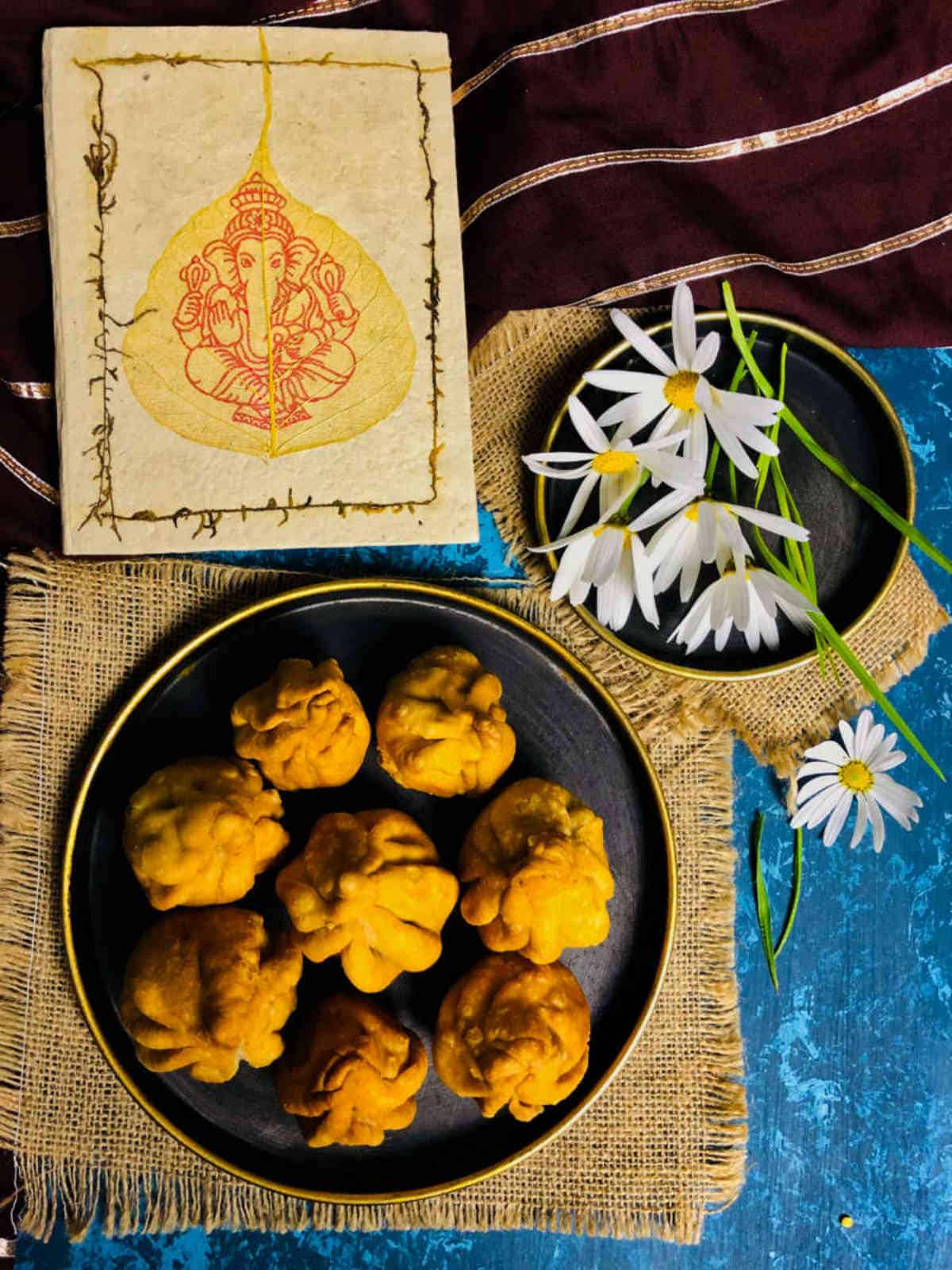
Also called talniche modak, these modakam dumplings are fried in ghee and are commonly offered as 'bhog' to Bappa during the Vinayaka Chaturthi festival. This crispy exterior complements the sweet, nutty, and chewy coconut filling inside beautifully, making it a delicious and satisfying treat.
This no-fail recipe is perfect for beginners and takes less than an hour to prepare. One of the great things about this delectable fried modak is that you can achieve beautiful pleats without using a mold. They are perfect for Ganesh Chaturthi celebrations and gatherings, as they can be made ahead of time and stored. Plus, they are easy to reheat in an oven or
Why you will love this recipe?
- Detailed instructions: This full-proof recipe has clear and concise instructions that are easy to follow. I am including step-wise details on the preparation of the dough, filling, and frying process.
- Accurate measurements: I have provided accurate measurements for all the ingredients used. This will ensure that the dough and filling have the right consistency and flavor.
- Variations: I am also giving you some variations in the filling and dough. This will help you make it as per your taste and preference.
- Tips and tricks: I am including all tips and tricks to help you make the best and most delicious fried modak. This includes how to achieve the perfect texture, how to fry them evenly, and how to avoid common mistakes.
Ingredients
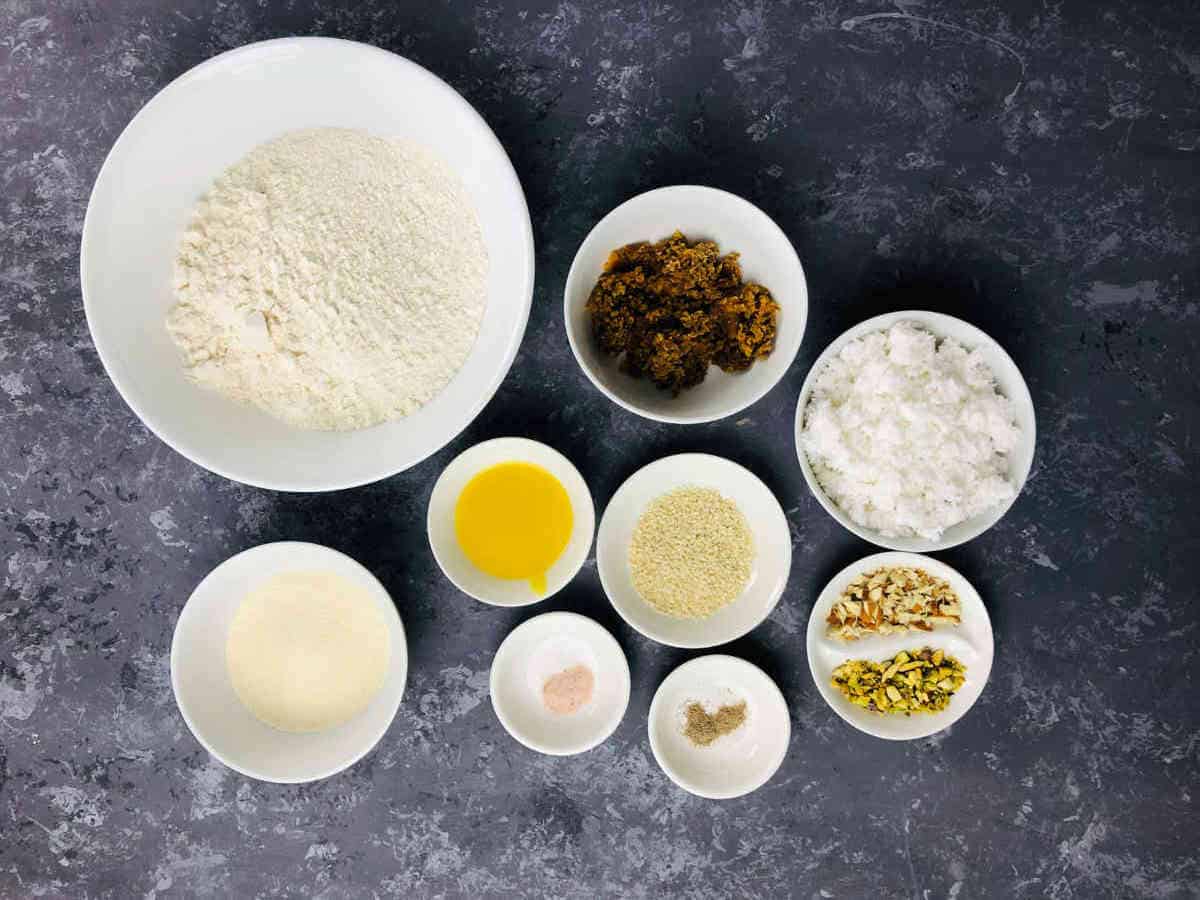
Plain flour and semolina: They are used to make the dough for the outer covering.
Coconut: Use freshly grated coconut.
Jaggery: This refined sugar-free modakum is sweetened with jaggery.
Ghee: I fry them in ghee and also use a small amount of ghee in the filling.
See the recipe card for full information on ingredients and quantities.
Variations
The filling I use is similar to what is used to make ukadiche modak. However, I also use nuts and sesame seeds. Pooran or hoorna can also be used as filling. Hoorna is made of chana dal and is used to make holige or pooran poli.
You may also use dried or desiccated coconut to make the filling. To make this, combine dried coconut with sugar, roasted Bengal gram, and nuts of your choice. This filling is the same as what is used to make karjikai or gujiya.
I make the dough for making the outer cover with maida (all-purpose flour). You may replace it with atta (Indian whole wheat flour) or use a mix of both atta and maida. Keep in mind that atta will give you slightly dense modakums.
Step-by-step instructions
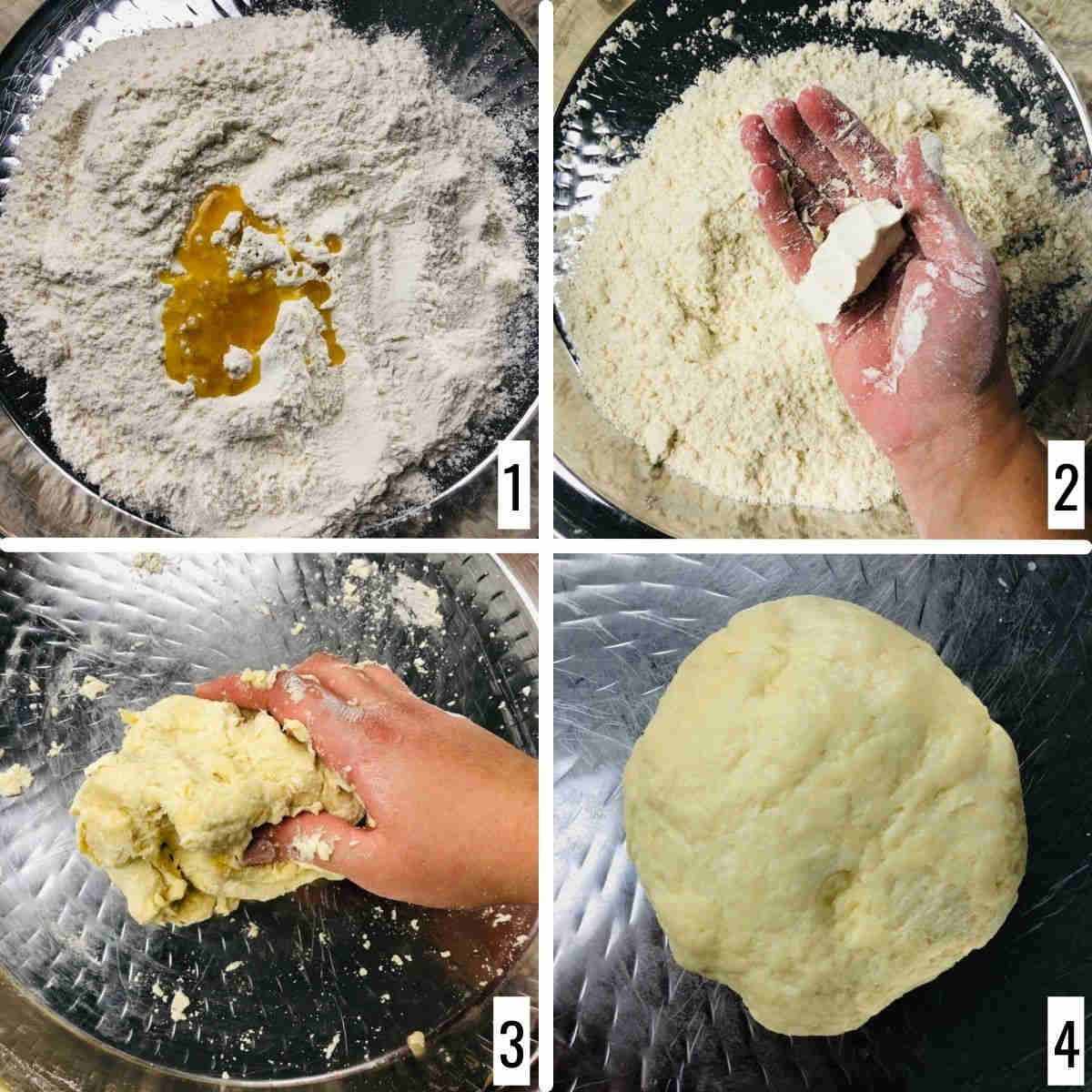
Step 1: In a large bowl, combine maida, suji, and salt. Add ghee and mix well. Rub the ghee and flour mixture together well for 3-5 minutes (images 1 and 2).
Step 2: Slowly add water and knead into a stiff dough. Cover with a damp cloth and let it rest for 30 minutes (images 3 and 4).
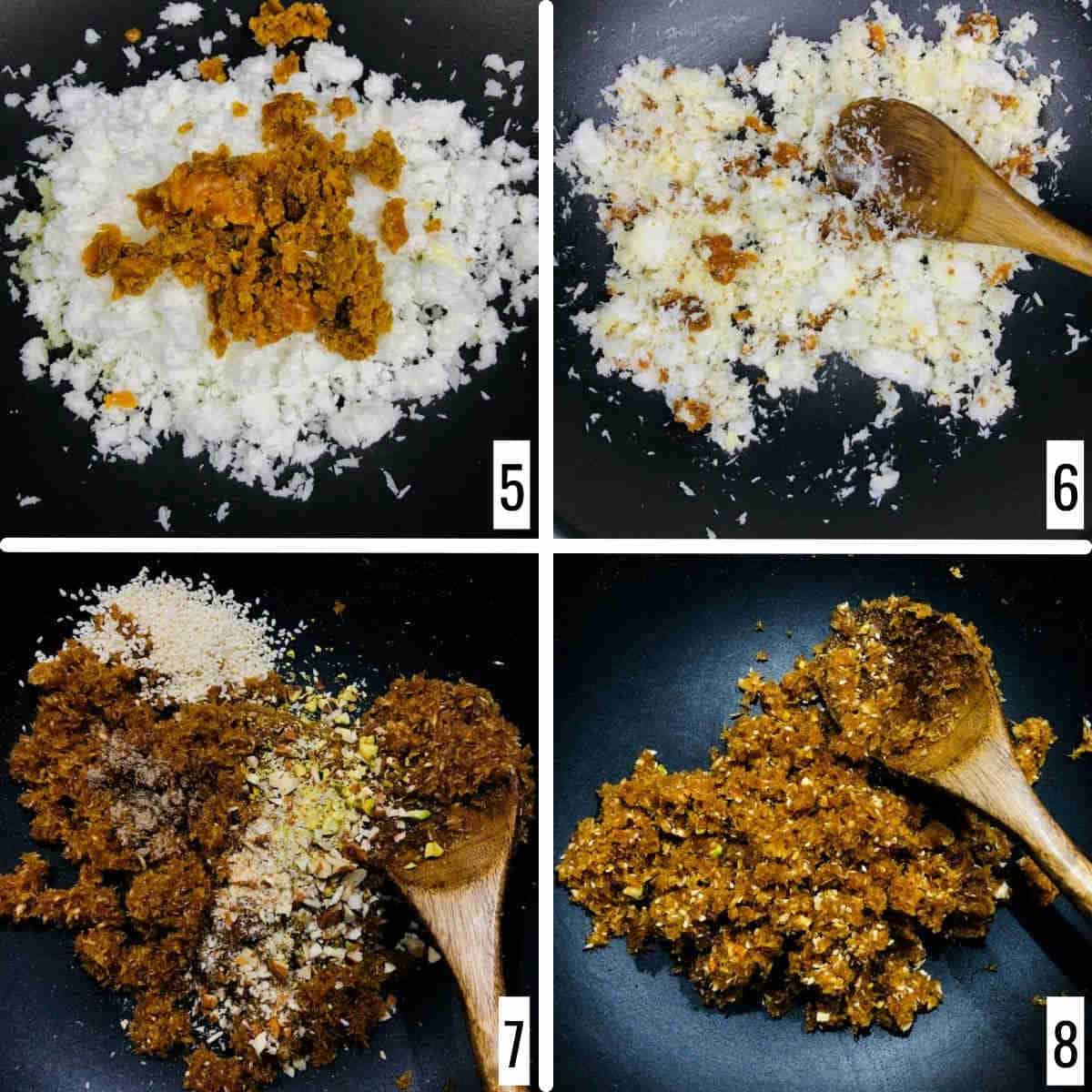
Step 3: Heat ghee and add coconut and jaggery. Keep stirring until the mixture thickens and comes together (images 5 and 6).
Step 4: Add cardamom powder, pistachio, almonds, and roasted white sesame seeds. Mix well. Let the cooked mixture cool completely (images 7 and 8).
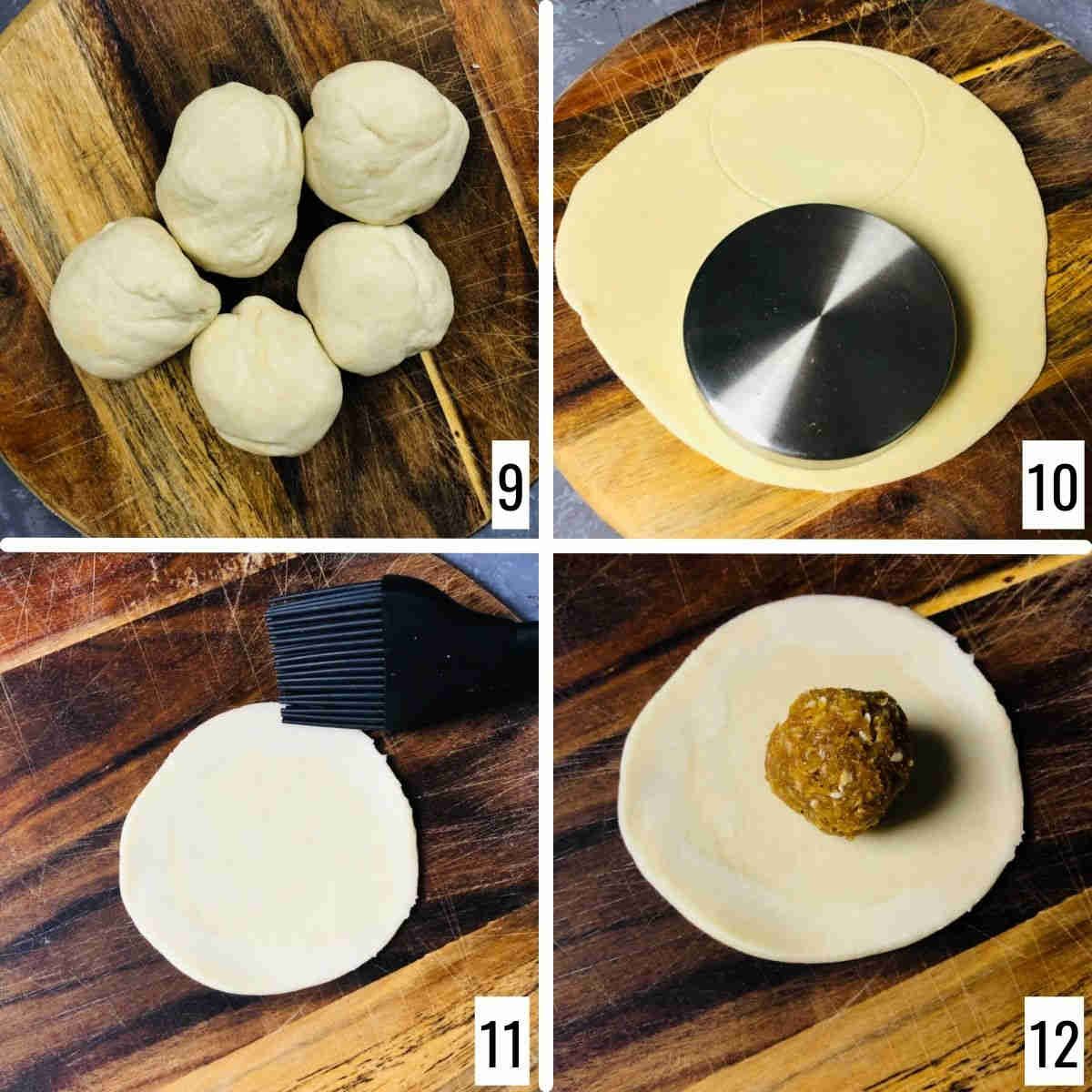
Step 5: Once the modak dough is rested, gently knead it again. Divide it into five equal portions. Lightly dust a rolling board with some flour and roll one dough ball into a slightly thick disc using a rolling pin. Using a sharp lid or cookie cutter, cut out two circles, approximately 4-5 inches in diameter (images 9 and 10).
Step 6: Brush water on the edges. Place approximately 1-2 tablespoons of cooked filling in the center (images 11 and 12).
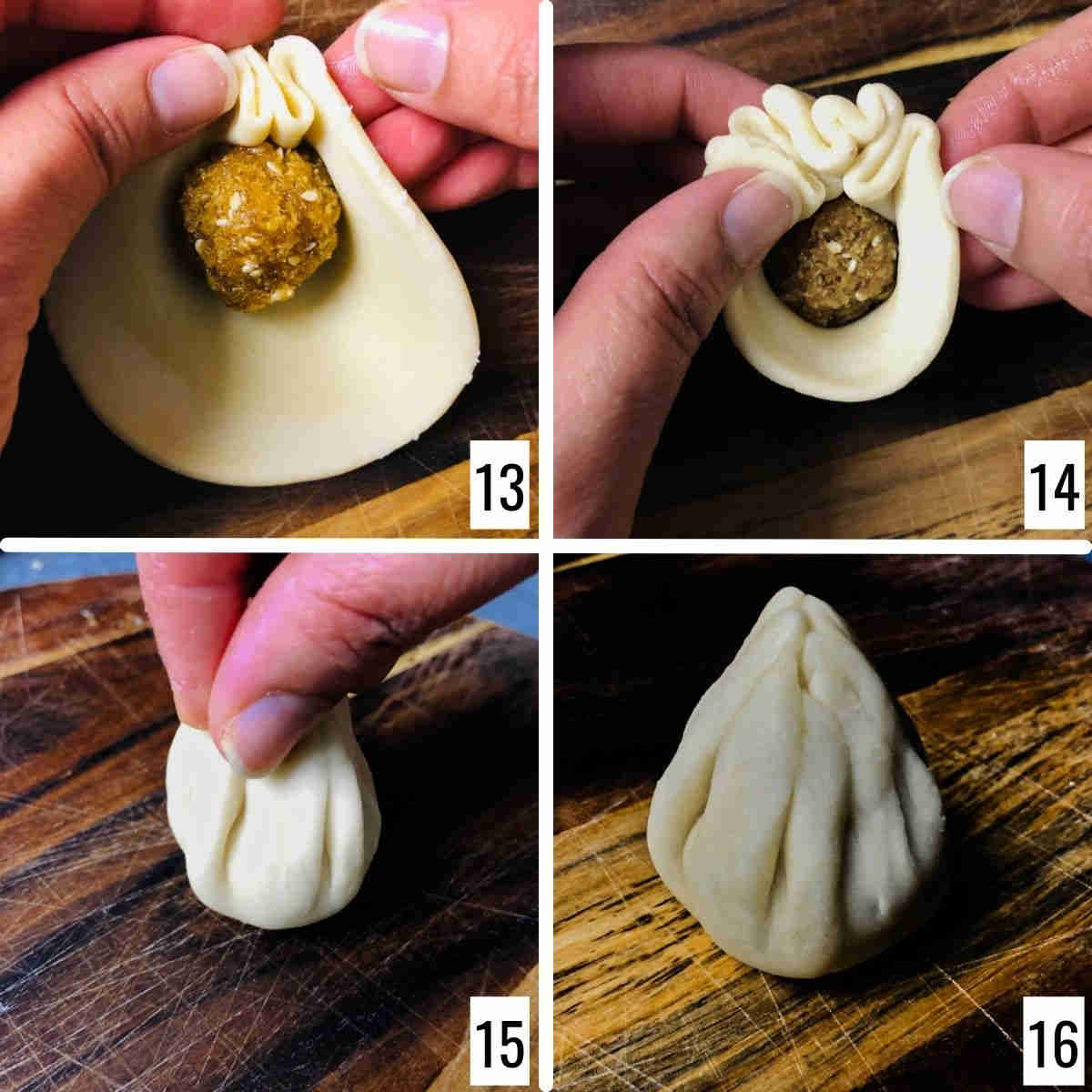
Step 7: Start pleating the edges together and bring them together. Seal the pleats together in the center firmly (images 13-16).
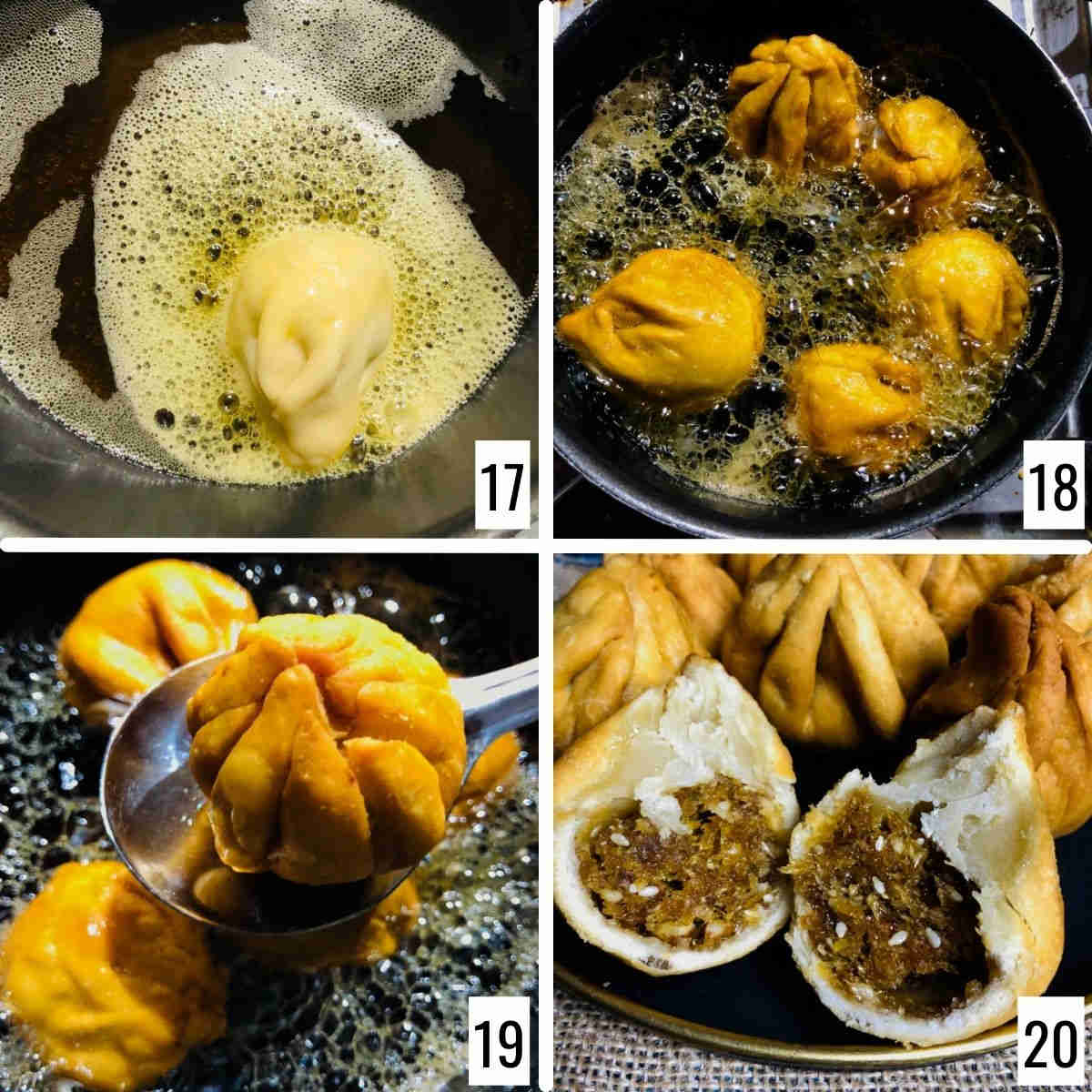
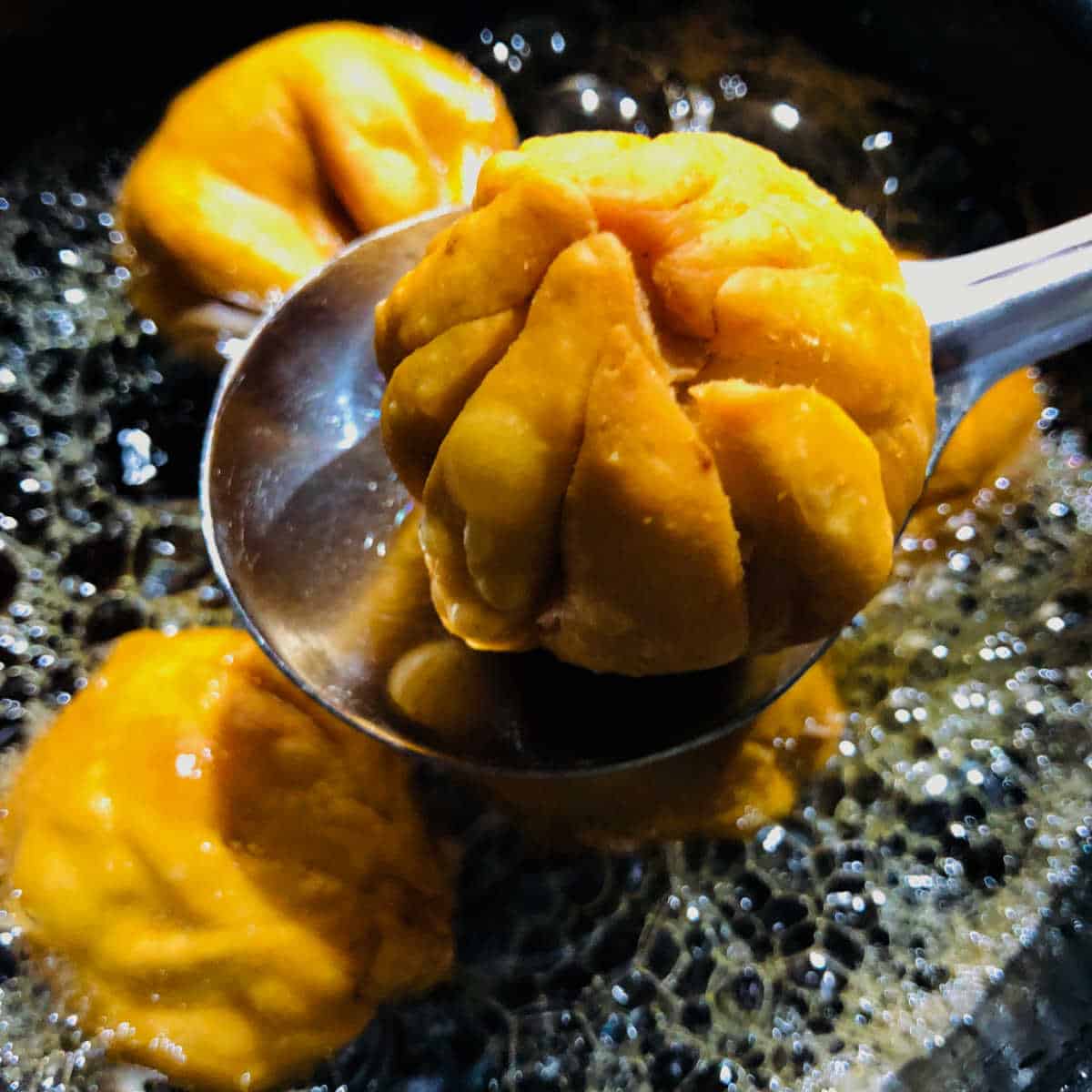
Step 4: Take ghee or oil for deep frying in a deep pan or kadhai and place it on medium heat. Once it heats, reduce the heat to low and slowly add the shaped dumplings to the hot ghee. Deep fry them in batches on low heat (image 17).
Step 5: Do not flip them for the first 5-6 minutes. Once they begin to firm, increase the heat to medium and carefully flip the modak (image 18).
Step 6: Deep fry until they are golden brown. Drain them and place them on a paper towel. Repeat with the rest of the shaped modaks. Talnich modak is ready (images 19 and 20).
Expert Tips
The jaggery I used is very soft and melts easily. If you are using hard blocks of jaggery, grate it before using it so that it melts easily.
The coconut mixture has to be thick and without any moisture content. To check if it is ready, take a small portion of the mixture and roll it. It should come together and form a ball. If it falls apart, continue stirring for a few more minutes and check again.
Make sure the coconut filling is completely cooled before using.
When making the dough, rub the flour and ghee together well. This is an important step that is often overlooked. Do not skip it. Rub them well for at least 4-5 minutes. To see if the fat is fully incorporated, take a small portion of the flour and press it in your fist. It should come together without falling apart (see step-by-step picture). Start adding water only after that.
Roll the dough into a slightly thick disc. If you roll it too thin, it may tear while frying, and if it is too thick, it may not cook completely.
When shaping, keep the dough and shaped modak under a damp tissue to make sure they do not become dry.
I fry the modaks in ghee as I make any food cooked to offer Lord Ganesha in ghee. However, you may use any cooking oil of your choice.
The temperature of the ghee is very important. The ghee should not be sizzling hot when frying. To check if the oil is ready, drop a small piece of dough in it. If it comes to the top slowly (and not too quickly), the oil is ready.
Once a batch of modaka is fried, let the ghee cool down slightly before adding the next batch.
Make sure the modakums are cooked evenly when frying. Each batch may take 8-10 minutes to be cooked completely.
Recipe FAQs
Yes, atta can be used to make the dough. However, this will give you a slightly dense modak.
If you roll the dough too thin, it will tear when frying. Make sure you roll it slightly thick. At the same time, take care not to roll it too thick. If the dough is too thick, it will not cook completely,
The coconut filling will become hard if the jaggery hardens. If this happens, place the filling on low heat for a few minutes so that the jaggery melts.
Yes. In that case, there is no need to cook the filling. Make the filling similar to the filling used in karjikai or gujiya.
I fry the modaks in ghee as I make any food cooked to offer Lord Ganesha in ghee. However, you may use any cooking oil of your choice.
To store fried modaks, allow them to cool down completely at room temperature. Then, transfer them to an airtight container and store them in a cool and dry place away from direct sunlight. They can last for up to 3 days at room temperature.
More modak recipes
If you tried this Fried Modak Recipe or any other recipe on my website, please leave a ? star rating and let me know how it went in the ? comments below.
Recipe card
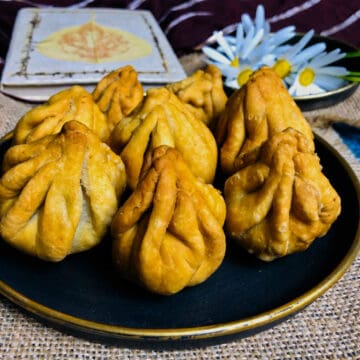
Fried Modak / Talniche Modak
Ingredients
For the outer cover:
- 1½ cup all-purpose flour
- 2 tablespoon semolina
- ½ teaspoon salt
- 2 tablespoon ghee melted (use store-bought or homemade ghee)
For the filling:
- 1 cup coconut fresh, grated
- ½ cup jaggery
- 1 teaspoon ghee
- ½ teaspoon ground cardamom
- 1 tablespoon pistachio
- 1 tablespoon almonds
- 1 tablespoon sesame seeds
Other ingredients
Instructions
Make the filling:
- Dry roast the sesame seeds and set them aside.
- Heat one teaspoon of ghee in a heavy bottom pan or kadhai. Once it heats, add the grated coconut and jaggery.
- Mix well and cook the mixture. Keep stirring until the mixture thickens and comes together like a ball.
- Add ground cardamom, pistachio, almonds, and roasted sesame seeds.
- Mix well and turn off the heat. Let the coconut filling cool down completely.
Make the dough:
- In a large bowl, combine maida, suji, and salt. Give it a good mix.
- Add 2 tablespoons of ghee and mix well. Rub the ghee and flour together well for 3-5 minutes.
- Incorporate the ghee and flour very well. To check if it is done, take some dough and press it in your fist. It should hold together without falling apart.
- Slowly add water and knead into a stiff dough. Do not overmix the dough.
- Cover with a damp cloth and let it rest for 30 minutes.
Shaping:
- Once the dough is rested, gently knead it again for 2 minutes. Divide it into five parts
- Lightly dust the rolling surface with some flour and roll the dough into a slightly thick disc.
- Using a sharp lid or cookie cutter, cut out two circles (approximately 4-5 inches in diameter).
- Brush water on the edges. Place approximately 1-2 tablespoons of filling in the center.
- Start pleating the edges together and bring them together.
- Seal the pleats together in the center firmly (see step-by-step pictures above).
- Repeat with the rest of the dough and filling. Keep the modak under a damp kitchen towel to make sure they do not dry out.
Deep frying:
- Take a deep heavy bottom pan and add ghee (or oil). Place it on medium heat.
- The ghee should be medium hot. To check if the ghee is ready, drop a small piece of dough in the oil. If it slowly rises up, the oil is ready.
- Once the oil is hot, reduce the heat to low.
- Carefully put the modaks in batches. Do not flip them for the first 5-6 minutes. Once they begin to firm, increase the heat to medium and carefully flip the modak.
- Fry until they are golden brown. Take them out and place them on a paper towel.
- Fried modak is ready to be served or stored.
Comments
No Comments