
 Add Preferred Source
Welcome to the ultimate guide on green chili peppers! Green chili peppers are an indispensable part of Indian cuisine, adding a fiery kick to various dishes. But what do you do with a surplus of green chili peppers? How do you store them to ensure their freshness?
In this comprehensive guide, I will walk you through the best practices for storing green chili peppers, including tips on prepping, freezing, and storing them for long-term use. I am also covering information on different types of chili peppers and substitutes for Indian green chili peppers.
Why you will love this guide?
- Comprehensive Coverage: This guide covers various aspects of storing green chili peppers, including whole chilies and chili paste.
- Practical Tips: It includes practical tips on how to properly select and prep them to maintain their freshness and quality. I am also giving information on the usage and substitution of Indian chili peppers.
- Clear and Easy-to-Follow Instructions: I have included step-wise instructions on each aspect of storing them along with useful tips.
What is green chili pepper?
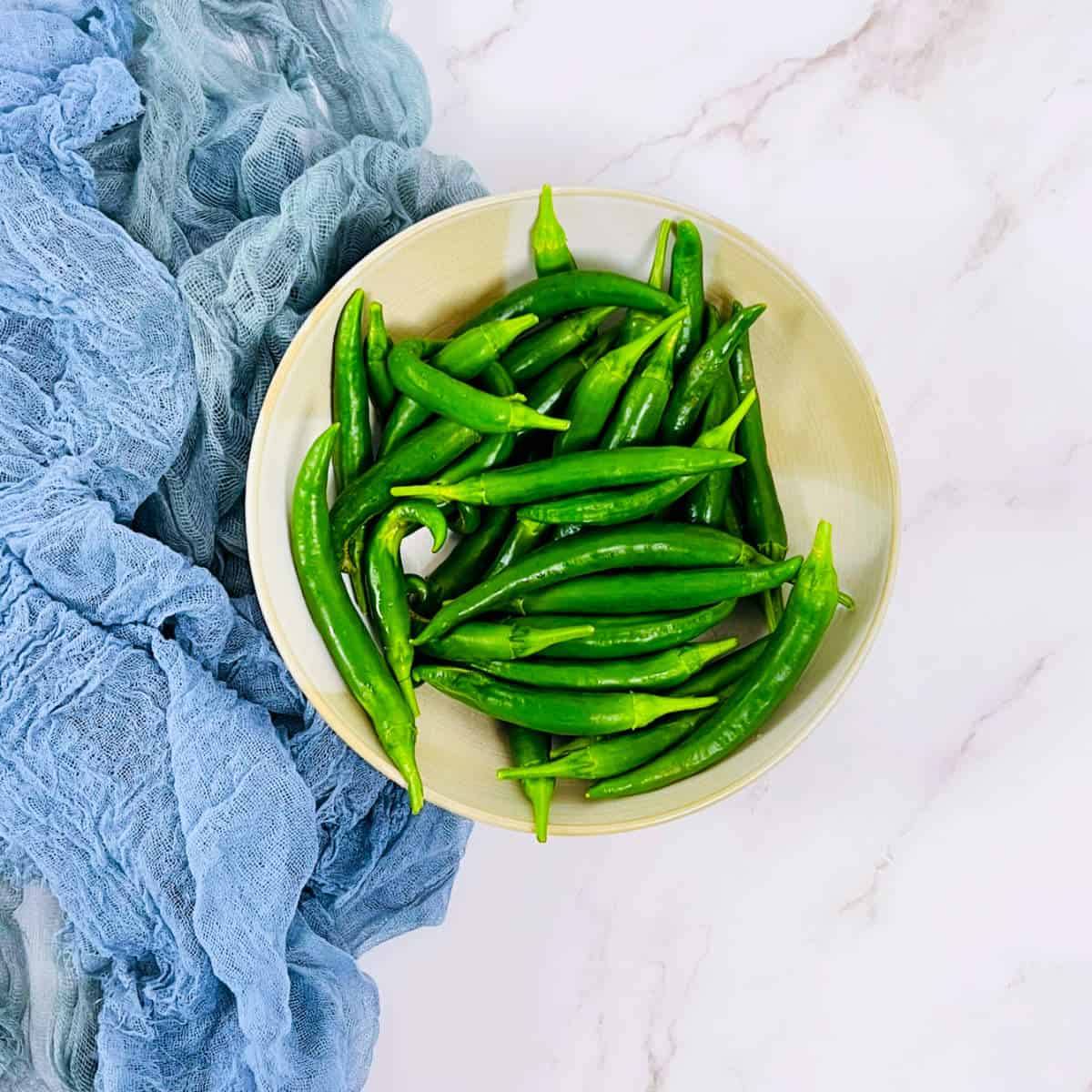
Green chili pepper refers to a type of chili pepper that is harvested when it is still in its unripe or immature stage and has a green color. Chili peppers, also known as hot peppers or simply peppers, are fruits of the Capsicum plant family and are widely used in various cuisines around the world for their spicy and flavorful characteristics.
They come in different varieties and sizes, and their spiciness can range from mild to extremely hot, depending on the type of chili pepper. They are used in a wide range of dishes, such as curries, soups, stews, sauces, salsas, and more, to add heat, flavor, and color.
Also known as hari mirch, they are an indispensable component of Indian cuisine. In India, vegetable vendors often give it for free alongside cilantro (dhaniya). There are several varieties of Indian chili peppers. Some of the most common varieties are:
- Bhut Jolokia: Also known as the "Ghost Pepper," this is one of the hottest chili peppers in the world and is native to Northeast India.
- Kashmiri Mirch: These chili peppers are known for their vibrant red color and are commonly used to add a mild to moderate level of heat and rich red color to dishes.
- Byadgi Chili: These chili peppers are known for their distinctive deep red color and are used in South Indian cuisine, particularly in the state of Karnataka, to add a moderate level of heat and flavor to dishes.
- Kanthari Chili: Kanthari Chili is a small hot chili pepper native to Kerala in South India. It is also called Bird's eye chili and is used to add intense heat and flavor to dishes.
- Guntur Chili: These chili peppers are widely used in Andhra Pradesh cuisine, known for their spicy and flavorful dishes. Guntur Chili is known for its high heat levels and is often used in spice blends and pickles.
Substitute of Indian green chili pepper
The Indian green chili pepper has a unique flavor and heat profile. However, if you are looking for a substitute, here are some options that are commonly available in the US:
- Jalapeno peppers: They are relatively mild in heat compared to Indian green chili peppers, but they still pack a punch of flavor.
- Serrano peppers: Serrano peppers are hotter than jalapeno peppers, but not as hot as Indian green chili peppers. They have a tangy flavor and can be used as a substitute in recipes where you want medium heat.
- Thai chile pepper: This variety has similar heat levels when compared to Indian chili peppers and can be swapped in a pinch. In fact, Thai chile peppers are widely available in Bengal and the northeast region of India and are called "dhani lonka".
- Poblano peppers: Poblano peppers are mild in heat and taste similar to green bell peppers. They can be used as a substitute for Indian chillies in recipes where you want a mild heat level.
- Banana peppers: Banana peppers are very mild and have a slightly sweet taste. This variety may not add any depth or flavor to dishes like curries or stews.
When using any of these substitutes, it is best to taste and adjust the quantities as the heat level of chili peppers can vary. Also, note that the flavor profile of the substitute may be slightly different from Indian green chili peppers, so the resulting dish may have a slightly different taste.
How to use green chili pepper?
Curries: Chili peppers are a staple ingredient in Indian curries. One of the most common ways to use green chili peppers is to chop them finely and sauté them in oil or ghee, along with other tempering ingredients. This is done at the beginning of cooking to infuse the dish with its flavor and heat.
Chutneys: Green chillies are commonly used in chutneys, along with a variety of ingredients such as herbs, spices, lime juice, and yogurt. Green chili chutney is often served as a side dish or accompaniment to main meals and snacks in Indian cuisine.
Spice blends: Green chili peppers can be dried and ground into a powder that can be used in various dishes. Once they are dry, they turn red in color, so the powdered form is called red chili powder or, simply, chili powder. They are added to spice blends and marinades or used as a seasoning on salads. It is used in spice mixes like garam masala, curry powder, and sambar powder.
Pickles: Green chili peppers are often pickled in India, either on their own or with other vegetables. They are preserved in oil and spices. These pickled chilis add a tangy, spicy kick to meals and are often enjoyed as a condiment or side dish.
Snacks: Green chili peppers are sometimes used in snacks like pakoras to add a spicy kick.
Where to buy green chilies?
You can buy fresh green chillies in any local Indian store. They are also available in all fresh stores, farmer's markets, and online stores like Amazon.
How to prep chilies for storage?
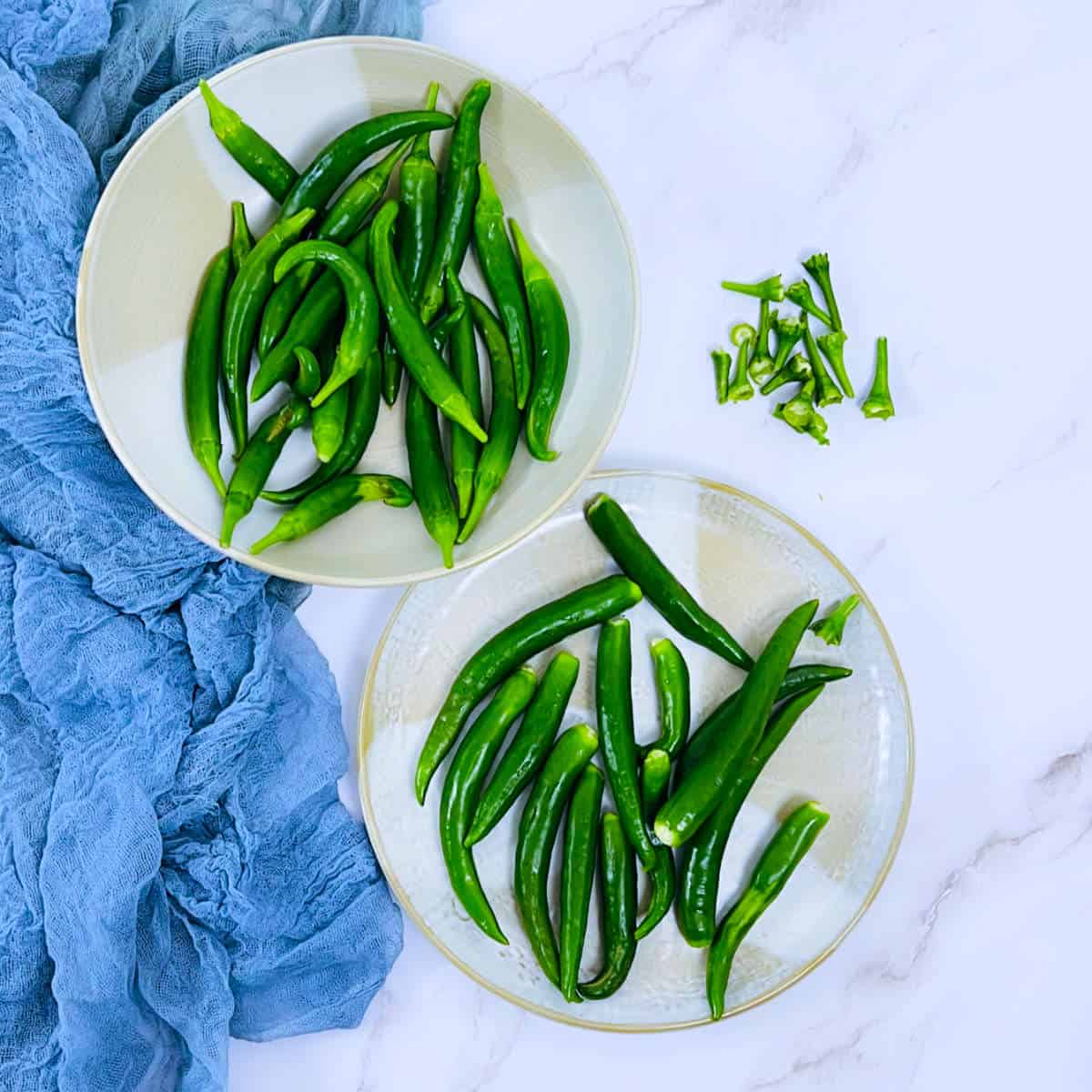
To prep green chilies for storage, start by selecting firm, undamaged peppers. Thoroughly wash and completely dry them to prevent moisture buildup that can lead to spoilage.
Remove the stems without damaging the chilies. Hold the chili gently but firmly and twist the stem to remove them without damaging the chili. If there are any signs of damage, consider storing them in the fridge for short-term use.
I recommend using gloves when handling hot chili pepper, particularly when making chili paste.
Storing in the refrigerator
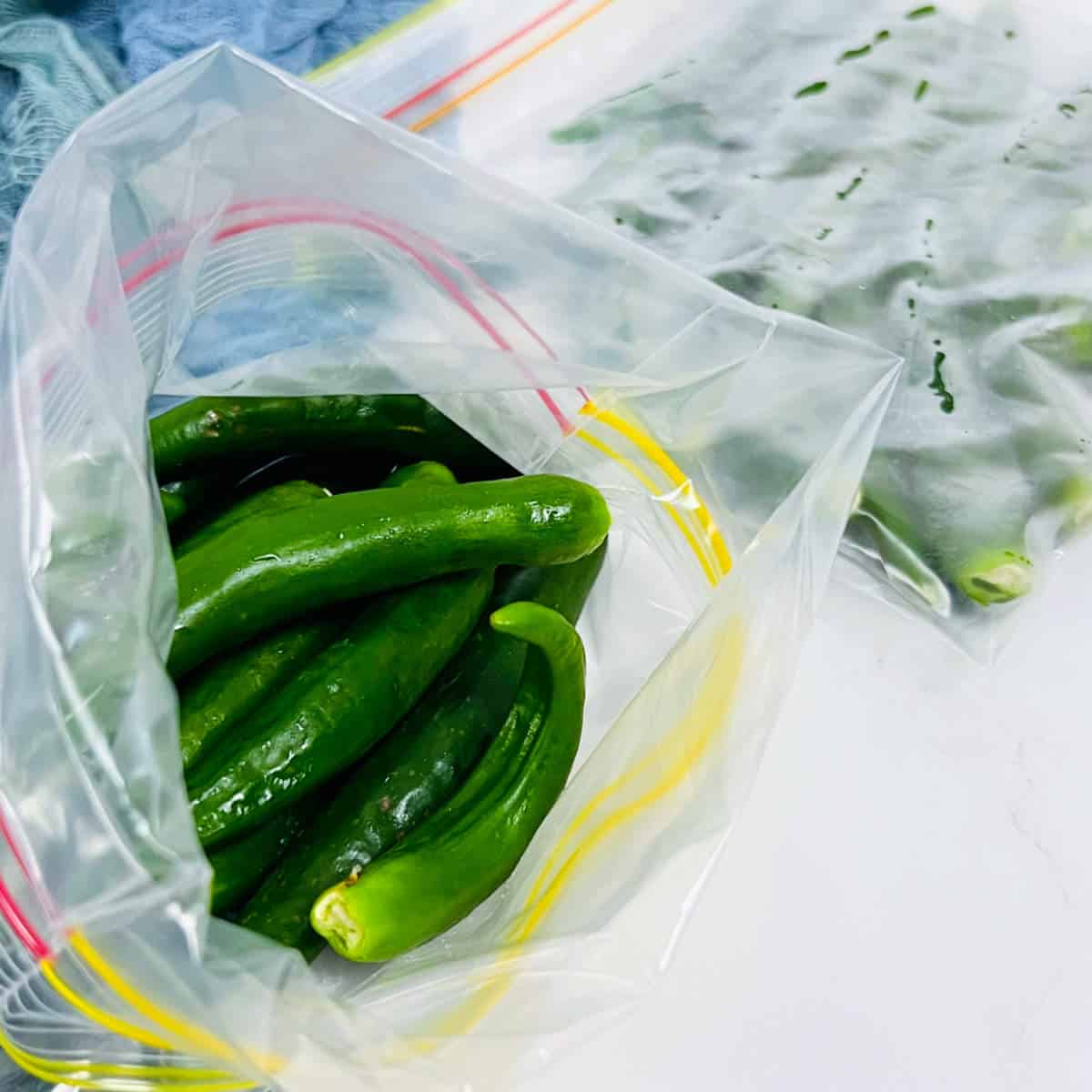
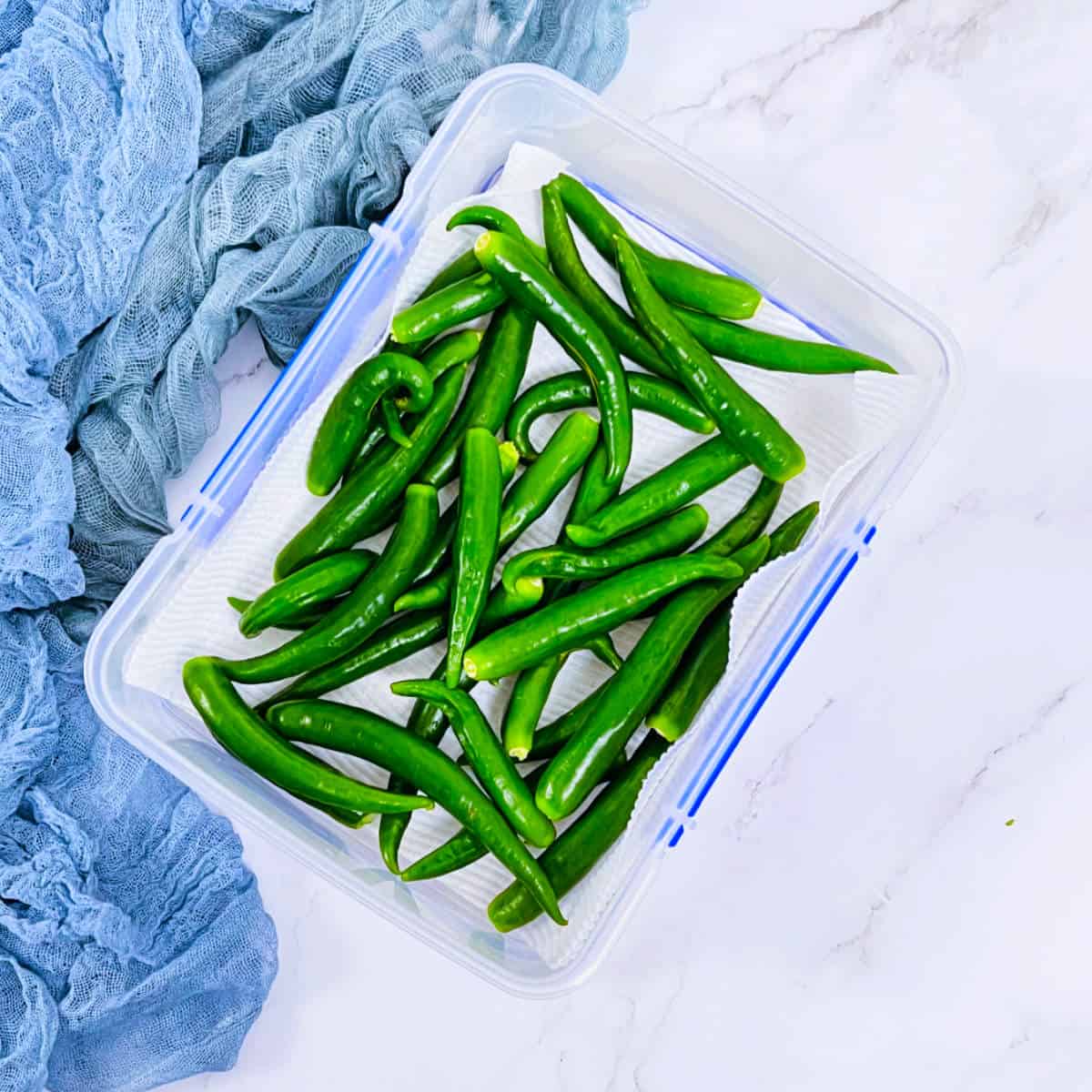
For short-term storage (up to 2 weeks), keep green chili peppers fresh in the refrigerator. Use a zip-lock plastic bag or an airtight container lined with a paper towel to absorb moisture.
Place the cleaned chilies in the container without overcrowding, then seal it. Store it in the refrigerator's crisper drawer, avoiding the door where temperature fluctuations occur.
Storing in the freezer
Freezing them is the best way to preserve the chili peppers for a longer term.
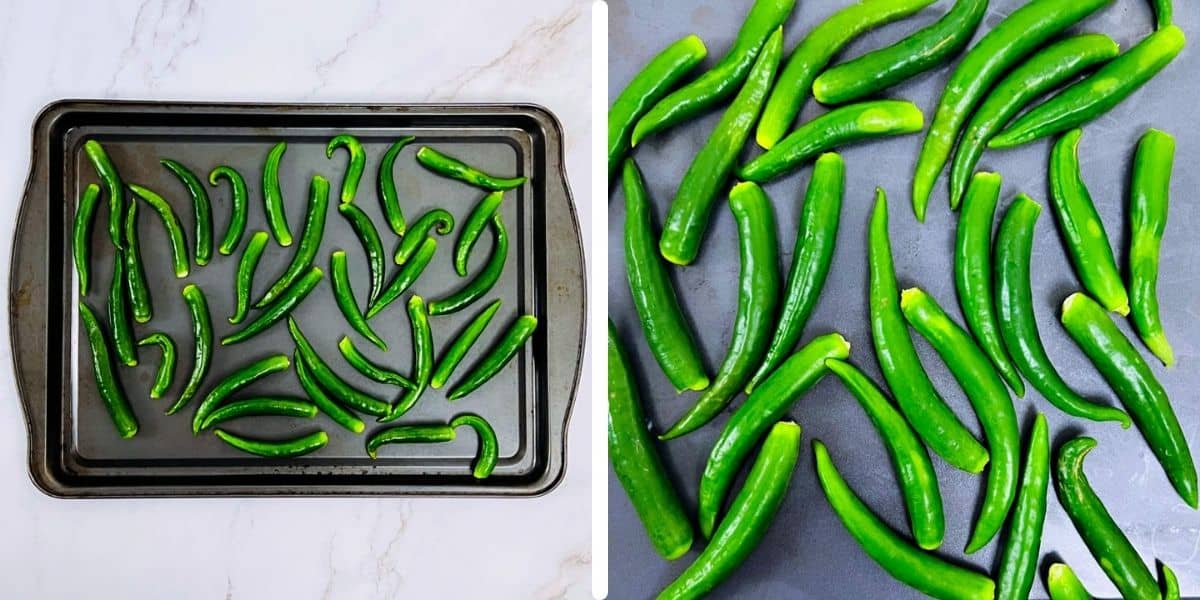
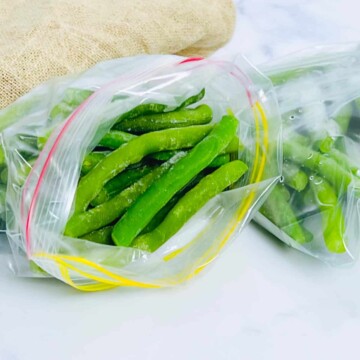
Step 1: Place the cleaned chili peppers on a baking sheet in a single layer and flash-freeze for one hour. It is important not to freeze for longer than that as it may cause freezer burns.
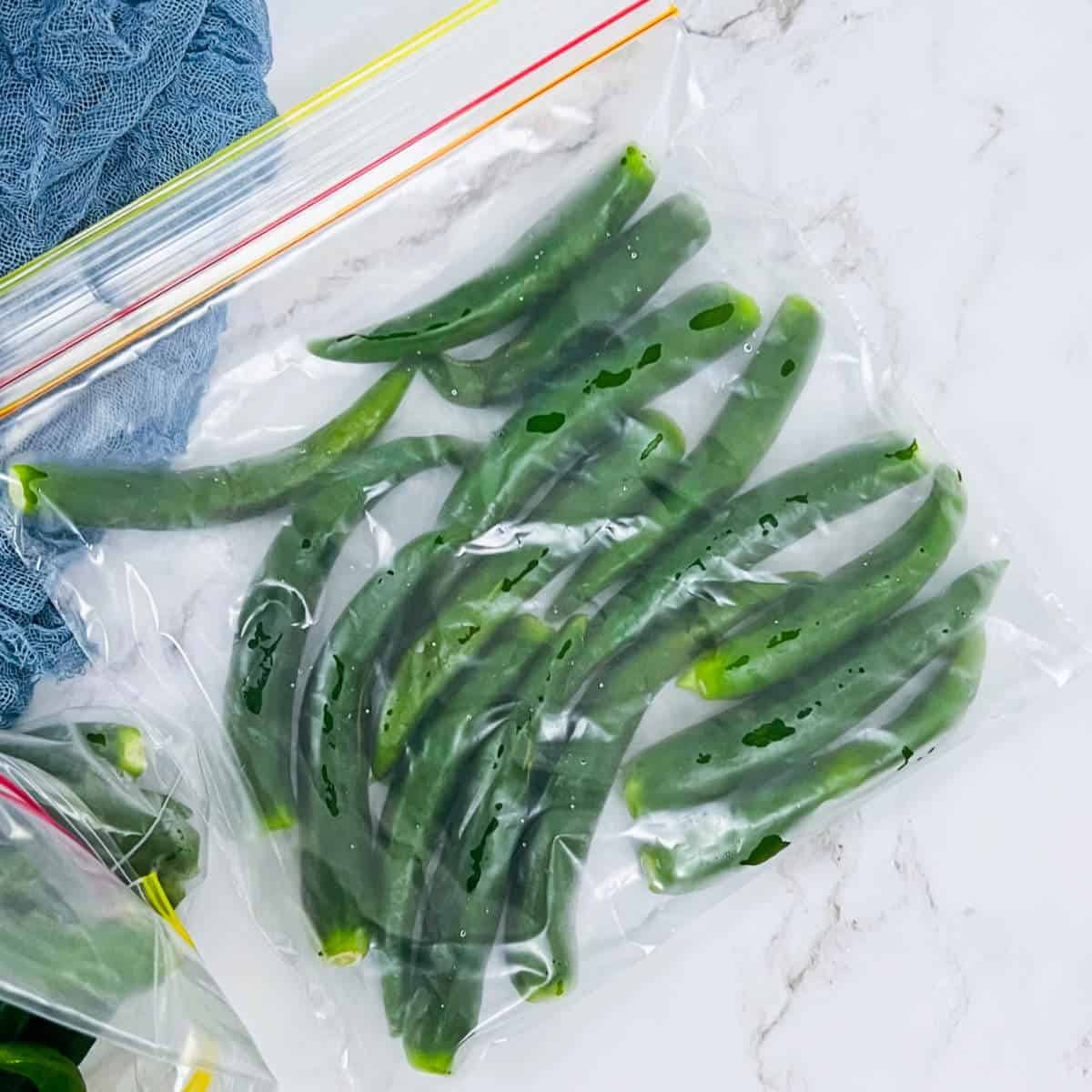
Step 2: Once they firm up, transfer them to a ziplock bag. Remove as much air as possible and seal the bag completely. Label the bag with the date and contents, and store it in the freezer. The peppers will stay fresh for up to 12 months.
Storing green chili paste
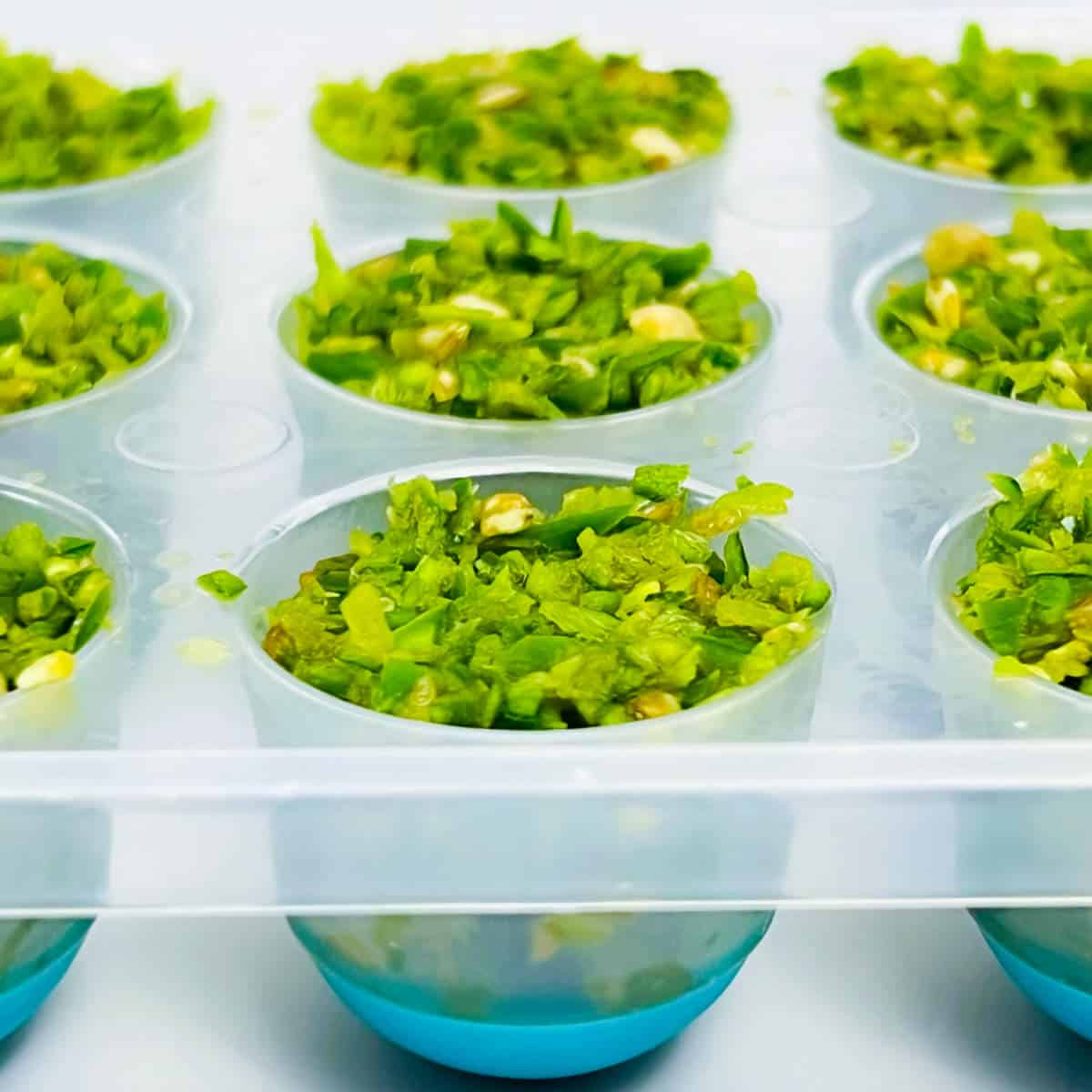
Preparing chili paste and freezing it can be an easy way to ensure you always have it on hand. To maximize convenience, it is a good idea to portion the chili paste into an ice cube tray before freezing. This way, you can easily take out the desired amount of chili paste, without having to thaw the entire batch.
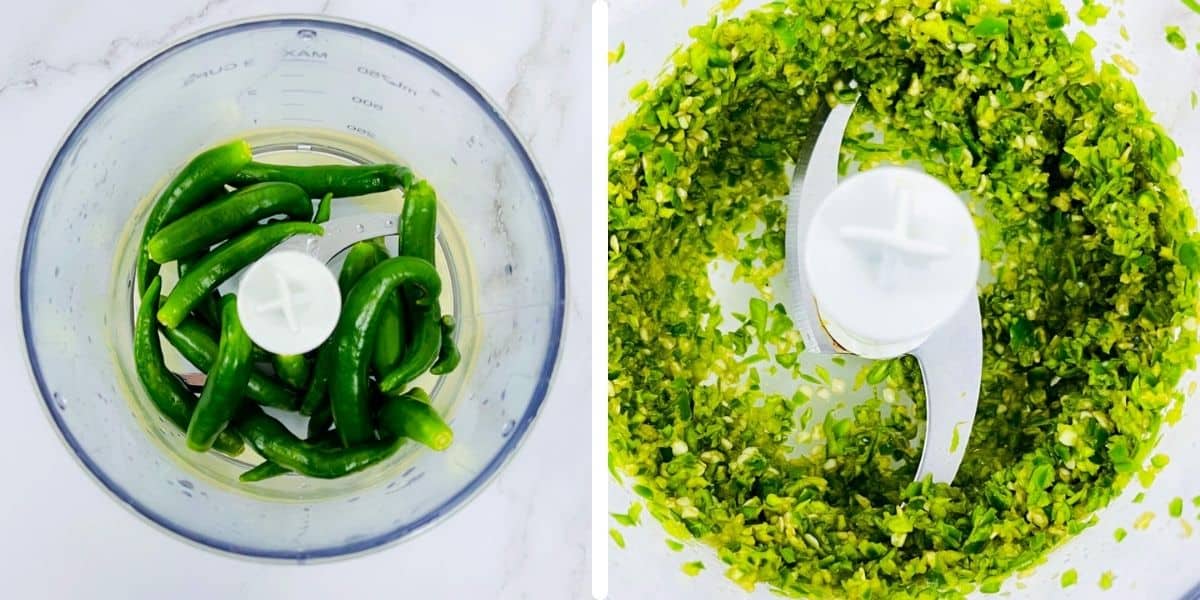
Step 1: Place the cleaned green chillies in a food processor and process them until they are finely chopped. Avoid adding any water while chopping them, as water can affect the texture and quality of the chili paste.
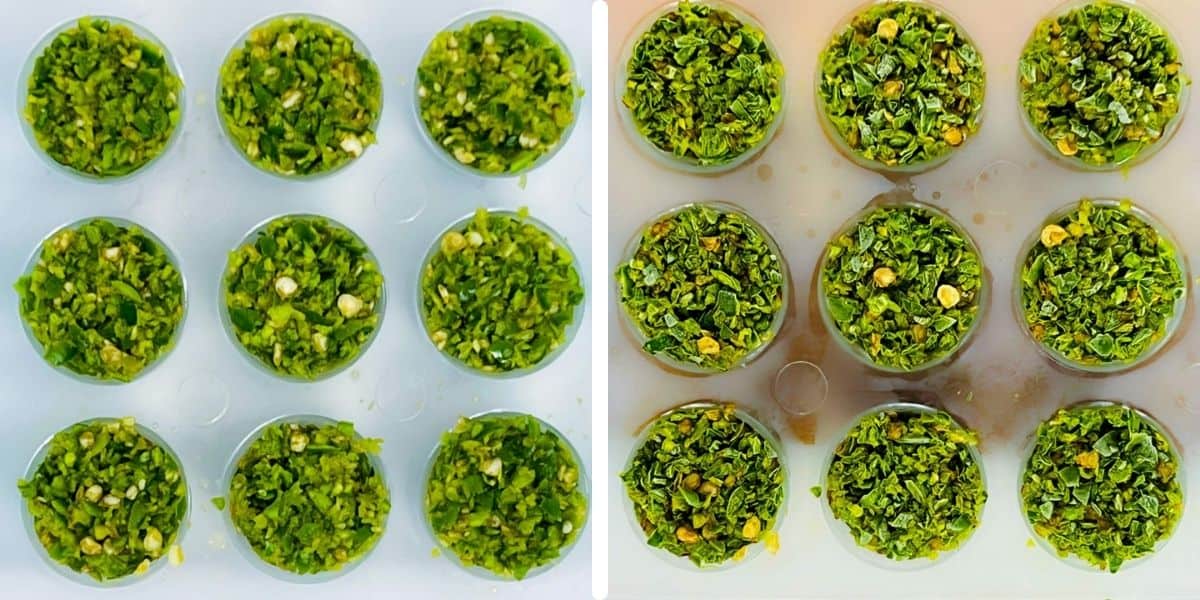
Step 2: Portion the chili paste by placing about one teaspoon of it in each compartment of an ice tray. Freeze the tray until the chili paste is fully set, which usually takes 5-6 hours.
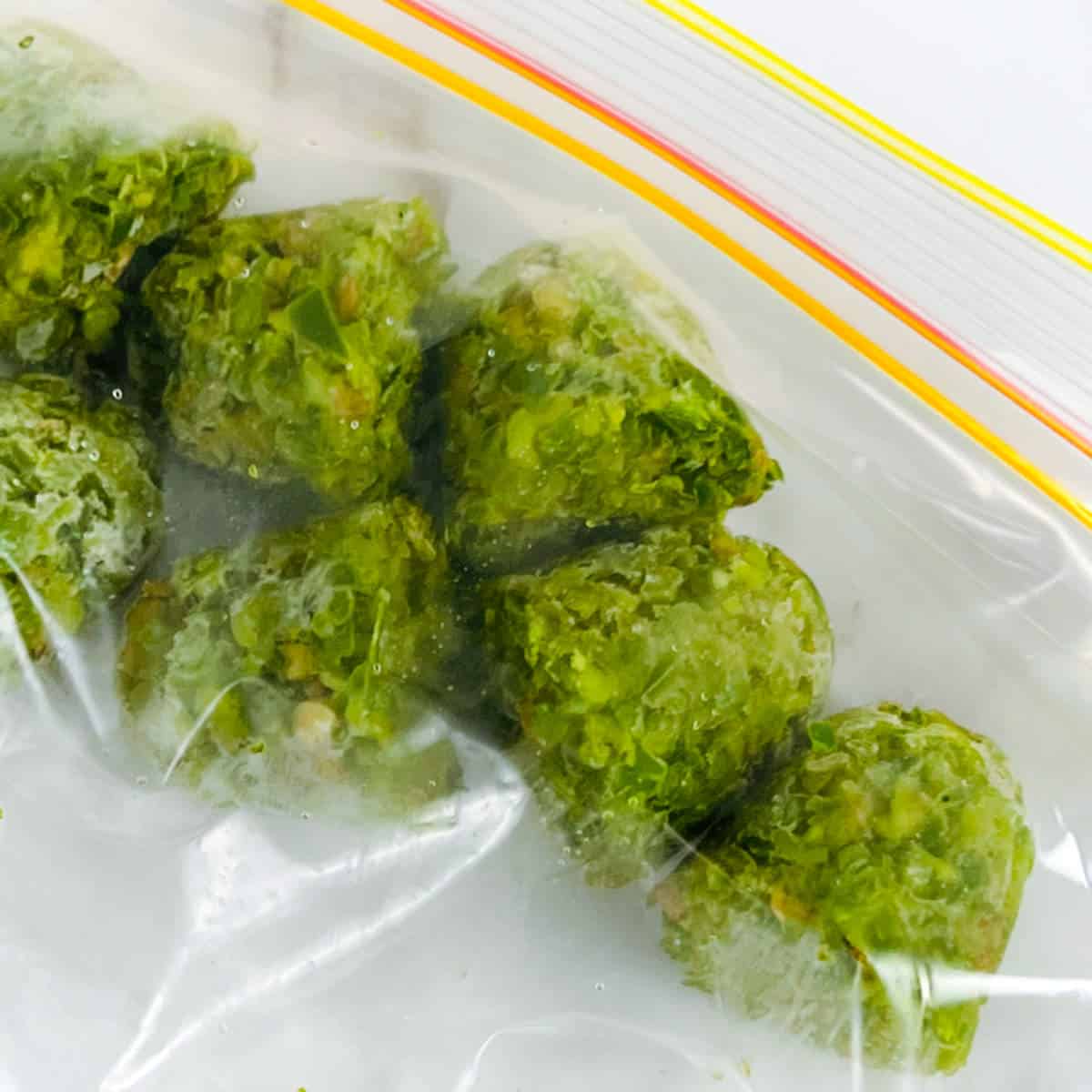
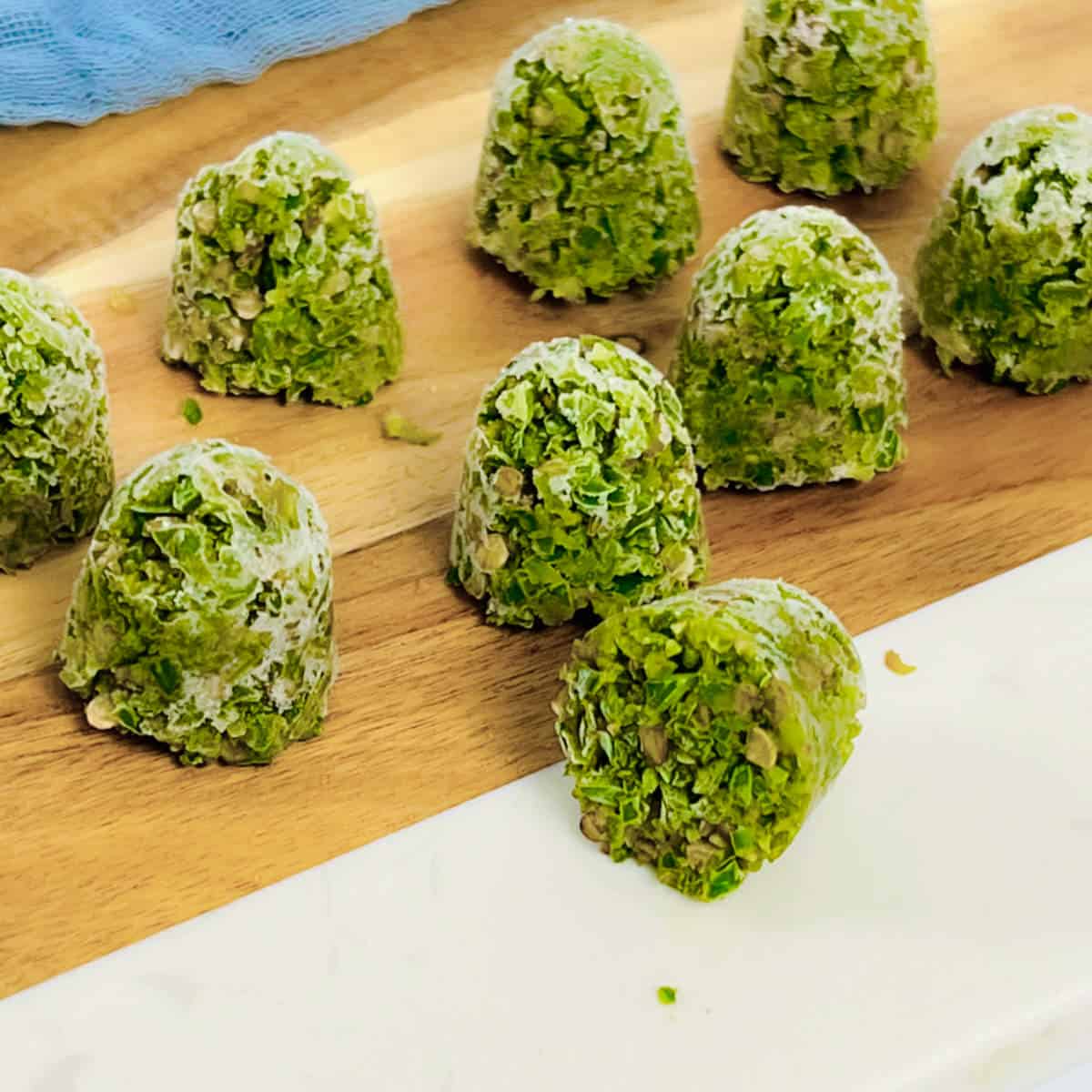
Step 3: Transfer the frozen chili paste cubes into a freezer-safe plastic bag. Try to remove as much air as possible from the bag before sealing it completely. This helps to prevent freezer burn and maintain the quality of the chili paste.
Step 4: Label the plastic bag with the date of freezing and store it in the freezer for up to 12 months. Properly frozen and stored chili paste can typically retain its quality for this duration.
If you liked this article, please don't forget to give a 5-star rating and leave a comment below.
Recipe card
How to store green chili peppers
Ingredients
- 1 lb green chili peppers or as needed
- Water as needed
Instructions
Prep the chilies for storage:
- Wash the green chilies in running water to remove any dirt. You can also place them in a colander and wash them.
- Spread them on a clean kitchen towel and let them air dry. Alternatively, pat them using a kitchen towel or paper towel to remove all the water content.
- Remove the stem of the chilies.
- If there are any signs of ripening or bruise, store them in fridge and do not freeze them.
Storing in the fridge:
- Take a clean and dry airtight container and line it with a paper towel. Place the cleaned chilies.
- Lightly wrap them and place them in the fridge.
- They can be stored in the refrigerator for up to 2 weeks.
Storing whole chilies in the freezer:
- Line them in a baking tray and flash freeze for one hour so that they can firm up. Do not flash freeze for longer than that as it may cause freezer burns.
- Once the chilies are firm, transfer them to a ziplock bag and seal it.
- Store in the freezer for up to 12 months.
Storing chili paste:
- Place the cleaned green chillies in a food processor and process them until they are finely chopped. Do not add any water when chopping them.
- Portion the chili paste by placing about one teaspoon of it in each compartment of an ice tray. Freeze the tray until the chili paste is fully set, which usually takes 5-6 hours.
- Transfer the frozen chili paste cubes into a freezer-safe plastic bag. Try to remove as much air as possible from the bag before sealing it completely.
- Label the plastic bag with the date of freezing and store it in the freezer for up to 12 months.
Comments
No Comments