
 Add Preferred Source
Dosa batter is a traditional South Indian fermented batter used to make dosas, which are a type of savory pancake or crepe. Dosa is a popular breakfast dish in South India and has gained popularity across the country and internationally.
Making dosa batter at home is easier than you think, and it can be very handy for breakfast, lunch boxes, and even lunch and dinner. This dosa batter recipe includes all the tips, tricks, and troubleshooting you need to get a well-fermented batter every time.
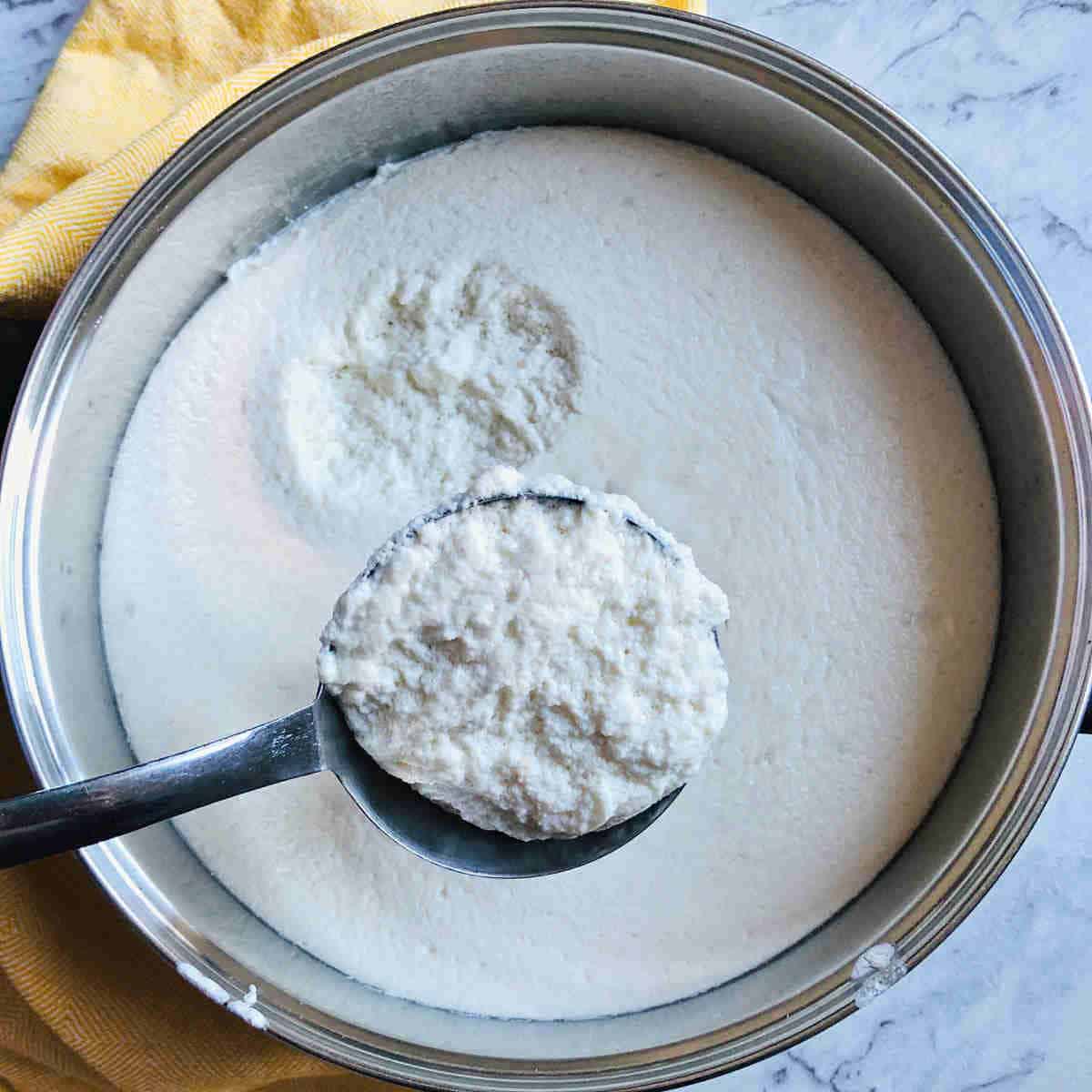
Why you will love this recipe?
- This dosa batter recipe has been tried and tested, ensuring that it consistently delivers excellent results.
- My recipe includes all the essential tips and techniques needed for grinding the rice and urad dal to the right consistency.
- By following this recipe, you can achieve the perfect dosa batter consistently. The measurements, proportions, and instructions will yield a batter that is smooth, well-fermented and makes perfect dosas.
- Dosa batter is incredibly versatile and can be used to make various dishes such as dosas, uttapam, appam, and more.
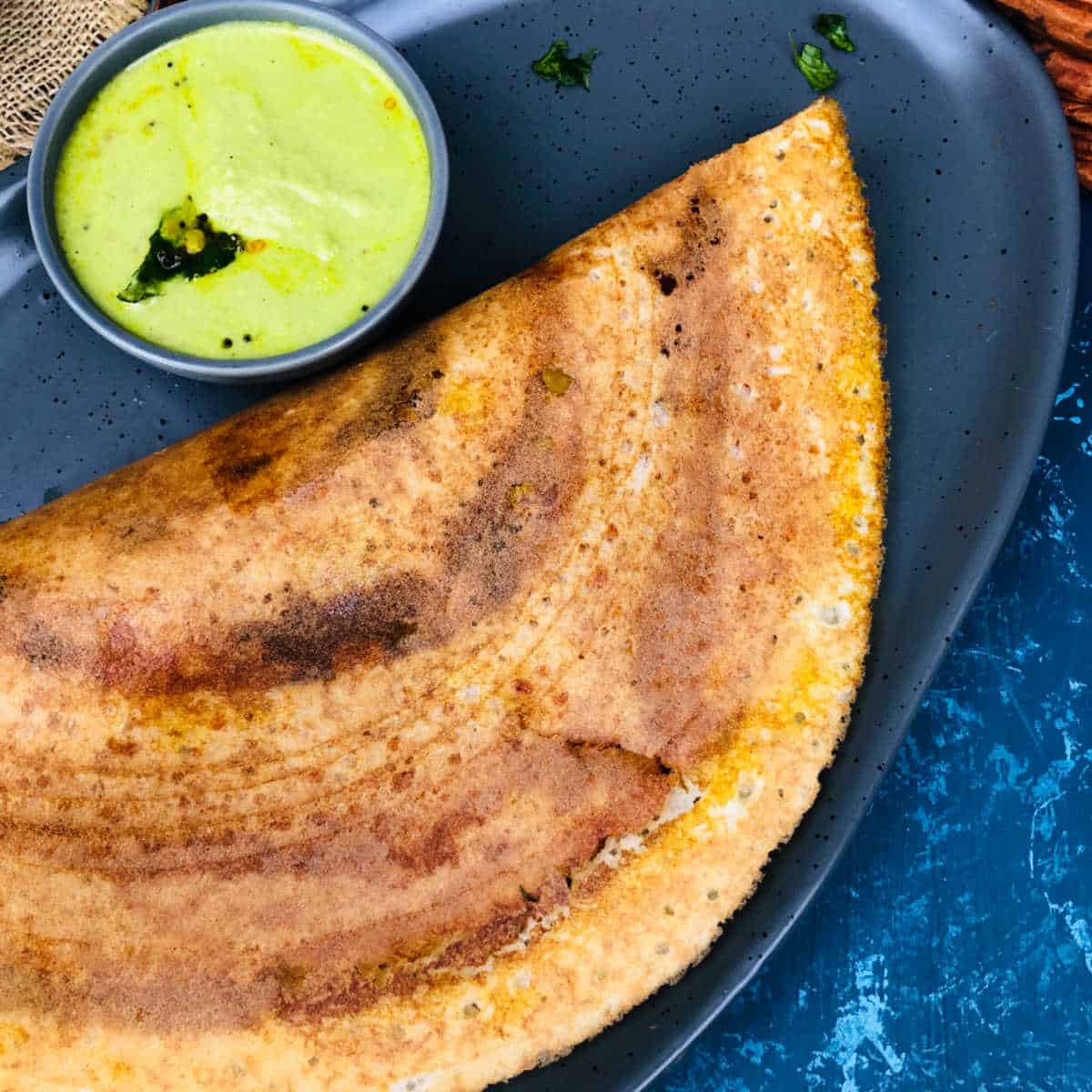
What is dosa
A dosa (pronounced 'dosey' or 'dosai') is a rice pancake originating from South India, and made from a fermented batter. It is somewhat similar to a crepe in appearance.
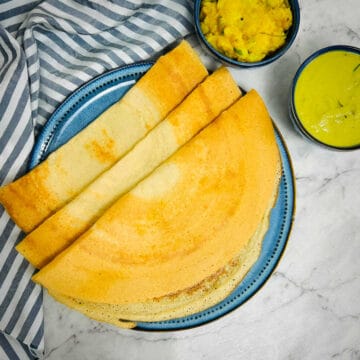
Dosas are a common part of the diet in South India but have become popular all over India and also in Indian restaurants outside of India. Traditionally, dosas are served hot along with sambar (dal) and chutney. Check out this blog post on dosa recipe to make perfect dosas.
What is dosa batter?
Dosa batter is the fermented batter used to make dosai. It is really easy to make, with most of the time involved being the fermentation time (resting time). Having it at hand can be a lifesaver, and it comes in very handy not just for breakfast but also for a quick lunch/dinner and lunch boxes.
The homemade dosa batter itself can be stored in the refrigerator for up to one week. Make it on the weekend and use it throughout the week. I have also tried freezing the leftover batter, and it works really well for up to three months. It is very important to defrost it completely before using it.
You can also make soft idli using this batter. This batter can also be used to make paniyaram and uttapam.
Ingredients
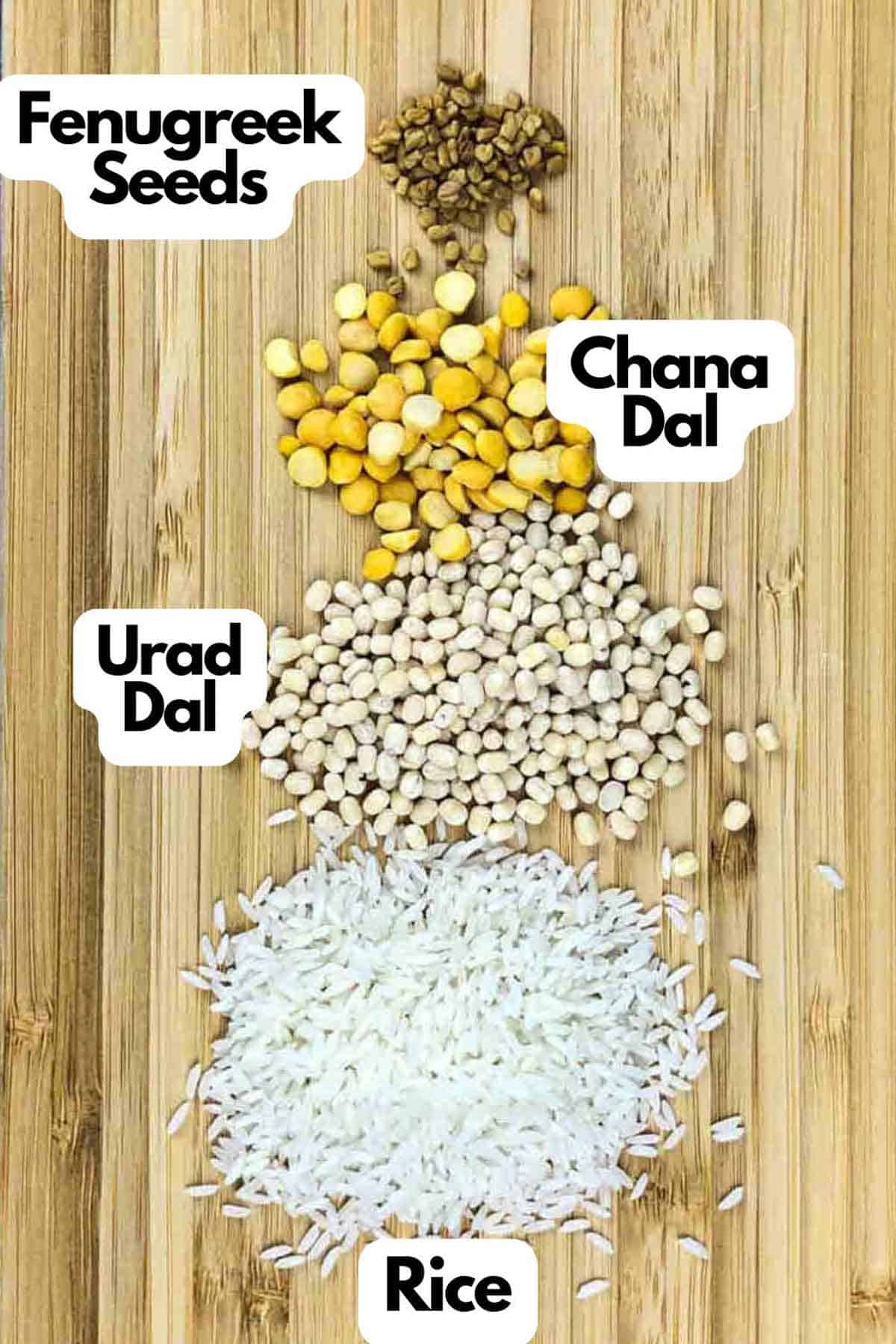
Rice: Any Indian variety short grain rice can be used. You can buy dosa rice or idli rice from Indian grocery stores. Here I have used sona masuri.
Dal: Urad dal (skinned black gram) is a key ingredient. Along with it, a small amount of chana dal (split yellow peas) is also used.
Fenugreek seeds: This helps in the batter fermentation.
Poha: (flattened rice or rice flakes) Red or white thick poha must be used to make the batter. This can also be replaced with parboiled rice.
Step-by-step instructions
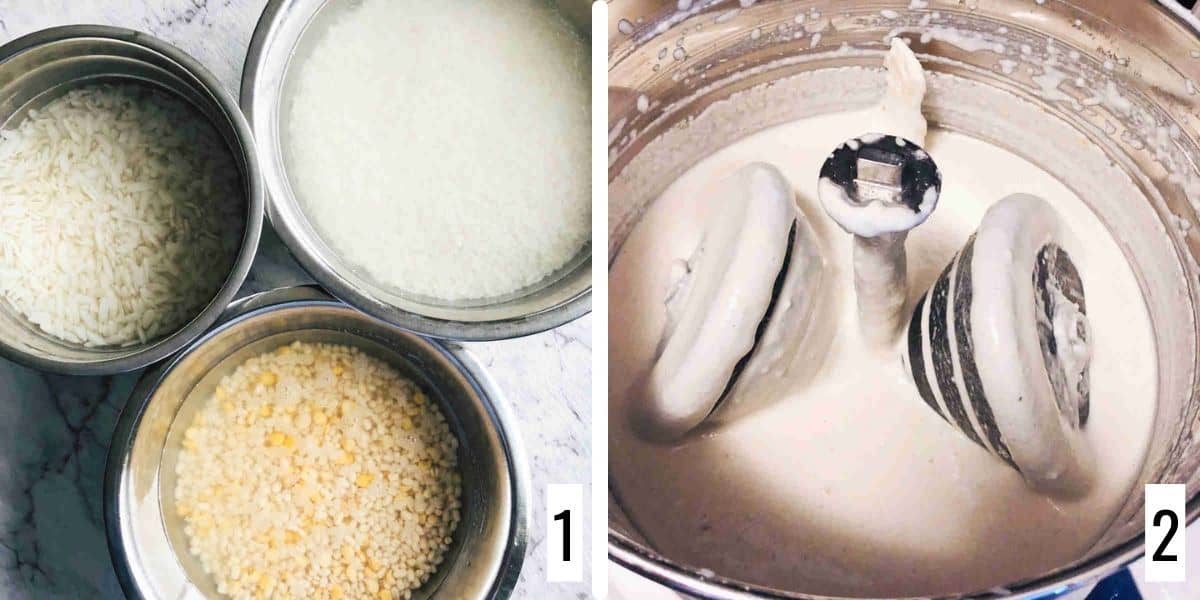
Step 1: Wash and soak urad dal, chana dal, and fenugreek seeds in a bowl. Wash and soak rice in another bowl. Soak poha two hours before grinding (image 1).
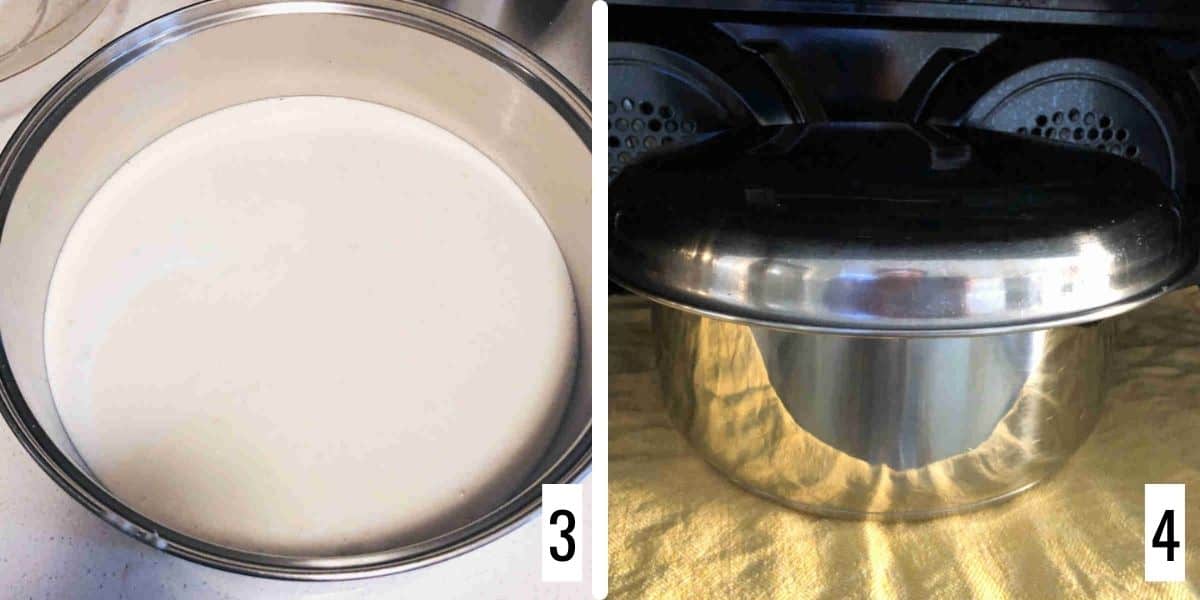
Step 2: Grind the rice and poha first and transfer them to a bowl. Next, grind the dal into a smooth paste. I am using a wet grinder or stone grinder. However, a good mixer grinder (or blender) will also do (image 2).
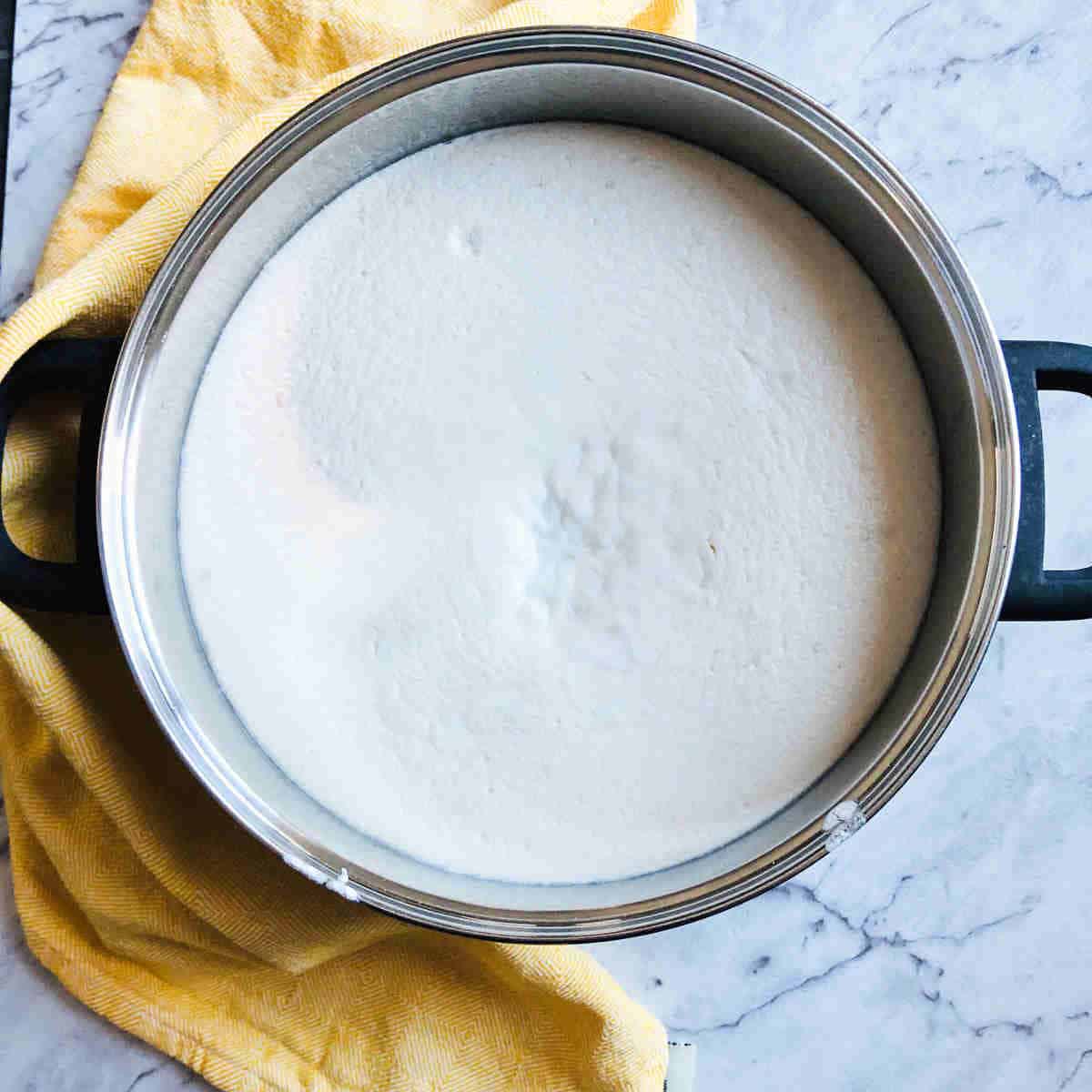
Step 3: Mix the lentil batter with the rice batter. Mix everything well with clean hands (image 3).
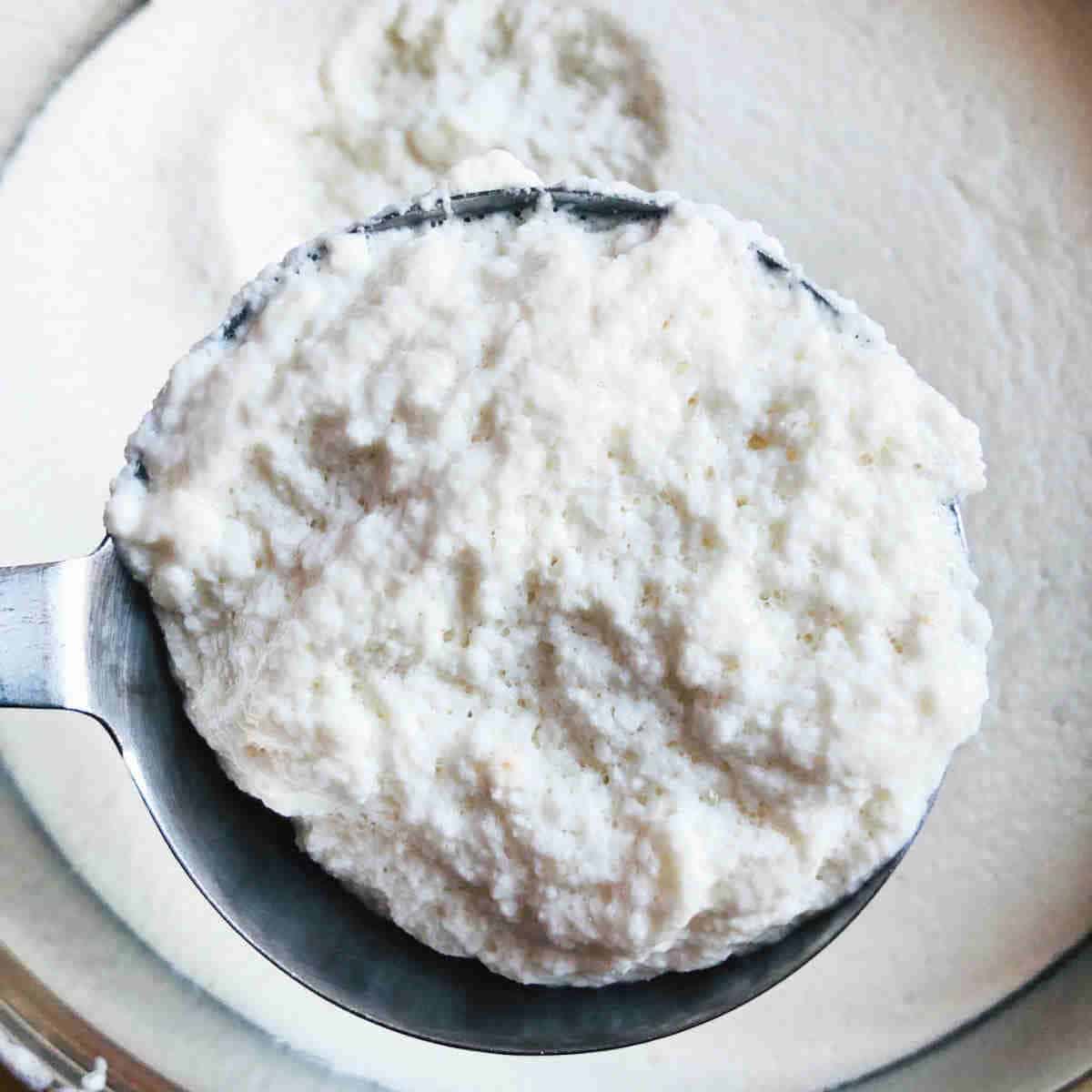
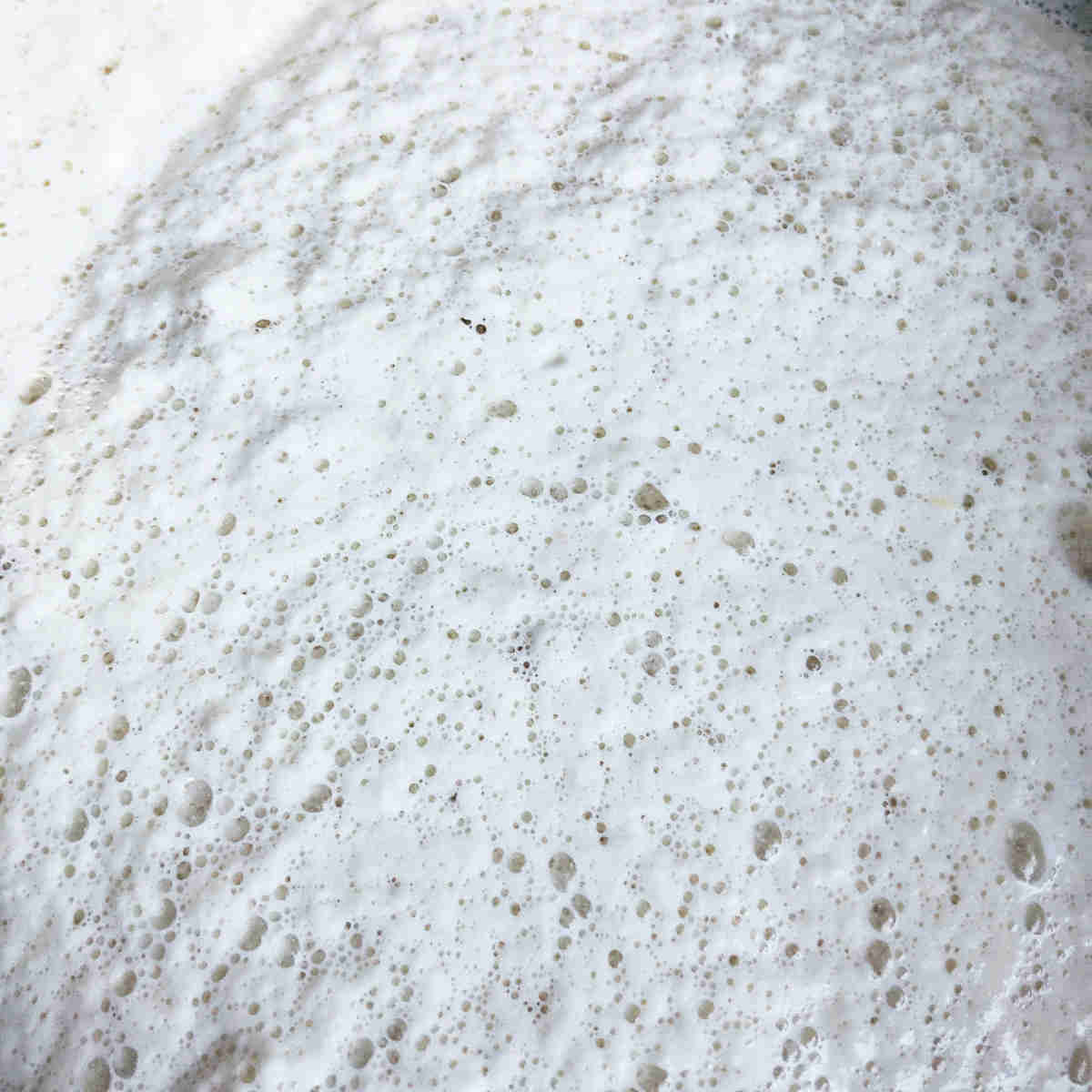
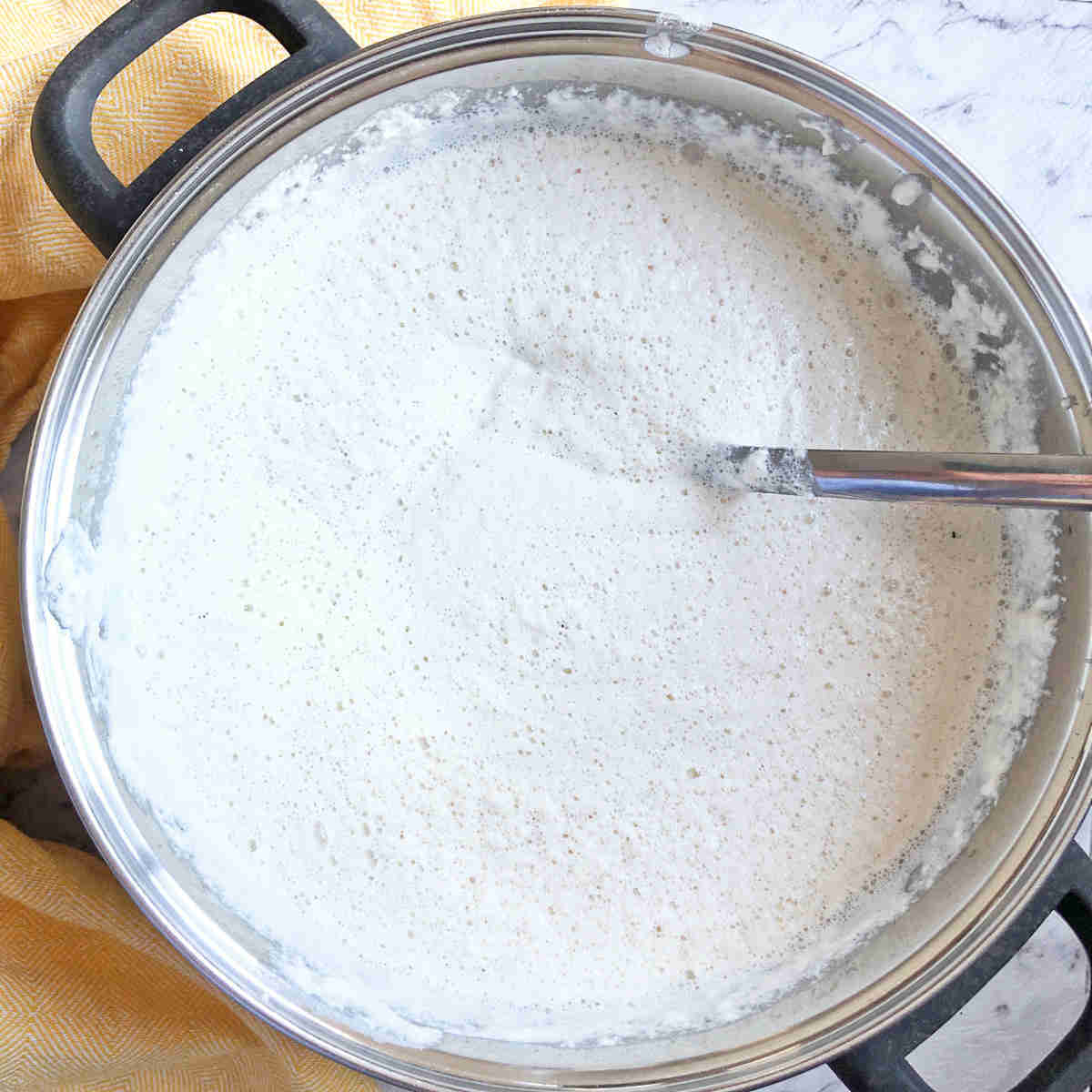
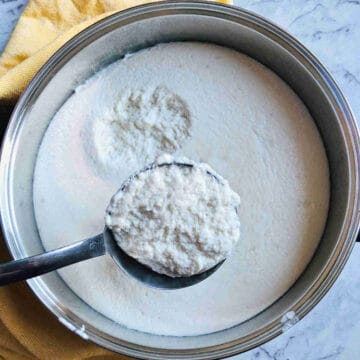
Step 4: Let the batter sit for fermentation (image 4). See the tips section below for useful tips to ferment the dosa batter perfectly.
The next morning, the batter will be fermented and ready to use.
What to serve with dosa
Dosa is usually accompanied by lots of ghee and butter, chutney/chutney powder, along with sambar.
Chutney: One of the most common chutneys associated with dosa idli is the coconut chutney, which is almost always served in all restaurants along with dosa and idli. It can also be served with tomato chutney or dry chutney powder.
Sambar: Sambar is a South Indian style dal made with pigeon pea lentils (toor dal), vegetables, and spices. When served with dosa, it adds more protein to the meal, making it wholesome.
Potato masala: An easy potato curry is commonly served with dosas. It is served as a side with plain dosa and as a stuffing in masala dosa.
Expert Tips to Make Perfect Dosa Batter
The measurements in this recipe will give 20-25 dosas, depending on the size and thickness. The batter itself will be around 16-18 cups, depending on the water used for grinding and the amount of aeration the batter has.
Soak the dal and rice in filtered water for the best results. This is particularly important in cold regions and if you are making dosa for the first time.
Wash the dal and rice thoroughly before soaking them in water. Also, it is important to soak them separately as they have different textures and need different grinding times.
After grinding everything, give it a good mix with your hands. Mixing them with hands is a key step that helps in the fermentation of the batter and cannot be skipped.
Ferment dosa batter in a dark, non-transparent steel vessel. It ferments best at high temperatures (95-105 F or 35-40 C). To maintain warmth during fermentation, use methods like briefly warming the oven or using an
You can use these tips to ferment the batter used to make adai dosa, millet dosa, or quinoa dosa.
Recipe FAQs
This batter can be stored in the refrigerator for up to one week. To use, portion out the required amount of batter and let it sit on the countertop for about an hour (depending on the quantity) to come to room temperature.
Yes. I have tried it and it works perfectly. It can be frozen for up to three months. It is important, however, to make sure that you defrost the batter fully before using it. Place it in the refrigerator overnight and then place it over the counter to bring it to room temperature.
More dosa recipes
If you tried this Homemade Dosa Batter Recipe or any other recipe on my website, please leave a ? star rating and let me know how it went in the ? comments below.
Recipe card
Homemade Dosa Batter
Equipment
Ingredients
- 1 cup urad dal
- 3 cups rice
- 2 tablespoon chana dal
- 1 teaspoon fenugreek seeds
- 1 cup poha
Instructions
Soaking:
- In a large bowl, add urad dal, chana dal, and methi (fenugreek seeds).
- Wash it thoroughly one to two times. Soak in fresh filtered water making sure the dal is entirely covered in water.
- In another bowl, take rice and wash it thoroughly one to two times. Soak in fresh filtered water making sure the rice is entirely covered in water.
- Let them soak for at least 5-6 hours.
- Two hours before grinding, take poha in a separate bowl and wash it thoroughly. Soak it in fresh filtered water.
Grinding:
- Once everything is soaked, we can begin the grinding process.
- Drain all the water from dal and rice.
- Start with grinding the rice and poha together by adding some water. Depending on the size of your grinder, grind them in small batches. You can either use a wet grinder or a high-powder blender to grind the batter.
- Add water in small batches as needed. The dosa batter consistency is similar to pancake batter.
- Once the rice is done, pour it into a container. Then add the urad dal for grinding.
- Once the urad dal is done, mix the rice and urad dal batter well.
- If you are grinding in batches, make sure you give the entire batter a good mix.
Fermentation:
- Pour the batter into a thick-bottom vessel making sure there is enough room for it to rise. If the batter is filling more than ¾ of the vessel, divide it into two bowls.
During Summer:
- Cover and place in a dark and warm spot for 8-10 hours preferably overnight. The batter will ferment quickly during summer.
During Winter:
- Set your oven to keep-warm mode (approximately 120 F / 50 C) for exactly 5 minutes, then turn off the oven.
- Once the oven has cooled down a bit, spread a clean cloth on the oven rack. Place the vessel with the batter on the cloth. If you have an oven light, you can keep that on as well.
- Let the batter ferment for 10-12 hours or till you get a slightly sour smell from the batter.
Rakib says
I have gotten great information about making perfect Dosa.
Sumanlata says
Nice. Very systematic way to make understand
Shilpa says
Thank you for your feedback, Sumanlata.
- Shilpa